Flooded Garage in San Tan Valley? Monsoon Emergency Steps
About half of the flooded-garage calls we run during monsoon season are not plumbing at all. Here is how to tell, and why it changes everything about your insurance claim.
The short answer
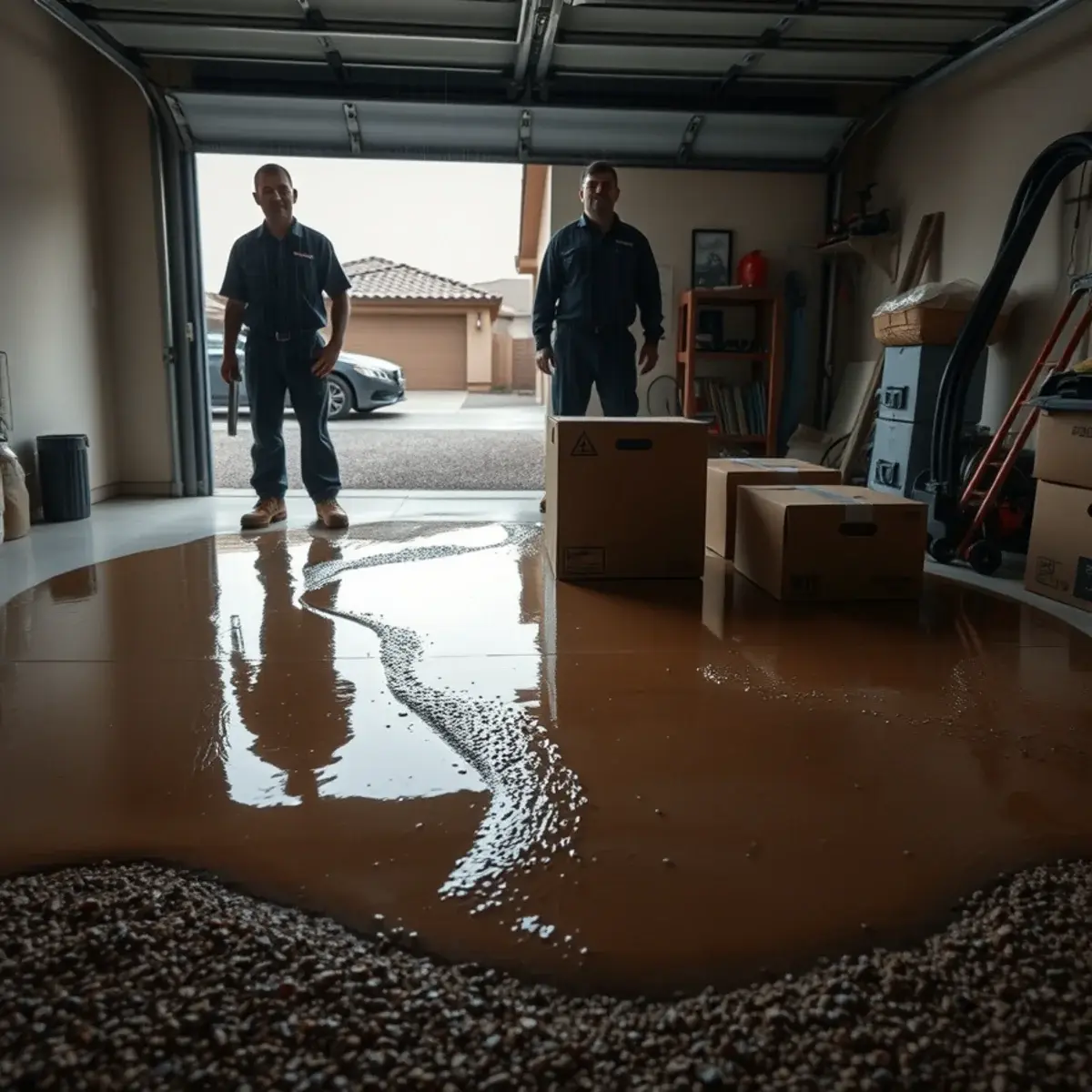
Make it safe first: no standing water near outlets or the panel, and shut off the water heater's gas or breaker if it is sitting in the water. Then establish which kind of flood you have — storm water enters under the garage door carrying silt and stops when the rain does, while a plumbing failure runs clear and keeps going. Your water meter settles it.
During monsoon season we get a lot of flooded-garage calls, and roughly half of them turn out not to be plumbing at all. Establishing which kind you have is the first thing that matters, because the two have completely different answers — including different insurance answers.
First: is it safe?
- 1Do not walk into standing water if outlets, extension cords or the panel are in it. Kill the circuit at the breaker if you can reach it dry, or call the utility.
- 2If the water heater is in the water, shut off its gas valve or breaker and close the cold inlet at the top of the tank.
- 3Get contents off the floor. Cardboard boxes first — cardboard wicks water outward fast and turns a puddle into a room.
- 4Photograph everything before you move or clean anything.
Then: storm water or plumbing?
The distinction is usually visible if you know what to look for.
| Clue | Storm water | Plumbing failure |
|---|---|---|
| Where it enters | Under the garage door, along the threshold, from the driveway side | From a wall, a fixture, the water heater, or up through a floor drain |
| What it looks like | Dirty, carrying silt, gravel and debris | Clear |
| Timing | Started during the storm, stops after | Continues after the rain has stopped |
| Direction of flow | Downhill from the driveway inward | Radiating from a specific point inside |
| Water meter with everything off | Not moving | Moving |
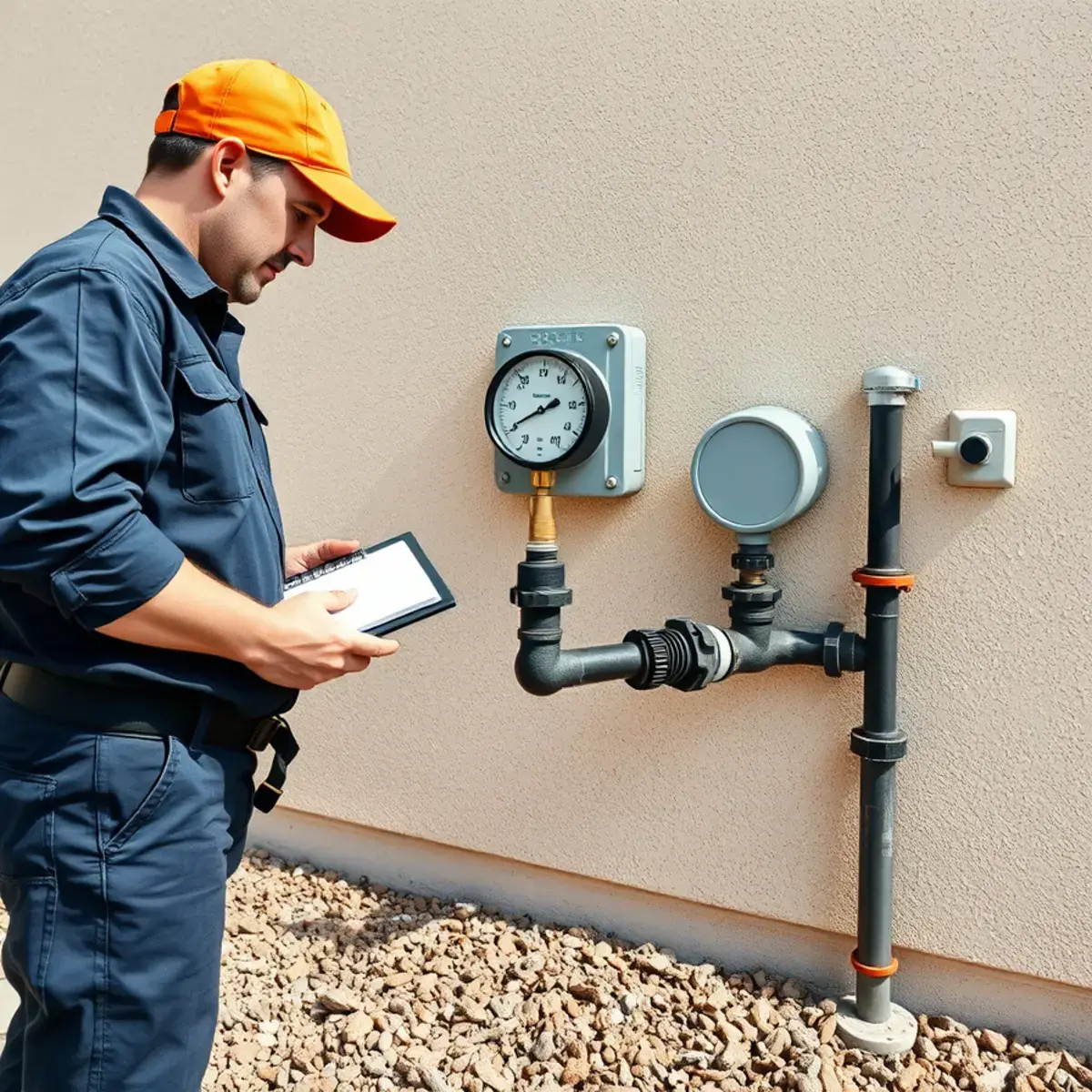
That last row is the decisive one. Shut every fixture in the house and look at the meter's low-flow indicator. If it is spinning, you are losing pressurized water somewhere and you have a plumbing problem regardless of the weather.
If it is storm water
This is a drainage and grading issue, not a plumbing failure. Common causes on San Tan Valley lots: a driveway that slopes toward the house, landscaping or gravel built up above the garage threshold, blocked or absent area drains, and low-lying property near the Hunt Highway corridor where Empire Boulevard and the surrounding streets flood.
Fixes are landscaping and drainage work: regrading, a trench drain across the garage apron, threshold seals, and correcting where downspouts and area drains discharge. We will tell you that honestly rather than selling you a plumbing repair you do not need.
The insurance side matters here too. Storm water intrusion is typically a flood-coverage question rather than a standard homeowners water damage claim, and those are very different policies. Knowing which you have before you file saves a lot of time.
If it is plumbing
In a San Tan Valley garage, the usual suspects are:
- The water heater. By far the most common. A tank that lets go empties forty to fifty gallons and keeps refilling. Shut the cold inlet at the top and kill gas or power. See emergency water heater service.
- The water softener. Drain line problems, a failed bypass or a control head leak.
- A washing machine supply line or drain. Braided lines harden and split, and standpipes back up.
- A slab leak surfacing. Water finding its way up through the garage slab from a failed under-slab line — see slab leak detection.
- The main line into the house, or a failed pressure regulator on the garage wall.
The sewer backup version
If water is coming up through a garage floor drain rather than in from outside, and it is dark or foul-smelling, that is a sewer backup rather than a supply leak. Stop all water use in the house immediately and treat it as a health hazard — see sewer backup after a monsoon storm.
Preventing the next one
- Get your water heater inspected if it is past year eight. A garage tank that fails on a storm night is the worst possible timing.
- Verify the drain pan under the water heater is actually piped to a drain — a pan with no outlet does nothing.
- Replace hardened braided supply lines throughout the house before they split.
- Keep the garage threshold clear and make sure landscaping rock has not built up above it.
- Store anything valuable on shelves rather than on the floor. In this climate, that is just sound practice.
More seasonal preparation in the pre-monsoon plumbing checklist, and if you are dealing with an active flood right now, our 24/7 emergency line is answered by a real person.
Why we turn down about half of these jobs
Roughly half the flooded-garage calls we attend during monsoon season are not plumbing at all. Hunt Highway floods, low-lying driveways channel water at the house, and it comes in under the threshold. That is a grading and drainage problem, and telling a homeowner otherwise would be inventing a repair.
The distinction matters far beyond our invoice. Storm water intrusion is generally a flood-coverage question, which is a separate policy most homeowners do not carry. A sudden plumbing failure is typically covered under a standard policy. Filing the wrong one wastes weeks, so we put the cause determination in writing either way.
One detail we check that owners rarely do: whether the drain pan under the water heater is actually piped to a drain. A pan with no outlet does nothing — it fills and overflows onto the same floor. It is one of the most common defects we inherit from other people's installations, and it turns a contained failure into a flooded garage.
The bottom line
Before the next cell, check three things: that your driveway does not slope toward the garage, that landscaping rock has not built up above the threshold, and that your water heater's pan drains somewhere. If you are standing in water right now, shut the main, kill the power to that area and call our 24/7 emergency line — and if it turns out to be the storm rather than your plumbing, we will tell you that.
Frequently asked questions
Usually not under a standard homeowners policy — surface water intrusion is generally a flood-coverage question, which is a separate policy. Sudden plumbing failures are typically covered. That is exactly why establishing which one you had matters before you file anything.
Shut every fixture in the house and watch the water meter's low-flow indicator. If it moves, you are losing pressurized water and it is plumbing. Clear water that keeps flowing after the rain stops points the same way; dirty water carrying silt that entered under the garage door does not.
You pay a diagnostic call and nothing else. We are not going to invent a repair. If the answer is that you need drainage work rather than a plumber, we will say so and point you in the right direction.