Sewage coming up through a shower drain is not a plumbing inconvenience, it is a biological hazard in your house. Category 3 water carries bacteria and viruses, it soaks into flooring and drywall within minutes, and every additional gallon you send down a drain makes the cleanup larger.
What you need to know about sewer backup & drain emergency here
So the instruction is short: stop using water everywhere in the house — sinks, toilets, dishwasher, washing machine, ice maker — and call. Then keep people and pets out of the affected room.
In San Tan Valley these calls spike in two windows. Monsoon season, from mid-June through the end of September, when a heavy cell over the Hunt Highway corridor surcharges the collection system faster than laterals can drain. And the holidays, when kitchen grease and heavy household use overwhelm lines that were already narrowed by scale and roots.
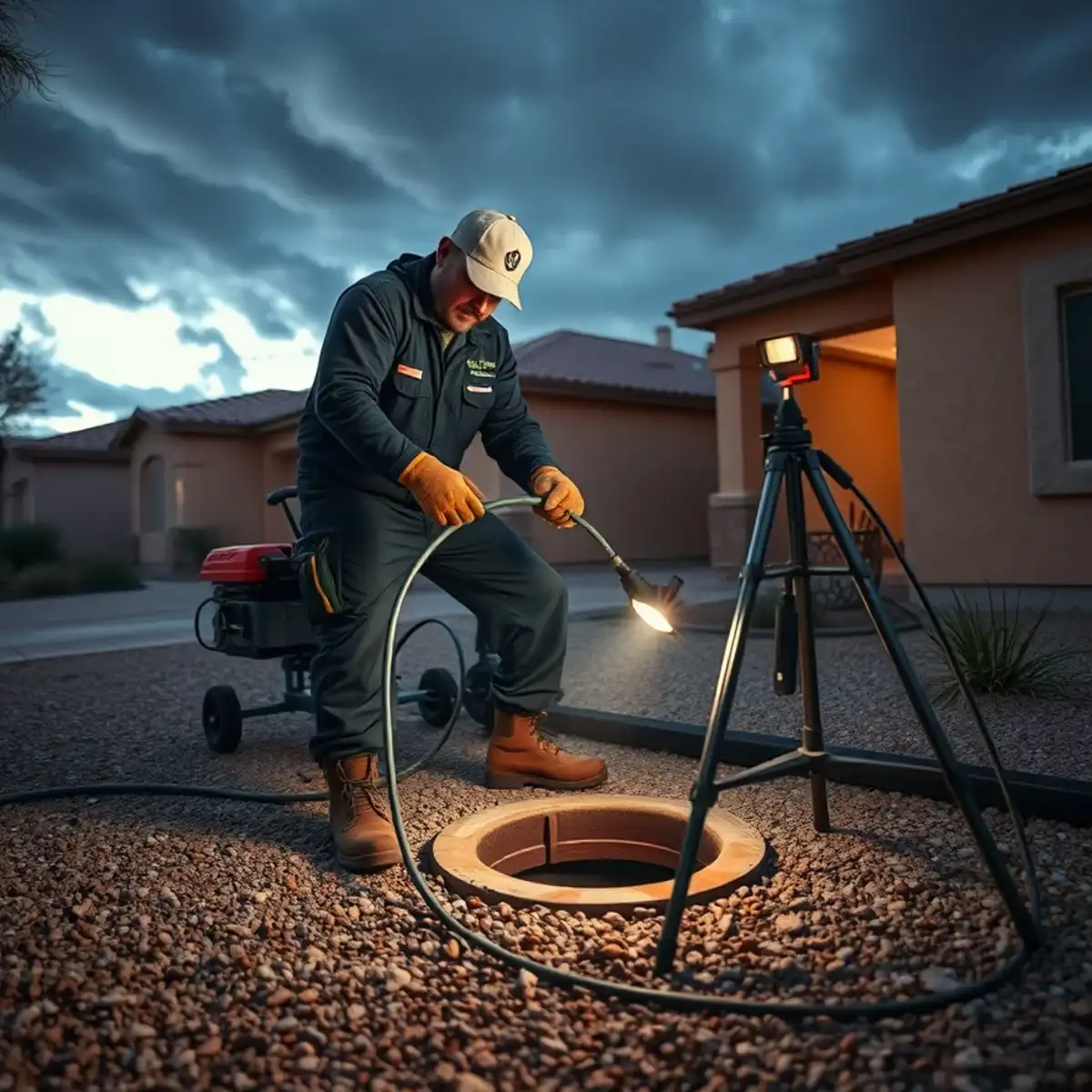
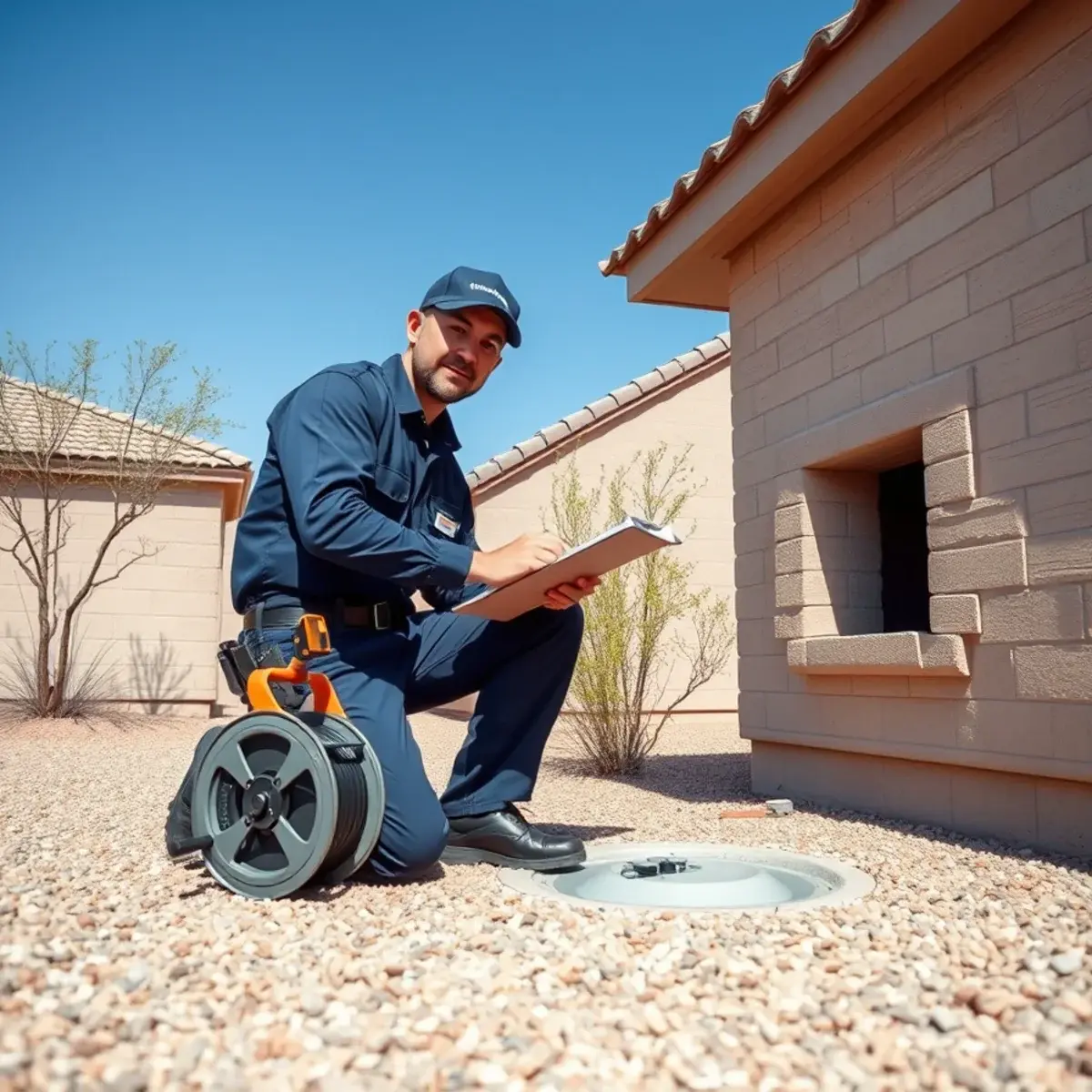
Exterior sewer cleanout relieving a backup outside a San Tan Valley home during a storm
If any of these describe what you are seeing, it is worth a phone call — most of them get cheaper the earlier they are caught.
Sewage or dark water rising in a tub, shower or floor drain
The lowest fixture in the house floods first. Stop all water use immediately and call.
Toilets bubbling when the washing machine drains
The main is restricted and the drain water has nowhere to go but back up through the trap. This is the warning before the flood.
Multiple fixtures backing up at the same time
One fixture is a fixture problem. Several at once is a main line problem.
Sewer odor through the house after a storm
Storm surcharge pushing gases back through the system, or a compromised lateral letting them escape.
Water rising in the cleanout in the yard
Actually good news — the cleanout is doing its job by relieving pressure outside instead of inside. It also tells us the blockage is downstream of that point.
What you get
What an emergency sewer backup call includes
Sewage in the house is a health hazard, not a plumbing inconvenience. The first instruction is on the phone and it is free: stop using water everywhere.
Immediate phone triage — stop all water use, keep people and pets out, and confirm whether the backup is active or receding
The exterior cleanout opened first so the backup discharges outside rather than into your home while we work
Correct cable and cutting head for the line, or the jetter where the pipe needs scouring rather than punching
Flow restored and verified with real volume, not a trickle test
Camera inspection included on every backup call — we are not going to charge you to find out why your house flooded
A determination of whether the blockage is on your lateral or downstream in a surcharged main
Help reporting it to the utility if the problem is not on your property
A written, camera-verified cause report — the first thing an adjuster asks for on a water backup claim
Real numbers for whatever the camera found: root treatment, spot repair, lining, or a backwater valve
Referrals to Category 3 remediation companies we would use ourselves, with no referral fee taken
Sewer Backup & Drain Emergency details
First Five Minutes
1Stop all water use. Everyone in the house. Post someone at the laundry room if you have to — a wash cycle mid-drain will empty forty gallons into your hallway.
2Keep people and pets away. Sewage water is a genuine health hazard, not just unpleasant. Shoes and gloves if you must enter.
3Do not use chemical drain openers. They will not clear a main line blockage and they turn the standing water into a chemical hazard for whoever works in it.
4Turn off the water heater if the water level is climbing toward it in a garage installation.
5Photograph everything before cleanup, including the water line on the walls and any affected contents.
Monsoon Backups: Why This Is a San Tan Valley Problem
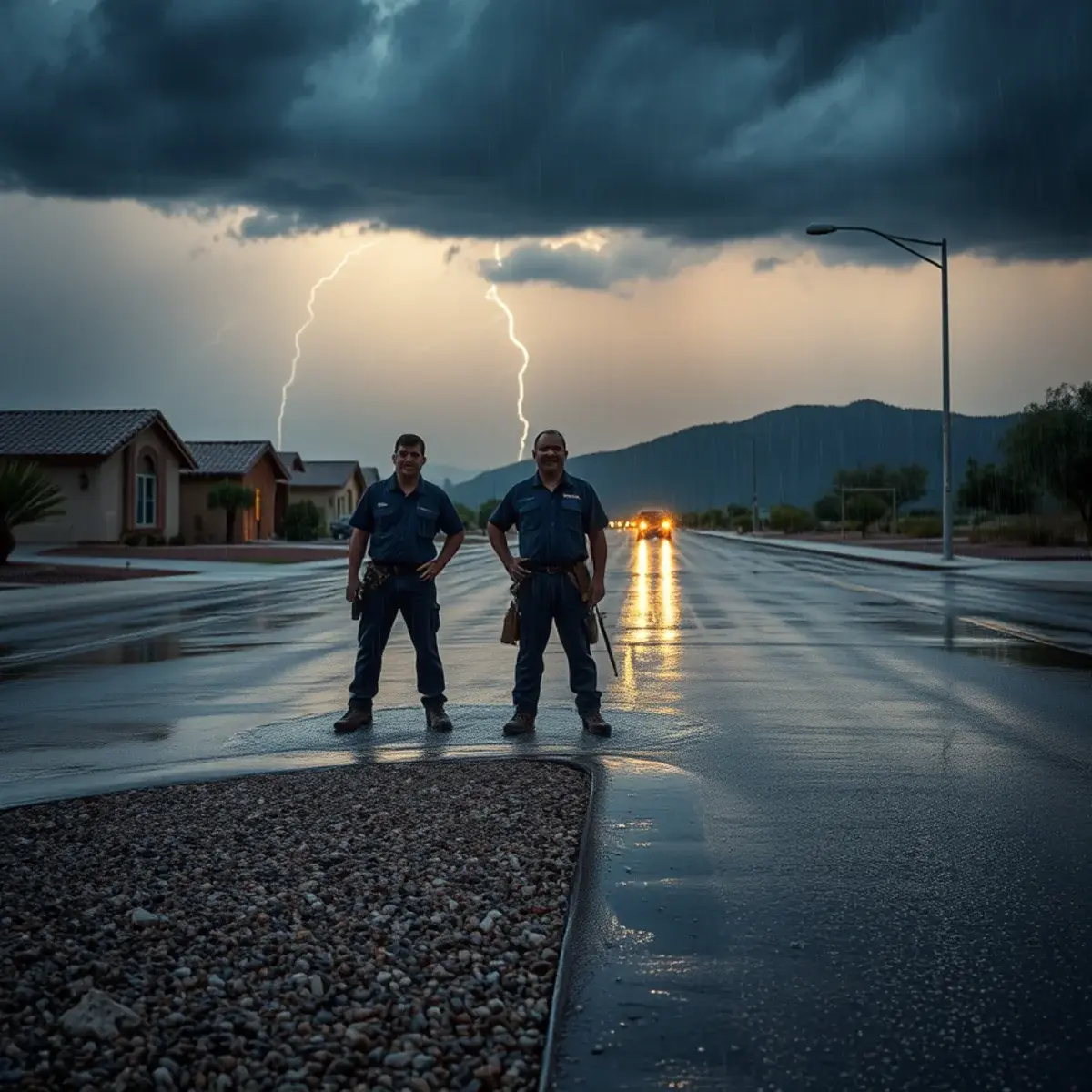
Between June 15 and September 30, monsoon cells drop an inch or more of rain on ground that cannot absorb it. Hunt Highway between Ellsworth and Thompson floods. Empire Boulevard closes. The collection system takes on far more volume than a normal day, and where storm water finds its way into sanitary infrastructure, the line surcharges — meaning it fills to capacity and pressurizes.
When that happens, your lateral has nowhere to discharge. The waste backs up toward the lowest opening it can find, and in a single-story slab home that is a guest shower pan or a garage floor drain.
The honest diagnostic question is whether your lateral is also blocked or whether it is simply backed up from downstream. We camera the line to find out, because the answers lead to very different bills. If the problem is on the utility side we tell you and help you report it. Our monsoon plumbing prep guide covers what to do before the next storm.
Backwater Valves: The Real Fix for Repeat Flooding
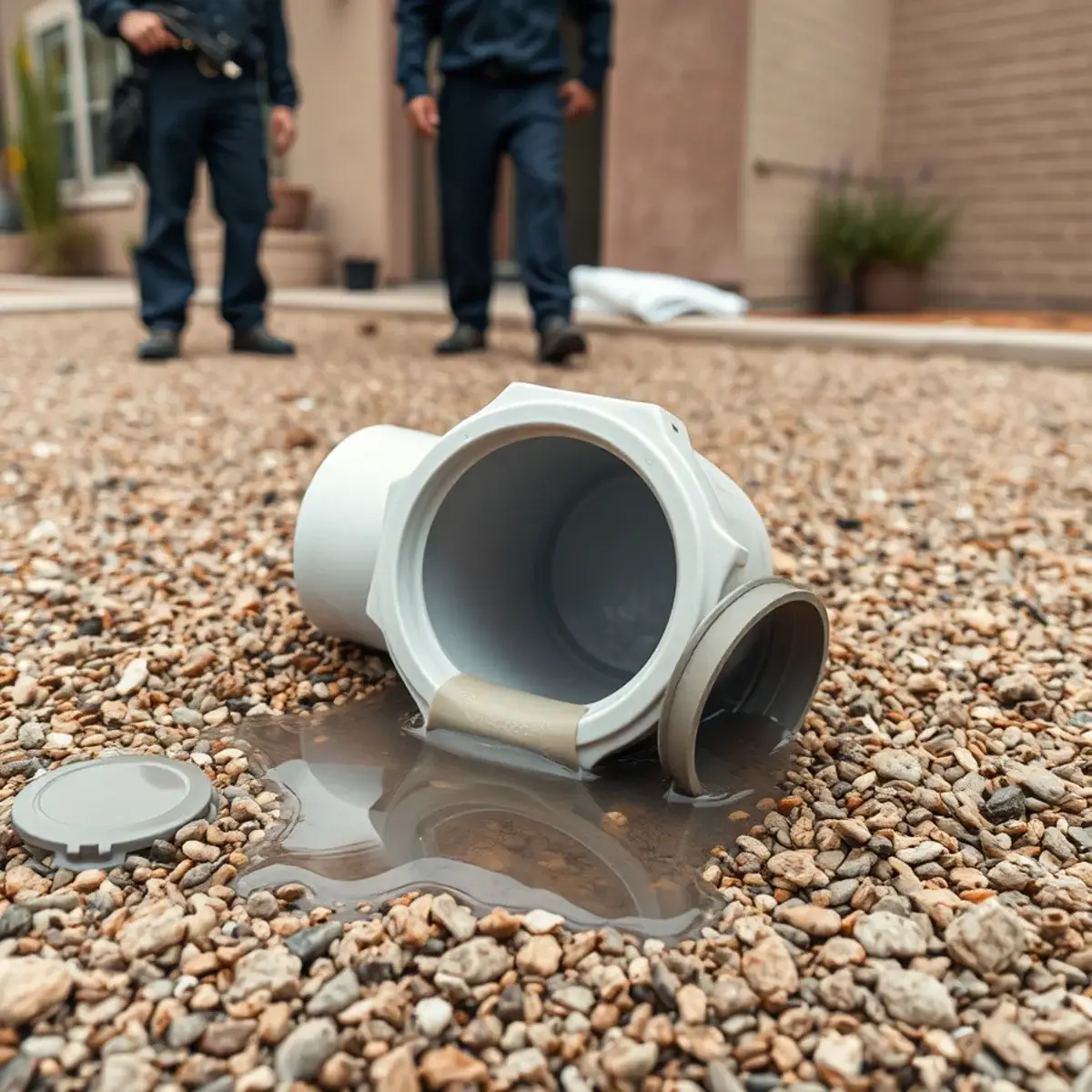
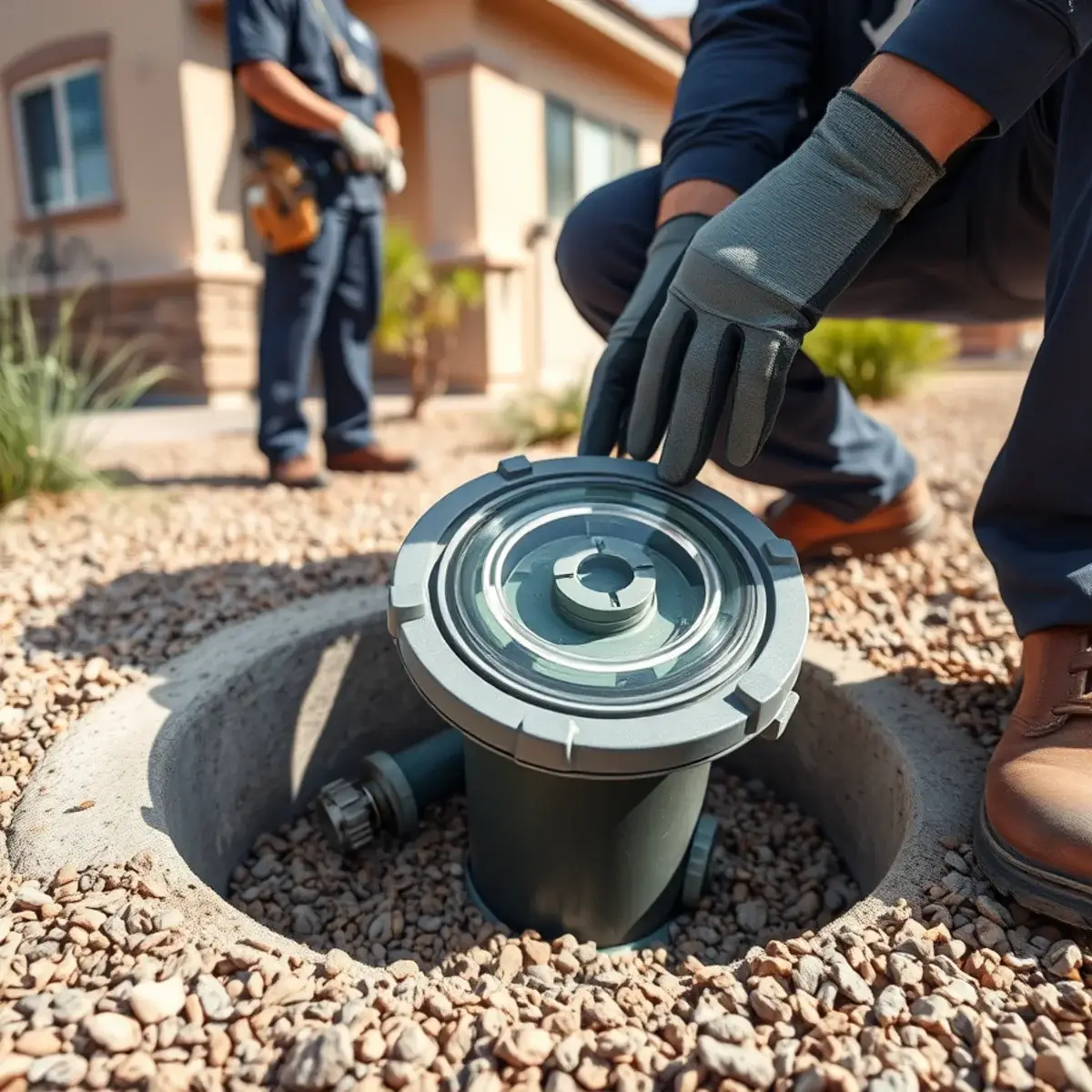
If your home has backed up during more than one storm, cleaning the line again will not change the outcome next August. A backwater valve — a one-way check valve installed on your sewer lateral — allows waste to flow out and physically prevents it from flowing back in when the main surcharges.
It is a permitted installation, it requires a pit and correct placement relative to your fixtures, and it needs to be inspected periodically so debris does not hold the flapper open. For homes in the low-lying pockets of the Hunt Highway corridor with a repeat backup history, it is the single most valuable plumbing investment we install.
Non-Storm Backups: What Is Actually in the Line
Cause
Signature
Fix
Roots at a joint
Backs up every spring; camera shows a hair-like mass at a joint
Root cutting now; lining or spot repair to end it — see sewer line repair
Grease
Kitchen-side, worse after holidays, camera shows a coated pipe wall
Hydro jetting to scour the wall back to full diameter
Belly in the line
Backs up every few months regardless of season; camera shows standing water
Re-lay the section at correct fall; cabling only buys time
Collapsed or offset pipe
Cable will not pass a specific point; camera shows a break
Spot repair, pipe bursting or replacement
Flushed items
Sudden onset with no history; wipes, hygiene products, toys
Retrieve or cut through, then a conversation about what goes down a toilet
Utility main surcharge
Whole neighborhood affected, storm-correlated
Report to the utility; consider a backwater valve
Cleanup, Health and Insurance
Sewage backup is classified as Category 3 — grossly contaminated — water. Porous materials that absorbed it, including carpet, pad, and the lower portion of drywall, generally need removal rather than drying. That is remediation work, and it should start within hours, not days.
Standard homeowners policies frequently exclude sewer backup unless you carry a specific water backup endorsement, which is inexpensive and worth having in this town. Check your declarations page today rather than after a storm. Whatever your coverage, we document the cause, photograph the extent and provide a written report — adjusters ask for the cause determination first, and a camera-verified finding carries far more weight than a description.
Backwater valve installed on a sewer lateral to stop monsoon backups in San Tan Valley
How we work
Our sewer backup & drain emergency process
No surprises, no mystery. Here is exactly what happens from the phone call to the walkthrough.
1
Immediate triage on the phone
Stop all water use, keep people out of the affected area, and confirm whether the backup is active or receding. We dispatch and give you a real ETA.
2
Relieve pressure safely
We open the exterior cleanout first so the backup discharges outside rather than into your home while we work.
3
Clear the blockage
Correct cable and cutting head for the line, or the jetter where the line needs scouring. We work it until full flow is restored and verified with volume.
4
Camera the line to find the cause
Included on every backup call. You see the footage. This is what separates 'we cleared it' from 'here is why it happened and what it will take to stop.'
5
Written cause report and options
A plain-English report you can hand to your insurer, plus real numbers for whatever the camera found — root treatment, spot repair, lining, or a backwater valve.
What it costs
What drives the price of sewer backup & drain emergency
We do not publish flat prices for work nobody has looked at — that is a guess dressed up as a quote. Here is what actually moves the number, so you can read any estimate you receive.
Emergency timing
Storm-night and after-hours response carries a premium, quoted before we roll. During monsoon season we are candid about queue times.
Access to the line
An accessible exterior cleanout is the fastest and least expensive entry. No cleanout means pulling a toilet, which adds labor and a reset.
Cable versus jetting
Cabling restores flow. Jetting restores the pipe. Grease and heavy scale need the jetter, and that is a larger machine and more time.
Camera inspection
Included on every emergency backup call. We are not going to charge you to find out why your house flooded.
Permanent corrections
Root treatment, spot repair, lining or a backwater valve are separate scheduled work at standard rates, quoted with the camera footage in front of you.
Why Economy Plumbers
Why San Tan Valley homeowners call us for sewer backup & drain emergency
Licensed, bonded and insured Arizona plumbing contractor. 20+ years of combined plumbing experience, dispatched from 2769 E Combs Rd — and 4.9★ from 168 customers who mostly mention the same things.
We know the monsoon pattern here
Hunt Highway between Ellsworth and Thompson floods, Empire Boulevard closes, and the collection system surcharges. We staff for storm nights from June 15 through September 30 because backups arrive in clusters.
Camera included, always
Clearing the line tells you nothing about why it happened. Every backup call ends with footage and a plain-English report, at no extra charge.
We install the permanent fix
If your home has backed up in more than one storm, cleaning it again will not change next August. A backwater valve is permitted work we do properly, with a pit and correct placement relative to your fixtures.
Health-hazard handling, not just plumbing
We tell you honestly which porous materials have to come out rather than dry, and we do not pretend a shop vac makes Category 3 water safe.
Licensed, insured and answering at 2 AM
Call (614) 830-0578. Storm-night response, quoted before we roll.
Get a written quote for sewer backup & drain emergency
Flat-rate pricing agreed before work starts, and we will tell you honestly if there is a cheaper answer.
Third-most populous Arizona county and one of the fastest-growing in the country; roughly 80% of its water supply is groundwater, so hardness and well issues dominate service calls.
Retiree and mobile-home mix at the base of the Superstition Mountains, where 1978–1995 polybutylene-era homes create high repipe and leak-repair density.
Stop all water use in the house immediately, including the dishwasher and washing machine, keep people and pets out of the affected room, and call (614) 830-0578. Do not pour drain chemicals into standing sewage. Photograph the affected area before any cleanup begins.
During monsoon season the collection system can surcharge — it fills faster than it can discharge — and your lateral has nowhere to drain. If it happens more than once, a backwater valve on your lateral is the permanent fix. It lets waste out and physically blocks it from coming back in.
Usually only if you carry a water backup endorsement, which many standard Arizona policies exclude by default. It is an inexpensive addition and worth checking your declarations page now rather than after a storm. We provide a written, camera-verified cause report on every backup call, which is what adjusters ask for first.
Almost always, yes. Sewage is Category 3 water and porous materials that absorbed it — carpet, pad and the bottom of drywall — generally need removal rather than drying. We stop the plumbing problem and refer you to remediation companies we would use ourselves; drying and reconstruction are separate trades.
A camera inspection answers it. If your lateral is clear all the way to the connection and the main is surcharged, the problem is downstream and it is not your repair — we will tell you that and help you report it. If the camera finds roots, a belly or a break on your side, you will see it on the screen.
Sewage in the house is a health emergency, not a plumbing inconvenience. Stop all water use first — and understand why the blockage may not be on your property at all.