
Service Problem-Solving7 min read
Sewer Camera Inspection: What It Actually Reveals
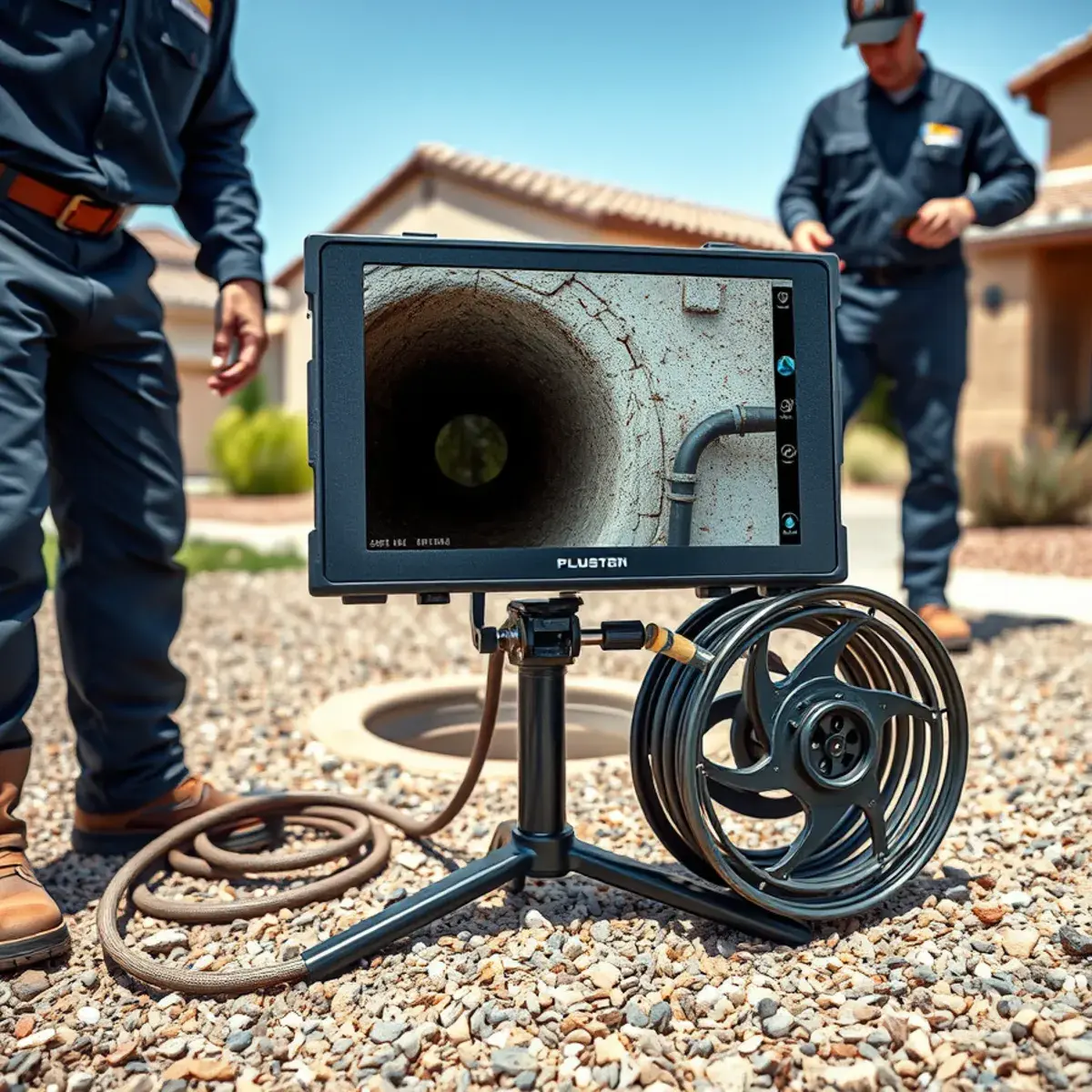
The difference between a $600 spot repair and a $9,000 replacement is almost entirely a diagnostic question. A camera is what answers it.
Read the guide24/7 emergency dispatch — a real person answers, day or night.
2769 E Combs Rd, San Tan Valley, AZ 85140
Plumbing service
4.9★
168 customer reviews
60–90 min
Typical San Tan Valley response
Licensed & insured
Bonded Arizona contractor
15–18 gpg
Hard-water specialists
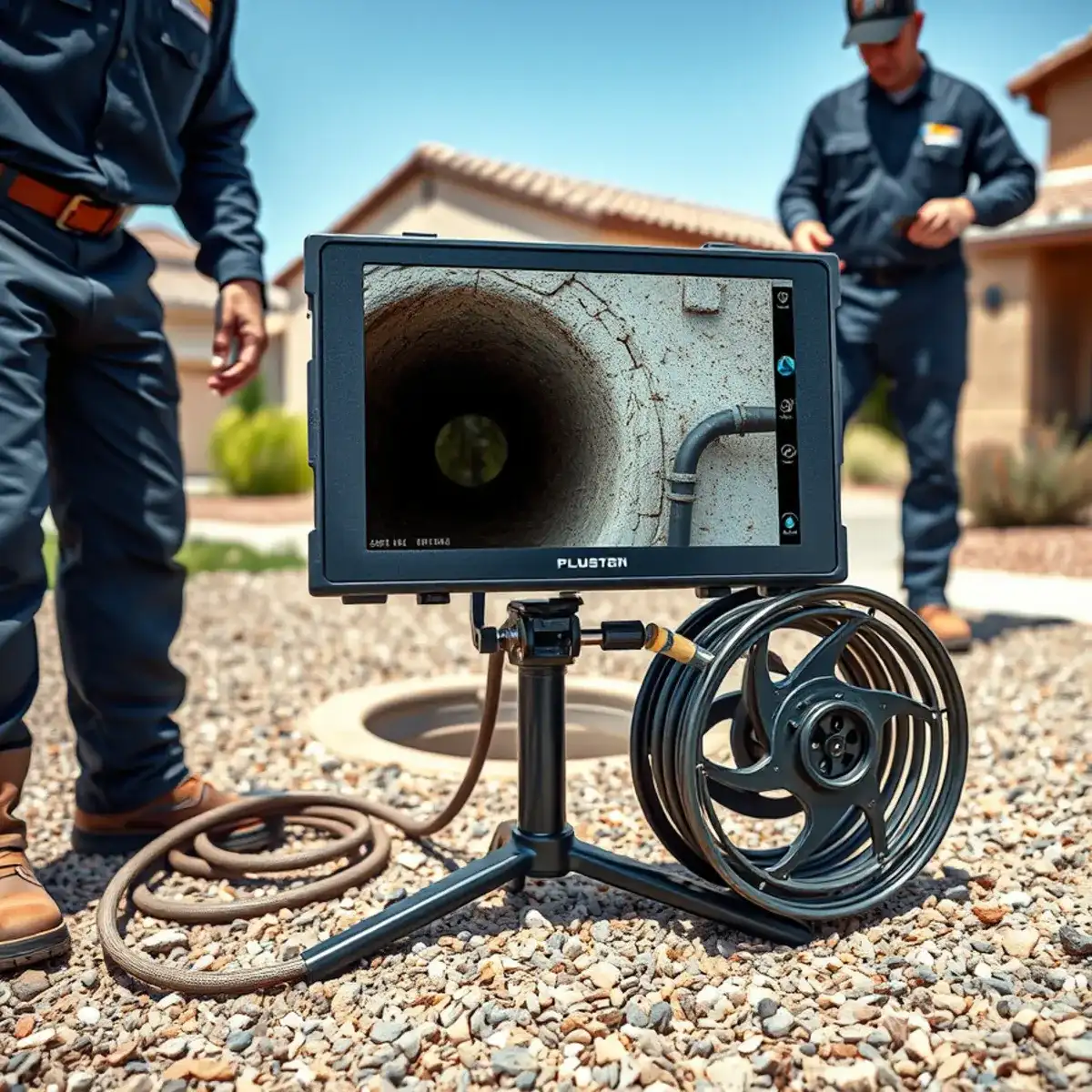
Sewer Camera Inspection in San Tan Valley
We run inspections as standalone jobs, not only as an upsell attached to something else. You get the recording to keep, whatever it shows and whatever you decide to do about it.
Signs you need us
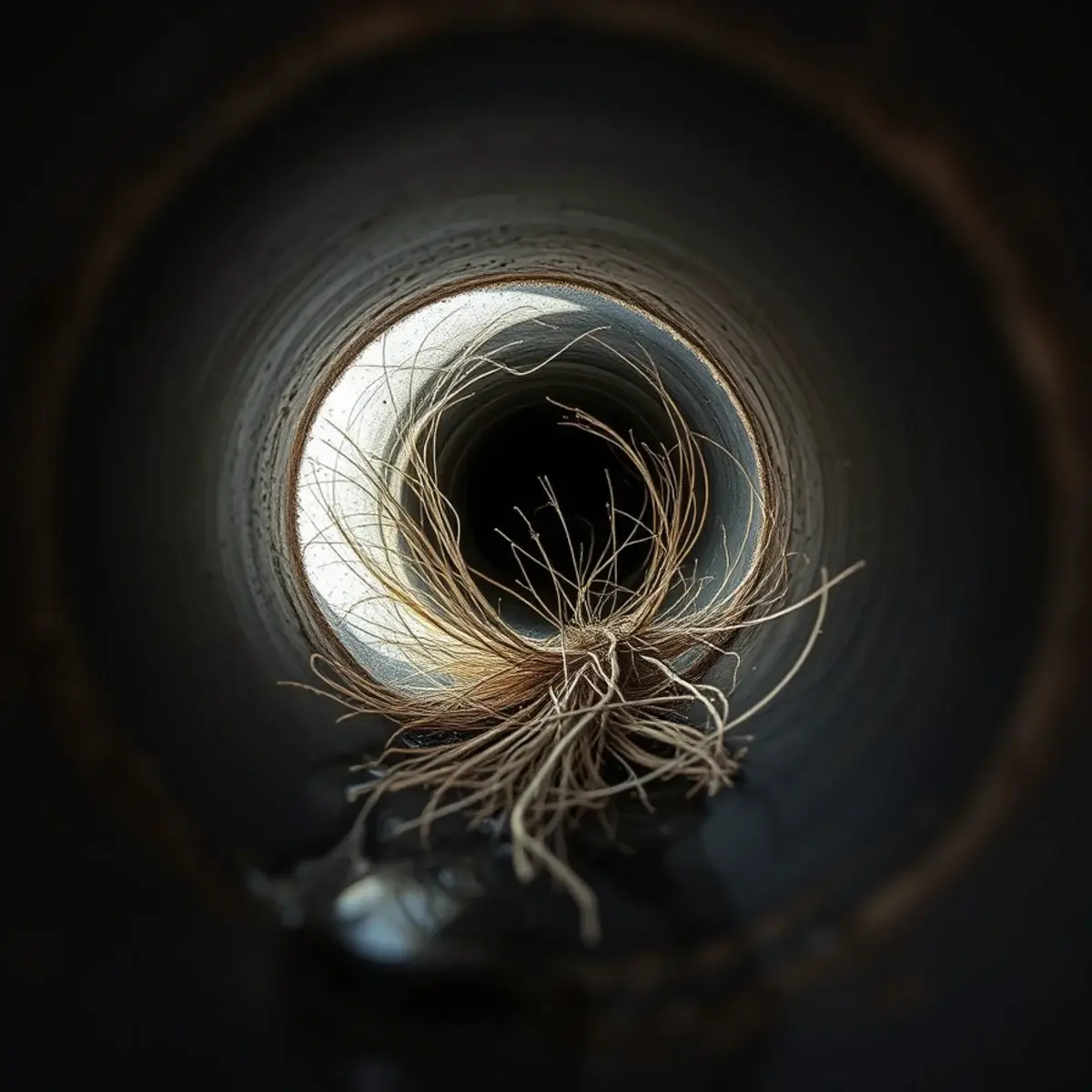
Two backups in the same line is a pattern, and patterns have causes. The camera finds whether it is roots, a belly, an offset joint or simply scale.
Older San Tan Valley laterals are the ones with clay sections and settled joints. A sewer scope before closing costs a fraction of what the repair does afterwards.
Roots do not break into sound pipe — they find an existing gap. If there are large trees between the house and the street, it is worth knowing.
Before anyone opens the ground, you want the depth, the path and the defect located and marked. That is a different conversation from "it is somewhere under there".
A line that behaves until a monsoon storm surcharges the system is telling you something specific. See [emergency sewer backup service](/sewer-backup-emergency/).
What you get
| What we see | What it usually means here | Typical answer |
|---|---|---|
| Fine root hair at a joint | An open clay or cast-iron seam on a pre-2005 lateral | Spot repair or a liner at that joint |
| Standing water mid-run | A belly from soil settlement — common in this valley's fill | Monitor, or re-lay that section |
| Pale rind narrowing the bore | Hard-water scale, not a blockage | Hydro jetting and descaling |
| Offset at a joint | Ground movement or a bad original bed | Spot repair before it catches debris |
| Construction debris | Left in the line at build — more common than people expect | Jetting or retrieval |
| Clean, round, dry pipe | Nothing wrong — the answer you want | Nothing. We will say so. |
A standard home inspection does not include the sewer lateral. On a 2000s-era San Tan Valley home that is the single most expensive thing nobody looked at. If the line has a defect, the time to find out is while price is still negotiable — see what plumbing to check on a 2000s home.
A camera shows the inside of a drain line. It does not show pressurised supply lines, it does not find slab leaks, and it cannot see through standing water in a belly — which is itself the finding, but it means anything beyond that low point is unverified until the water is cleared. It also cannot tell you how a pipe will behave in five years. We will say which of these limits applied to your run rather than implying the footage is a complete picture.
The other honest limit is interpretation. Two technicians can watch the same footage and disagree about whether a hairline at a joint needs attention now or watching for a year. That is exactly why we hand over the recording — a second opinion on video is cheap, and a second excavation is not.
Finding a defect is half the job. Knowing precisely where it is in three dimensions is what keeps the repair small. The camera head carries a sonde — a transmitter the locator above ground can pick up — so we can stand on your driveway and mark the exact point above the defect, then write the depth beside the mark.
On a typical San Tan Valley lot that turns an exploratory trench into a targeted dig of a few feet. Without it, an excavator opens a line across the yard looking for the problem, and you pay for every foot of it plus the landscaping afterwards. When someone quotes you a sewer repair without having located the defect, that uncertainty is priced into the number.
Build era is the strongest predictor of what the camera finds here. Late-1990s and early-2000s San Tan Valley phases are where we still see clay and cast-iron sections with joints that have opened enough for root hair. Mid-2000s homes are generally ABS or PVC, where the failures are bellies from settlement and debris left at construction rather than material breakdown. Homes from 2015 onward are usually sound, and the inspections that find nothing tend to be these.
None of that is a substitute for looking. It is a reason to look: if your house is in the first group and has backed up once, the odds are high enough that guessing is the expensive option.
How we work
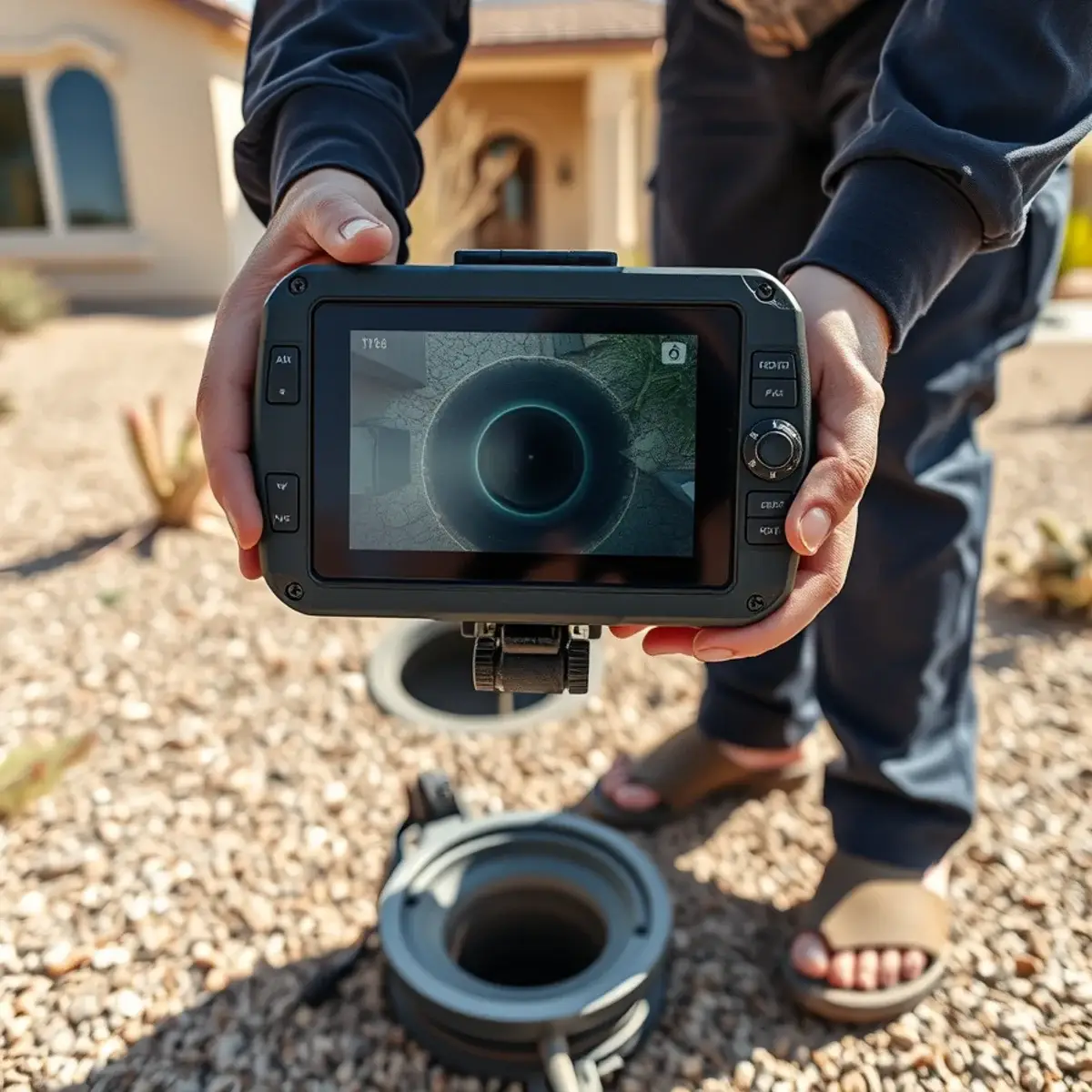
Most San Tan Valley homes have one near the front foundation or the property line. If it is buried or was never installed, we will tell you before we start what access will involve.
The camera goes the full length with a distance counter on screen, so every observation has a measurement attached rather than a vague location.
A sonde in the camera head lets us put a mark on the ground directly above a defect, with its depth written beside it. That is what keeps a repair dig small.
On screen, there and then. You see the defect, how far out it is and what the pipe either side looks like.
Spot repair, liner, replacement or nothing — with what each costs and what happens if you wait. No pressure to decide on the driveway.
What it costs
An existing ground-level cleanout is straightforward. Entry through a roof vent, or digging to find a buried cleanout, adds time.
A short lateral to a street main is quicker than a long run across an acreage lot.
Looking is one thing; putting a mark and a depth on the ground for an excavation is additional work.
Booked alone it carries a diagnostic fee, stated on the phone before we come out. Proceed with the repair and it is credited back.
Inside a closing window we will usually fit you in sooner, and that scheduling can affect the price.
Why Economy Plumbers
Whatever you decide, and whoever ends up doing the work. Evidence you can take for a second opinion is the point of paying for an inspection.
A defect at 42 feet, marked on the ground at four feet deep, is a small trench. "Somewhere in the front yard" is a big one.
You can book an inspection without committing to anything that follows, including with us.
Knowing which San Tan Valley phases used clay, and where the fill settles, changes how the footage is interpreted.
If you go ahead with us, the inspection cost is credited against the work.
Flat-rate pricing agreed before work starts, and we will tell you honestly if there is a cheaper answer.
Where this comes up most
The anchor golf-course community; its late-1990s phases are the oldest tract homes in town, so original water heaters and anodes are failing en masse.
Mature landscaping around Magma Ranch K-8 sends tree roots into older sewer laterals, producing recurring root-intrusion camera-and-jetting jobs.
Pinal County seat since 1875 with a National Historic District; pre-1995 housing makes polybutylene repipes and aging sewer laterals the core call driver.
We serve San Tan Valley and the surrounding Pinal County area — see every area we cover.
Questions we get
It depends mostly on access — an existing ground-level cleanout versus entry through a roof vent — and on whether you need the line located and marked for a dig. We quote the diagnostic fee on the phone before coming out, and it is credited against the repair if you proceed with us.
On anything built before roughly 2005, we think so. A standard home inspection does not cover the sewer lateral, and it is the most expensive thing on the property nobody has looked at. Finding a defect before closing is the difference between a negotiation and a surprise.
No — different problem, different tool. A sewer camera inspects drain lines. A slab leak is a pressurised supply line and needs acoustic detection; see slab leak detection and repair.
That is itself a finding — it usually means a collapse, a hard offset or a severe belly. We will tell you where it stopped, how far out that is, and what it most likely means rather than guessing at the rest.
Often yes, by pulling a toilet or entering through a roof vent, though both add time. If your home has no cleanout, installing one is usually worth doing while we are there — it makes every future service call cheaper.
Related
Camera diagnosis first, then the right fix: spot repair, pipe lining or full replacement — with the footage to prove why.
Learn moreSewage in the house is a health emergency. We clear the main, camera the line and tell you whether the problem is yours or the utility's.
Learn moreHigh-pressure jetting that scours the pipe back to bare wall, for drains that keep coming back.
Learn moreSlow sinks, gurgling tubs and backed-up mains cleared with cable machines, hydro jetting and camera diagnosis — not guesswork.
Learn moreThe difference between a $600 spot repair and a $9,000 replacement is almost entirely a diagnostic question. A camera is what answers it.
Read the guide
Thousands of San Tan Valley homes were built in the same few years, with the same materials, drinking the same water. They are all arriving at the same milestones together.
Read the guide
Sewage in the house is a health emergency, not a plumbing inconvenience. Stop all water use first — and understand why the blockage may not be on your property at all.
Read the guideFree estimate
Call and a real person picks up — day, night, weekend or holiday. Most in-town calls see a truck in 60–90 minutes.