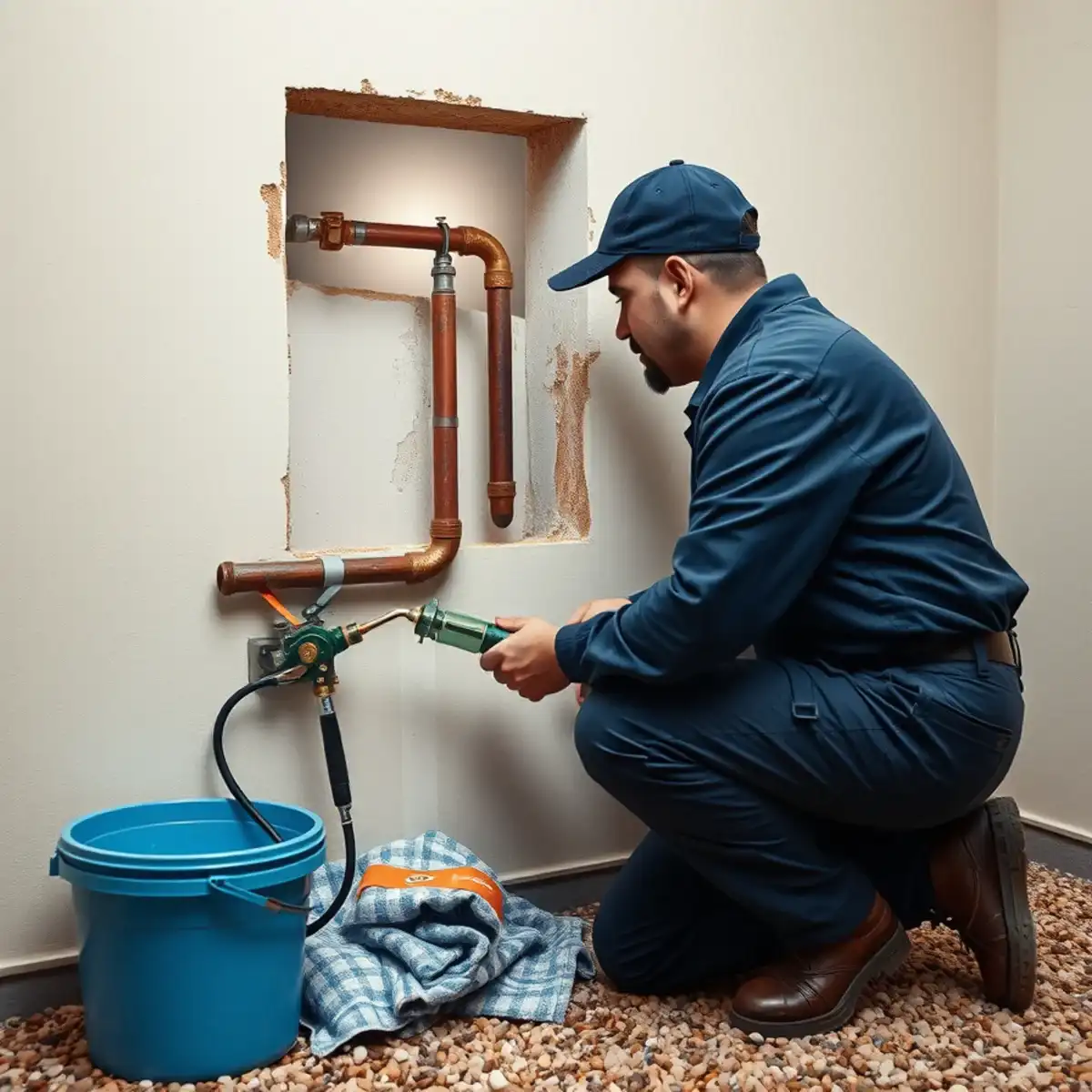
A burst pipe in a slab home is a race. Water under pressure fills a room faster than most people expect — a half-inch supply line at typical municipal pressure moves several gallons a minute, and it does not stop until somebody closes a valve.
What you need to know about burst pipe repair here
So the first thing we do when you call is not schedule you. It is get the water off. Shut your main, then stay on the line and we will confirm you have the right valve and get a truck moving.
Arizona homes do not usually burst from freezing. They burst from age, heat cycling and pressure — hardened braided supply lines under a sink, a sun-baked hose bib that cracked at the stem, a solder joint in a 115-degree attic, a failed fitting on a pipe that has been quietly thinning for a decade. Those are the calls we run, and they are all repairable the same day.
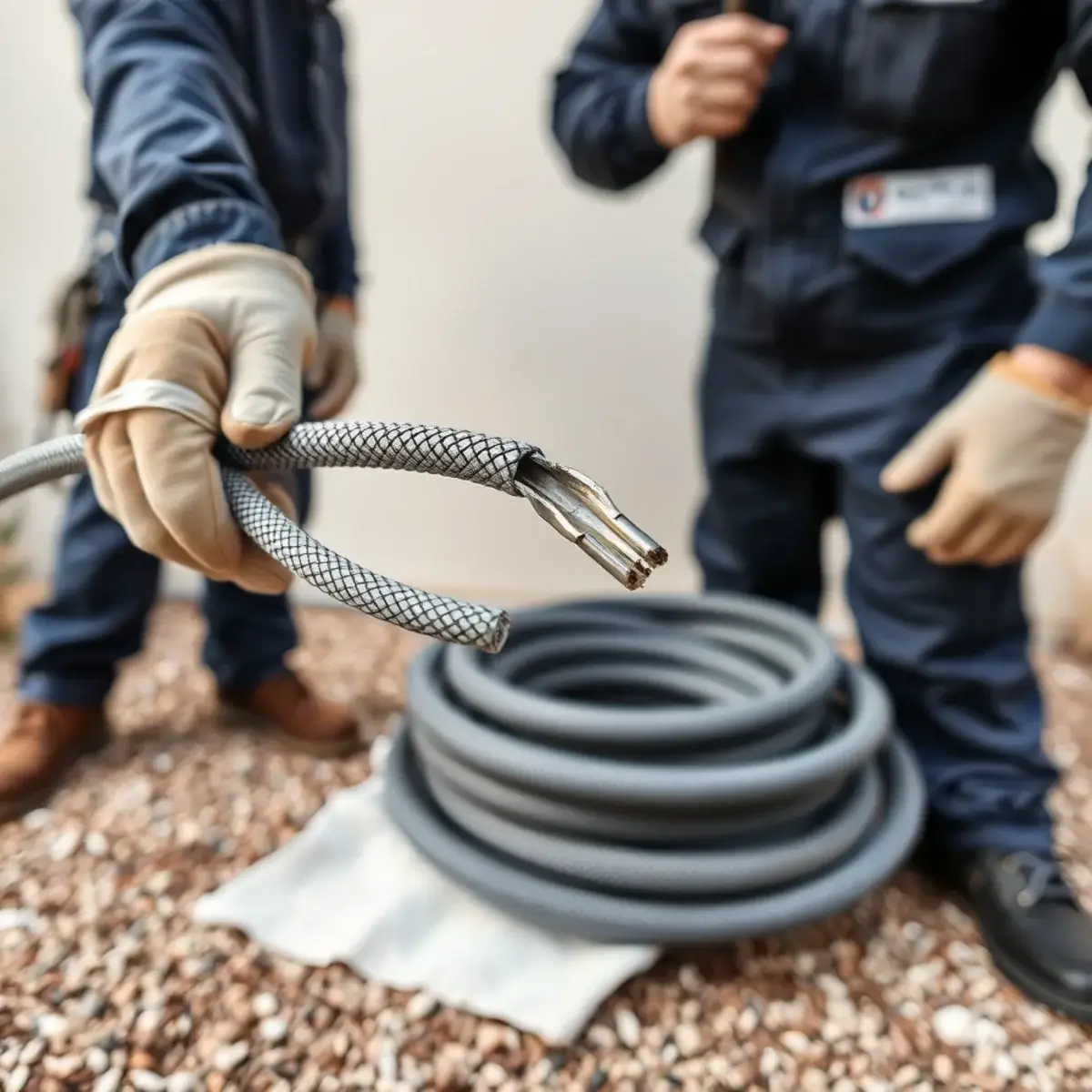
Failed braided supply line that burst under a sink in a San Tan Valley home
Phone guidance to your main shutoff before we even discuss dispatch
Instruction on opening the lowest fixture to drain system pressure and slow the leak
Guidance on killing power to affected circuits safely, and shutting the water heater cold inlet
Moisture meters, thermal imaging and acoustic listening to locate concealed failures — small deliberate openings, never exploratory demolition
The damaged branch isolated so water is restored to the rest of the house while we work
Repair matched to the failure: section repair in copper, transition to PEX, or an overhead reroute for under-slab lines
The repair pressure-tested before anything closes up
Static pressure and the pressure-reducing valve checked, because fixing a burst without asking why it burst is half a job
The failed component photographed before removal and kept for you, with a written cause note
Honest referrals to restoration companies we would use ourselves — with no referral fee taken, so the recommendation means something
Burst Pipe Repair details
Right Now: Stop the Water
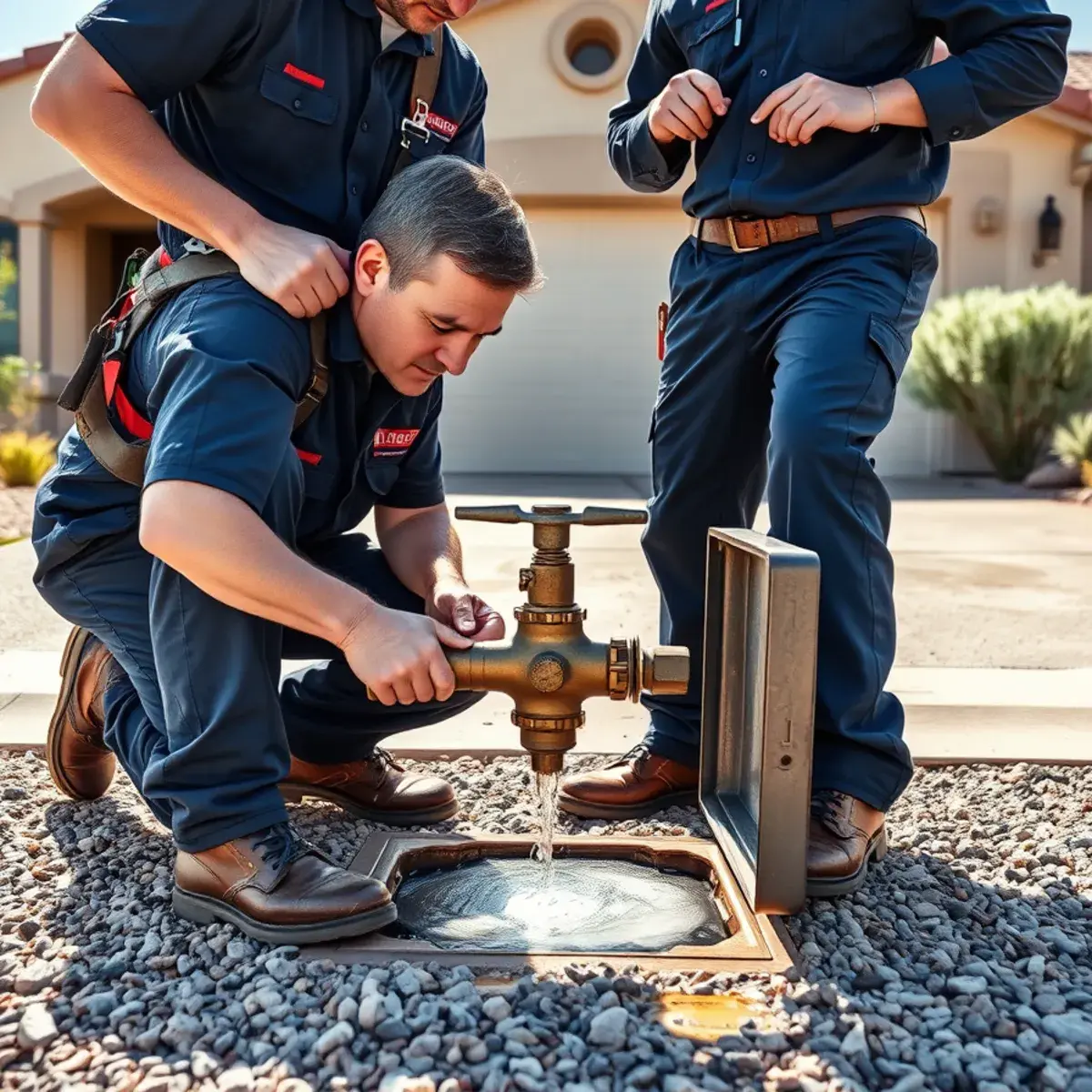
1Find the main shutoff. On most San Tan Valley homes it is in a valve box near the property line at the front of the lot, or on the exterior wall near the hose bib closest to the street. Turn clockwise until it stops.
2If you cannot find it or it will not turn, use the curb stop at the meter. It needs a meter key or a large adjustable wrench and it turns a quarter turn. Call us and we will talk you through it.
3Open the lowest fixture in the house — usually a tub or an outside hose bib — to drain the pressure out of the system and slow the leak.
4Kill power to any circuit near the water. Do not stand in water to reach a panel.
5Photograph the damage before you move anything. Wide, medium and close shots.
Why Pipes Burst in the Arizona Desert
Braided supply lines that aged out
The flexible connectors under your sinks and behind your toilets have a rubber core inside a stainless braid. Heat and time harden that core until it splits, and when it does it releases at full line pressure with nobody home. These are the most common indoor burst we see, and replacing every one in a house is an inexpensive afternoon that prevents a five-figure loss.
Excessive static pressure
Portions of San Tan Valley run high line pressure, and pressure above roughly 80 psi stresses every joint, fixture and appliance in your house. Where a pressure-reducing valve exists, it eventually fails — usually gradually, so the pressure climbs without anyone noticing. We check static pressure on every burst pipe call because it is often the actual root cause.
Attic heat cycling
An uninsulated attic here swings from 60 degrees in January to over 150 in July. Copper expands and contracts through every one of those cycles, and joints that were marginal at installation eventually work loose or crack.
Thinning copper and pinholes that finally let go
Many burst pipes are not sudden. They are the final failure of a line that has been thinning from the inside for years. If your house has had a pinhole before, the burst is a message about the whole system — see whole-home repiping.
Hose bibs and irrigation
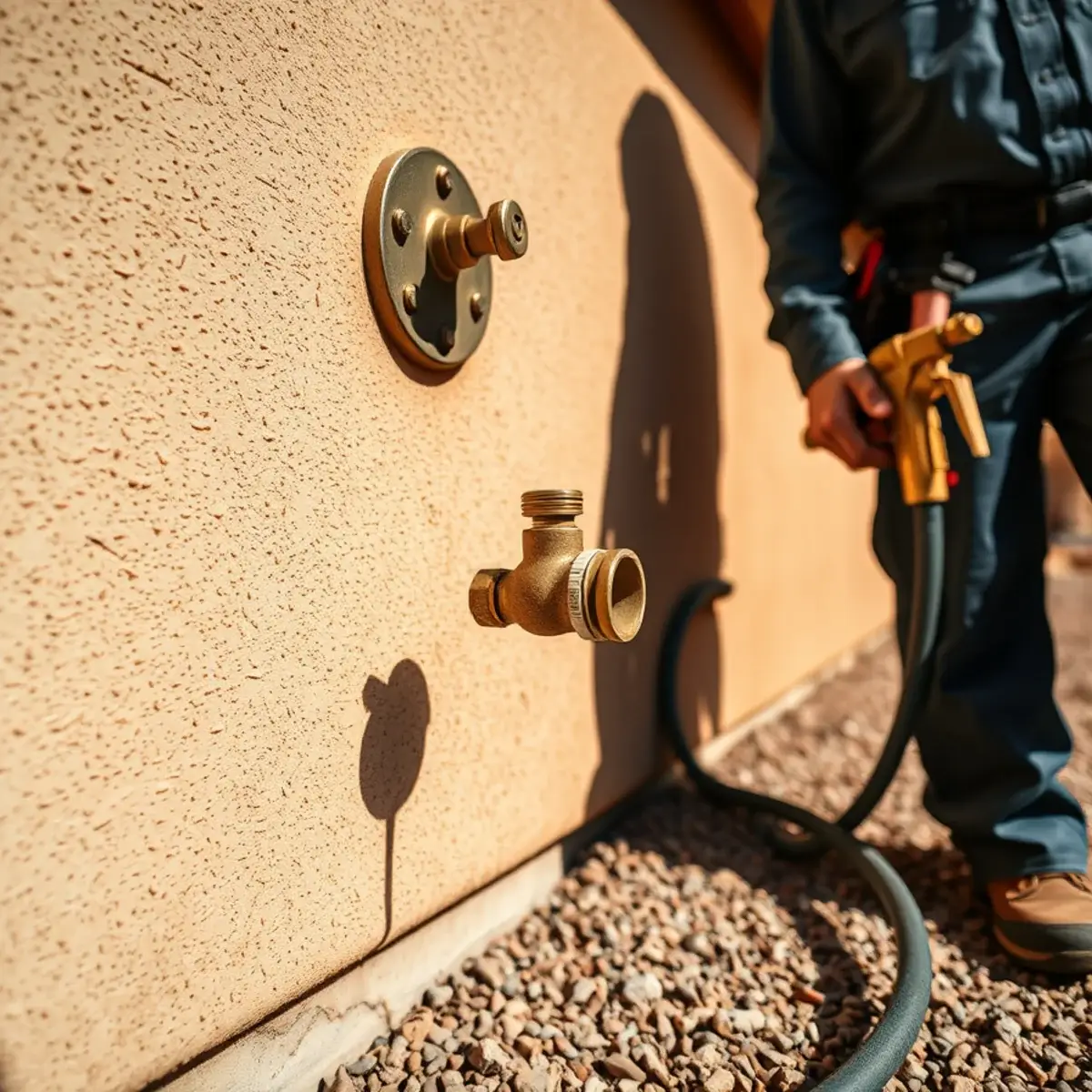
Exterior hose bibs on the south and west walls take direct sun all summer. Add a hose left pressurized and the bib body cracks. Irrigation manifolds and backflow assemblies fail the same way, particularly in the larger-lot neighborhoods with big landscape systems like Pecan Creek and Bella Vista Farms.
How We Repair It
The right repair depends entirely on where the failure is.
Location of failure
Typical repair
Braided supply line, angle stop
Replace the connector and the stop — same-day, straightforward
Hose bib or sillcock
Cut out and replace with a quarter-turn frost-free bib
Accessible copper in a wall or attic
Cut out the damaged section, repair in copper or transition to PEX
Under-slab supply line
Overhead PEX reroute — we do not trench post-tension slabs (see slab leak repair)
Main service line between meter and house
Excavate and replace the damaged section, or pull a new service line
Most homeowners policies in Arizona cover sudden and accidental water damage from a burst pipe — the drywall, flooring, cabinetry and contents — while the pipe repair itself may or may not be covered. What is almost always required is proof that the failure was sudden rather than a long-term seepage the homeowner ignored.
On every burst pipe call we photograph the failed component before removal, keep the failed part for you, note the location and the probable cause in writing, and itemize the invoice in a way adjusters can follow. We do this whether you plan to file or not, because you may change your mind once the drying estimate arrives.
After the Water Stops
We repair the plumbing. Drying the structure is a different trade and it needs to start fast — in our summer humidity a wet carpet pad and wet drywall can start growing within a day or two. We will tell you honestly whether you need a remediation company or whether fans and an open window will do it, and we can refer you to local restoration firms we would use on our own homes. We do not take referral fees for that, so the recommendation is worth something.
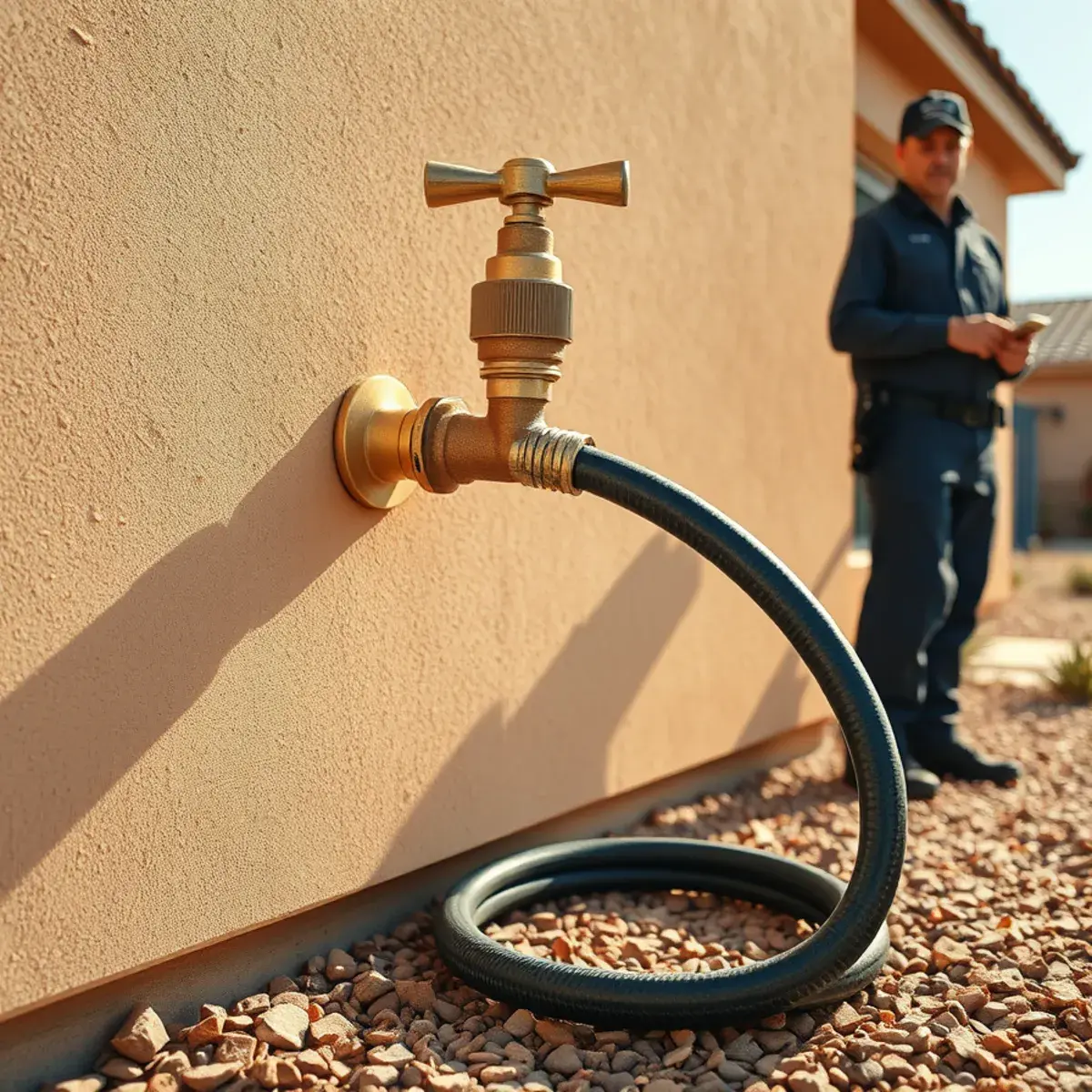
Sun-damaged hose bib cracked at the stem on a San Tan Valley home exterior wall
How we work
Our burst pipe repair process
No surprises, no mystery. Here is exactly what happens from the phone call to the walkthrough.
1
Phone triage and shutoff guidance
Before anything else we get the water off. If you are not sure where your main is, we walk you through it while the truck is rolling.
2
Locate the failure
Visible failures are quick. Concealed ones get moisture meters, thermal imaging and acoustic listening so we open the smallest area necessary.
3
Isolate and repair
Where possible we isolate the damaged branch and restore water to the rest of the house immediately, so you are not without water while we work.
4
Pressure test and check the root cause
The repair is tested under pressure, and we check static pressure and the PRV. Fixing a burst without checking why it burst is half a job.
5
Document and advise
Photos, the failed part, a written cause note, and an honest conversation about whether this was a one-off or the first of several.
What it costs
What drives the price of burst pipe repair
We do not publish flat prices for work nobody has looked at — that is a guess dressed up as a quote. Here is what actually moves the number, so you can read any estimate you receive.
Where the pipe failed
An accessible supply line is the least expensive repair we do. A concealed line inside a wall or under a slab costs more because access is most of the labor.
Emergency timing
After-hours response carries a premium, quoted on the phone. Once the water is off and the house is stable, the permanent repair can often be scheduled at standard rates.
Repair material and method
A section repair in copper, a transition to PEX, or an overhead reroute — each priced differently and each right in different situations.
Root cause corrections
If static pressure is running high, a pressure-reducing valve is a real recommendation, not an upsell. Same for replacing the other supply lines of the same age while we are already there.
Restoration
We patch what we open. Structural drying, mold remediation and finish carpentry are separate trades and separate quotes from separate companies.
Why Economy Plumbers
Why San Tan Valley homeowners call us for burst pipe repair
Licensed, bonded and insured Arizona plumbing contractor. 20+ years of combined plumbing experience, dispatched from 2769 E Combs Rd — and 4.9★ from 168 customers who mostly mention the same things.
We find the root cause, not just the hole
High static pressure is behind a large share of burst supply lines here. We put a gauge on your hose bib on every burst call, because otherwise you get to do this again.
Concealed leaks located, not chased
Instruments first. A homeowner should not pay for a wall opened on a hunch, and we do not open one until the moisture map and thermal read agree.
Insurance documentation as standard
Carriers exclude long-term seepage, so proving the failure was sudden decides many claims. Photos, the failed part and a written cause determination come with every burst call whether or not you file.
We are honest about what comes next
A cracked hose bib says nothing about your indoor plumbing. A pinhole burst in twenty-year-old copper is often the first of several — and that is a repiping conversation, not three more repairs.
24/7, licensed and insured
Burst pipes do not wait for business hours, and neither does our licence, bond or liability coverage.
Get a written quote for burst pipe repair
Flat-rate pricing agreed before work starts, and we will tell you honestly if there is a cheaper answer.
Gated North and South sections with larger lots, where bigger irrigation systems mean backflow-assembly failures and hose-bib leaks in 106-degree summer heat.
Affluent agritainment hub around Schnepf Farms and the Queen Creek Olive Mill, with nonstop luxury new construction driving softener and tankless demand.
Most homes here have it either in a valve box near the front property line or on the exterior wall closest to the street, often near the first hose bib. Turn it clockwise until it stops. If it will not budge, the curb stop at the meter is your backup — and we will talk you through either one over the phone.
Arizona bursts come from age, pressure and heat rather than freezing. Braided supply lines harden and split, hose bibs crack from summer sun, attic solder joints fatigue from a 90-degree annual temperature swing, and copper thinned by years of aggressive water finally lets go. High static pressure accelerates all of it.
Most Arizona policies cover the resulting sudden water damage to your home and contents, while coverage for the pipe repair itself varies. Carriers do exclude long-term seepage, so documentation matters. We photograph the failure, keep the failed part and write up the cause on every call, whether or not you plan to file.
Sometimes. We locate concealed failures with moisture meters and thermal imaging first so any opening is as small as possible, and where the failure is in an under-slab line we usually reroute overhead through the attic instead of cutting the foundation.
It depends on why it failed. A hose bib that cracked in the sun says nothing about your indoor plumbing. A pinhole burst in a copper line in a twenty-year-old house is often the first of several, and that is worth an honest conversation about repiping rather than repairing the same system three more times.
Water under pressure moves several gallons a minute and does not stop until somebody closes a valve. Here is the exact order of operations for the first ten minutes.