What to Do When a Pipe Bursts in Your San Tan Valley Home
Water under pressure moves several gallons a minute and does not stop until somebody closes a valve. Here is the exact order of operations for the first ten minutes.
The short answer
Shut off the water at your main first — everything else is secondary. On most San Tan Valley homes that valve sits in a box near the front property line or on the exterior wall closest to the street, and it turns clockwise. Then kill power to any circuit near the water, open the lowest fixture to drain pressure, and photograph everything before you clean up.
A burst supply line in a slab home is a race, and most of the damage happens in the first ten minutes. A half-inch line at typical municipal pressure moves several gallons a minute, and it does not stop on its own. Everything below is in priority order — do them in this sequence.
1. Shut off the water at the main

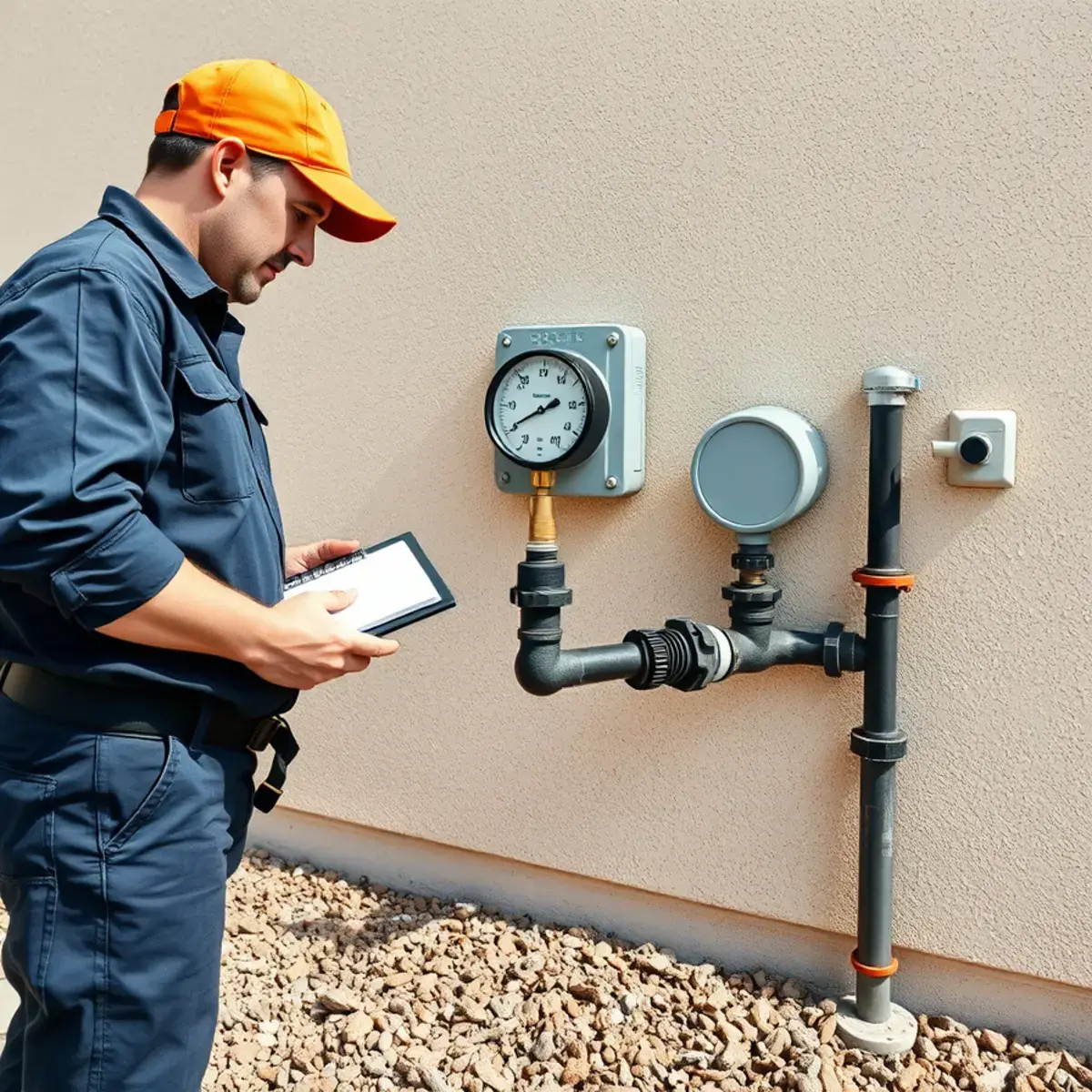
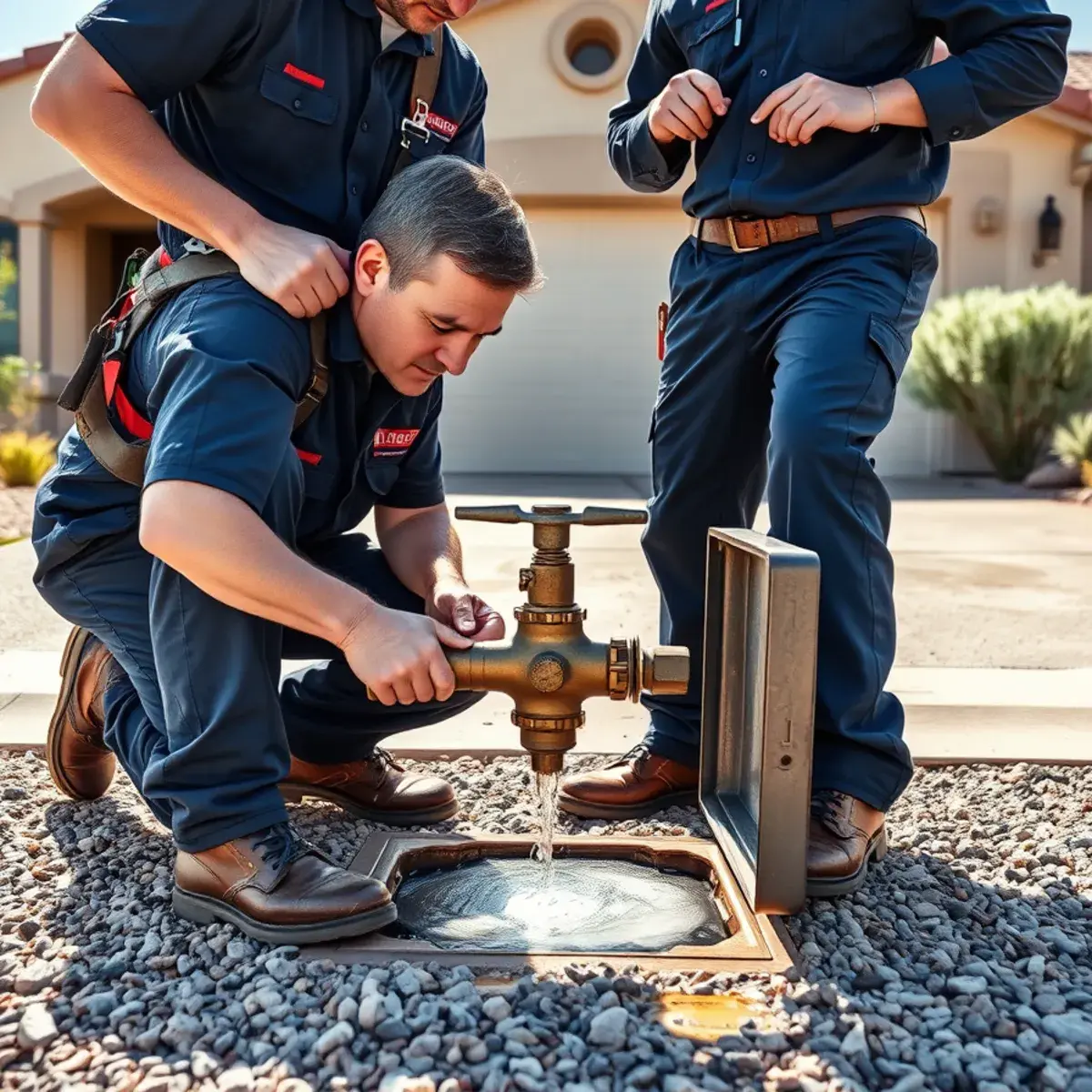
This is the only step that stops the damage. On most San Tan Valley homes the main shutoff is in a valve box near the front property line, or on the exterior wall closest to the street — often right by the first hose bib. Turn it clockwise until it stops.
If it will not turn, do not force it with a pipe wrench and break it. Go to the curb stop at the meter instead; it takes a meter key or a large adjustable wrench and moves a quarter turn. If you are unsure, call us and we will talk you through it while a truck is rolling.
2. Kill power to anything near the water

At the breaker panel, not at the device — and never while standing in water. If the panel itself is in the affected area, call an electrician or the utility rather than reaching for it. If the water heater is the source, shut off its gas valve or its breaker as well.
3. Open the lowest fixture in the house

With the main off, open a downstairs tub or an outside hose bib to drain the pressure out of the system. That slows the leak immediately and reduces how much water is still sitting in your pipes above the break.
4. Photograph everything before you clean

Wide shots of each affected room, medium shots showing the water line on baseboards and walls, close shots of the failed component and any damaged contents. Timestamps matter. This takes ninety seconds and it is what your adjuster will ask for first.
Most Arizona homeowners policies cover sudden and accidental water damage while excluding long-term seepage. The distinction between those two is frequently decided by documentation, so do not skip this step because the room is chaotic.
5. Move what you can

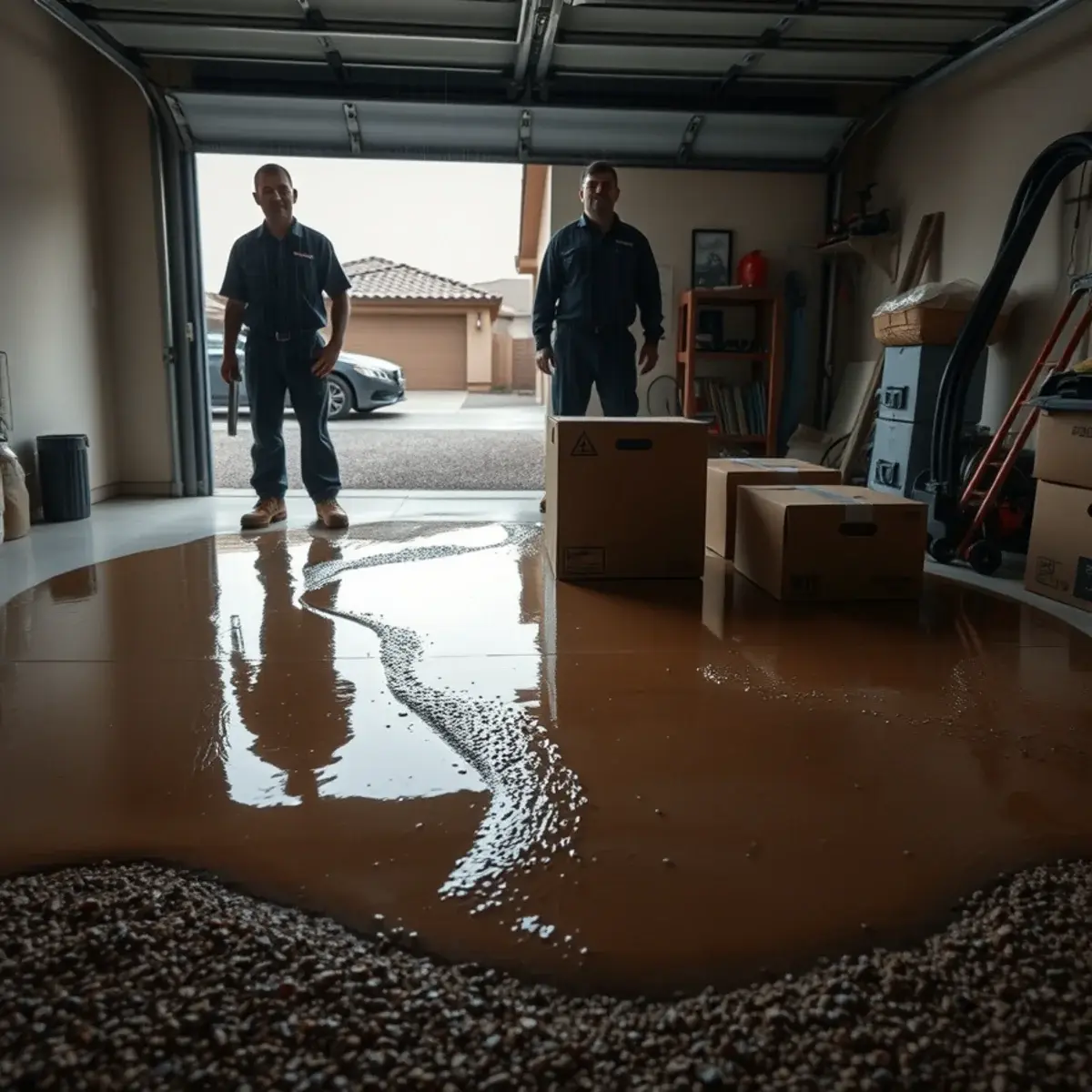
Cardboard boxes off the garage floor first — cardboard wicks water outward across a slab remarkably fast and turns a contained puddle into a room-wide problem. Then rugs up, furniture legs onto blocks or foil, and closet floors emptied.
6. Start air moving, carefully

Fans and open interior doors help. Do not run the air conditioning if water may have reached ductwork running through the slab. And know the clock you are working against: mold growth in wet building materials generally begins within 24 to 48 hours in our summer humidity.
Why Arizona pipes burst without freezing
Homeowners from colder states are often confused by this. Our bursts come from four causes, none of which involve ice:
- Braided supply lines that aged out. The rubber core inside the stainless braid hardens with heat and time, then splits at full line pressure. These are the most common indoor burst we see.
- Static pressure above 80 psi. High pressure stresses every joint and fitting continuously. A failed pressure-reducing valve is often the actual root cause behind a burst.
- Attic heat cycling. An uninsulated attic swings from 60 degrees in January to over 150 in July, and copper joints fatigue through every one of those cycles.
- Thinning copper. Years of aggressive water chemistry erode the pipe wall from inside until it finally lets go — often after one or more pinholes have already appeared.
What happens when we arrive
We locate the failure — visually if it is accessible, or with moisture meters and thermal imaging if it is concealed, so any opening is small and deliberate. We isolate the damaged branch and restore water to the rest of the house wherever possible, so you are not without water while we work. Then we repair, pressure test, and check your static pressure and PRV, because fixing a burst without asking why it burst is half a job.
You get photos, the failed part itself, a written cause note and an itemized invoice your adjuster can read. Full detail on our burst pipe repair service.
After the water stops
We are plumbers. We stop water and repair plumbing. Structural drying, mold remediation and reconstruction are separate trades, and they need to start fast. We will tell you honestly whether you need a remediation company or whether fans and open doors will handle it, and we refer to local firms we would use on our own homes without taking a referral fee.
If this happened once, it is worth asking whether it will happen again. A hose bib that cracked in the sun says nothing about your indoor plumbing. A pinhole burst in a twenty-year-old copper system is frequently the first of several, and that is a repiping conversation rather than a series of repairs.
What we look for that homeowners usually miss
Once the water is off, the question we care about is not *where* the pipe burst but *why*. On a large share of burst calls we run, static pressure is sitting above 80 psi because a pressure-reducing valve has failed open — and a homeowner who repairs the pipe without correcting that gets to do this again in eighteen months.
The second thing: we keep the failed part. A split braided supply line with a hardened, cracked rubber core is physical evidence that the failure was sudden rather than a slow seep somebody ignored. That distinction decides a lot of Arizona water damage claims, and adjusters ask for it early.
The honest tradeoff on the repair itself: a section repair in copper is faster and cheaper today. Transitioning that run to PEX costs a little more and removes the material that just failed. On a first burst in an otherwise sound system we will do the section repair. On a second one in the same house, spending money on copper again is throwing it away.
The bottom line
The first ten minutes matter more than everything that follows. Find your main shutoff before you need it, confirm it actually turns, and show every adult in the house where it is. If a pipe has already burst, get the water off and call — our 24/7 emergency line is answered by a real person, and we will confirm you have the right valve while a truck is on the way.
Frequently asked questions
Only if the water is off. With the system depressurized, a rubber-and-clamp repair kit can hold a small split temporarily. Do not attempt anything on a pressurized line, and treat any DIY patch as a stopgap until it is repaired properly — a temporary clamp on a thinning pipe often just moves the failure a few inches.
Most Arizona homeowners policies cover sudden and accidental water damage to your home and contents, while coverage for the pipe repair itself varies by carrier. Long-term seepage is typically excluded, which is why documenting the failure as sudden matters so much.
Most in-town addresses see a truck in 60 to 90 minutes, and we start helping the moment you call by walking you through the shutoff. Our shop is on E Combs Rd, so the Hunt Highway corridor neighborhoods are minutes away.