How to Find & Shut Off Your Main Water Valve
The single most useful thing you can do this weekend. Two minutes now saves thousands later — and hard water seizes the valve you have never touched.
The short answer
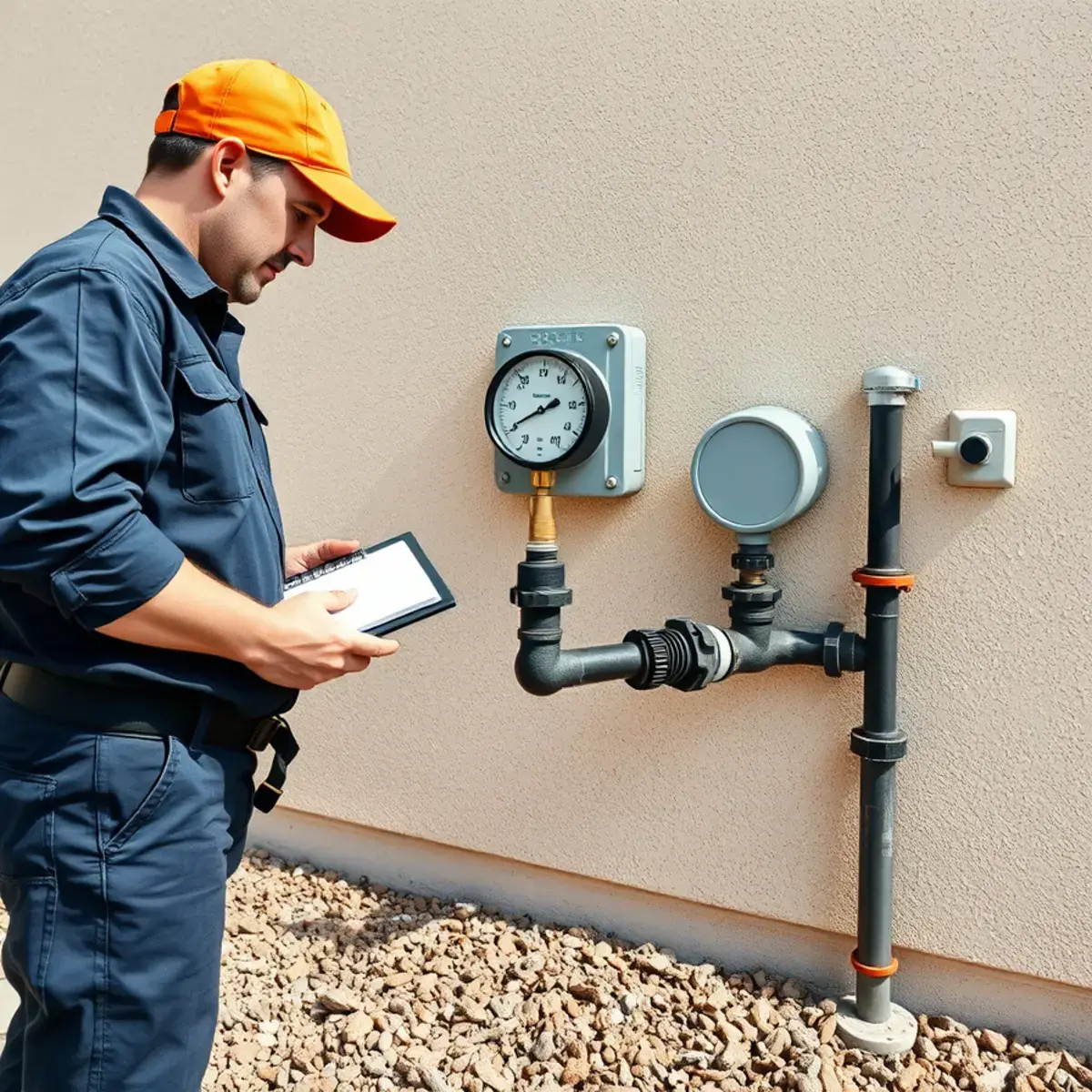
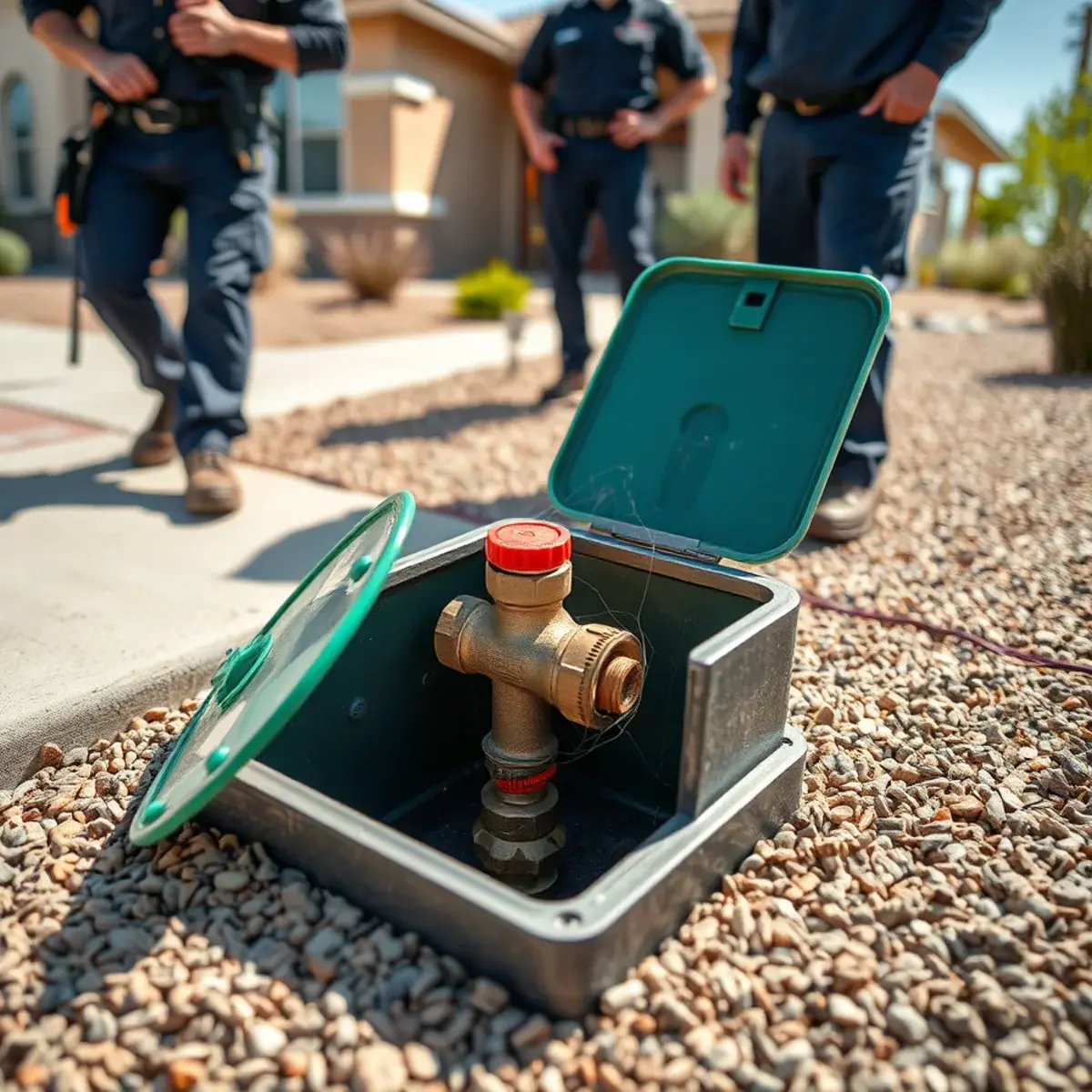
On most San Tan Valley homes the main shutoff is either in a valve box near the front property line or on the exterior wall closest to the street, often beside the first hose bib. Ball valves take a quarter turn; gate valves take many rotations clockwise until they firmly stop. The curb stop at the meter is your backup if the house valve fails.
Every plumbing emergency has the same first step, and most homeowners find out they cannot perform it while water is running across their floor. Ten minutes this weekend removes that problem permanently.
Where it is on a San Tan Valley home
Post-2000 tract homes here almost always have the main shutoff in one of two places:
- 1A valve box near the front property line. A rectangular plastic or concrete lid flush with the gravel, usually between the sidewalk and the house, often near the water meter box but separate from it. Lift the lid and you will see a ball valve with a lever handle or a gate valve with a round wheel.
- 2On the exterior wall closest to the street. Frequently right next to the first hose bib, sometimes behind a small access panel or inside the garage on the shared wall.
On older homes and rural properties the location varies more, and some properties have the shutoff inside a utility closet or in the garage near where the supply enters.
How to turn it
Ball valve — the lever type. A quarter turn so the handle sits crossways to the pipe means off. If the handle is in line with the pipe, water flows.
Gate valve — the round wheel type. Turn clockwise, and keep turning. Gate valves take many rotations to close fully, and stopping partway leaves water flowing. Turn until it firmly stops.
The backup: the curb stop at the meter
If your house valve fails or you cannot find it, the utility's curb stop at the meter is the fallback. Lift the meter box lid and look for a valve on the street side of the meter with a rectangular or slotted head rather than a handle.
It takes a meter key — an inexpensive tool worth owning — or a large adjustable wrench, and it turns a quarter turn. Turn slowly and gently; these are utility property and forcing one is a problem you do not want.
The valves that will not turn
This is the specifically local part of the story. At 15 to 18 grains per gallon, mineral deposits build inside any valve that never moves. The shutoff you have not touched since you bought the house may be functionally welded in position.
That applies just as much to the small angle stops under your sinks and behind your toilets. Homeowners discover it at the worst moment — a running toilet at midnight and a shutoff that will not budge, so now the whole house has to go off.
Replacing every angle stop and supply line in an older home is inexpensive, takes a single visit, and is one of the highest-value plumbing jobs we do. See toilet and fixture repair.
Also worth knowing
- The water heater's cold inlet valve — on top of the tank. Closing this isolates the heater without shutting the whole house down, which matters when the heater is the thing leaking.
- Your irrigation shutoff — usually a separate valve near the backflow assembly. Isolating irrigation is the fastest way to determine whether a mystery leak is landscape or house.
- Individual fixture stops — under every sink and behind every toilet, so a single fixture problem does not require shutting off the whole house.
- The gas shutoff at the meter, and how to turn it. Different emergency, same principle.
Show everyone in the house
The person home when a pipe bursts is not always the person who read this article. Walk every adult in the household out to the valve, show them which way it turns, and take a photo of the location on your phone so it is findable at 2 AM in the dark.
For homes that sit empty part of the year — common in Gold Canyon and out toward the retirement communities — shutting the main off before you leave is not optional. It is the single most effective loss-prevention step available, and an automatic shutoff leak detector on the main is the version that works while you are asleep or away.
When you do have an emergency
Shut the water off first, then call. If you cannot find the valve, call anyway — we walk you through it on the phone while a truck is rolling. Our 24/7 emergency service dispatches from E Combs Rd, so neighborhoods off Hunt Highway like Laredo Ranch see the fastest response in town.
Why the valve you never touch is the one that fails
This is the specifically local part. At 15 to 18 grains per gallon, mineral deposits build inside any valve that never moves. The shutoff you have not operated since you bought the house may be functionally welded in position, and you find that out at the exact moment you need it.
Which is why we tell people to exercise it rather than just locate it. Close it, confirm a tap inside runs dry, reopen it. If a gate valve resists, stop — do not reach for a pipe wrench. A corroded gate valve can snap at the stem, and then you have a drill turned into an emergency. That is a Tuesday phone call, not a Sunday disaster.
The same logic applies to the small angle stops under every sink and behind every toilet, and those are where it actually bites. Homeowners discover a seized stop at midnight with a running toilet, and now the whole house has to go off. Replacing every angle stop and supply line in an older home is one visit and one of the highest-value plumbing jobs we do.
The bottom line
Ten minutes this weekend removes the worst part of every future plumbing emergency. Find the valve, turn it off and back on, photograph the location on your phone, and walk every adult in the house out to it. If yours will not budge, that is a scheduled residential plumbing visit at standard rates rather than a crisis — and it is a great deal cheaper than finding out during one.
Frequently asked questions
Clockwise. On a lever-style ball valve, a quarter turn until the handle sits crossways to the pipe. On a round-wheel gate valve, keep turning clockwise until it firmly stops — gate valves take many rotations and stopping partway leaves water flowing.
Do not force it with a pipe wrench — a corroded valve can snap and turn a small problem into a flood. Use the curb stop at the meter instead as a backup, and schedule a valve replacement during normal hours. Hard water seizes valves that are never operated, so this is common here.
For a weekend, it is optional. For anything longer — and absolutely for seasonal absences of months — yes. Shut the main, drain the system by opening the lowest fixture, and set the water heater to vacation mode. An automatic shutoff leak detector is worth it for any home that sits empty regularly.