Sewer Camera Inspection: What It Actually Reveals
The difference between a $600 spot repair and a $9,000 replacement is almost entirely a diagnostic question. A camera is what answers it.
The short answer
A camera shows you which of five things is actually wrong: root intrusion at a joint, a belly holding standing water, an offset or cracked joint, grease and scale coating the wall, or a collapse. Those need completely different repairs at completely different prices — which is why no honest sewer quote happens without one.
Our rule is simple and we hold to it: we do not quote a sewer repair you have not watched on a screen. Nobody can diagnose a buried pipe from the top of a cleanout, and the difference between a modest spot repair and a full replacement is almost entirely a diagnostic question.
How it works
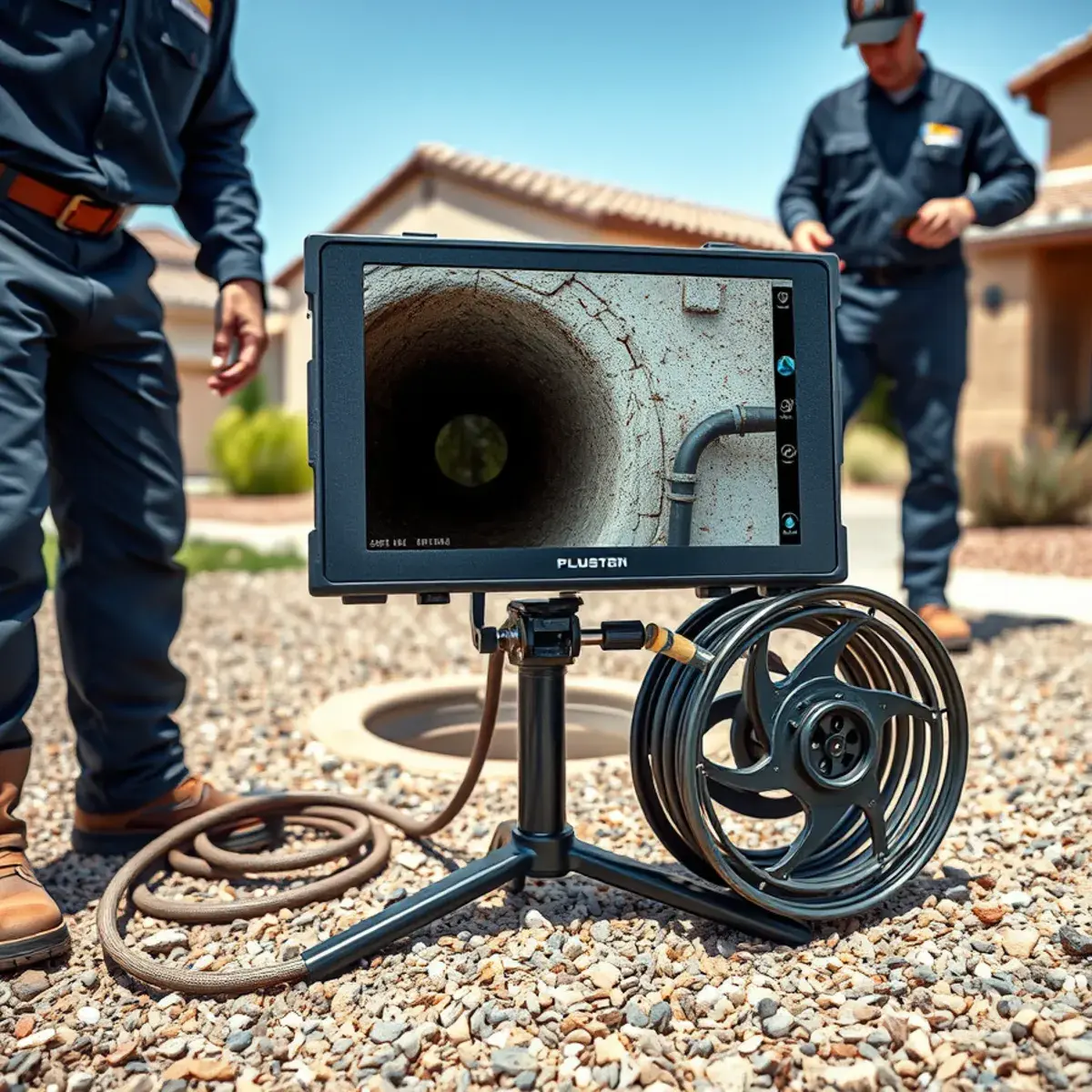
A self-leveling camera on a flexible push rod goes in through the cleanout and travels the length of the lateral to the connection at the main. The head carries a sonde — a transmitter — so we can locate any defect from the surface and mark its position and depth on your ground.
You watch the monitor with us. You get the footage. That is the standard, and any shop unwilling to show you what they found should prompt a second opinion.
What we are reading for
| What it looks like | What it means | What it needs |
|---|---|---|
| Hair-like mass at a joint | Root intrusion through a separated joint or crack | Cutting now; lining or spot repair to end it |
| Standing water in a level section | A belly — the pipe sagged as trench backfill settled | Re-lay the section at correct fall. Cabling never fixes this |
| A ledge or step at a joint | Offset joint from ground movement | Spot repair or lining |
| Longitudinal crack or missing pipe wall | Structural failure | Spot repair, lining or bursting |
| Uniform coating narrowing the pipe | Grease and scale accumulation | Hydro jetting to restore full diameter |
| Camera cannot pass a point | Collapse or a hard obstruction | Excavation or pipe bursting |
| Clean pipe, good flow, correct fall | Nothing wrong with your lateral | Nothing — and we will tell you that |
That last row matters. A meaningful share of our camera inspections end with us telling a homeowner their line is fine and the problem was a one-off blockage or something downstream. That is a good outcome and it is worth the inspection cost to know it.
When a camera inspection is worth paying for
Before buying a home
Standard home inspections do not include the sewer lateral. In older housing stock — Florence, Coolidge, older Mesa, mid-century Casa Grande — that is exactly where the expensive surprises hide. An inspection costs a small fraction of a sewer replacement and gives you real negotiating information before you close.
After a second clog in the same line
One clog is a clog. Two in the same line is a pipe condition. Paying to cable the same line every six months forever costs far more than finding out what is actually wrong.
Before monsoon season
A lateral already half restricted has no margin when the collection system surcharges during a storm. Camera in May, fix anything found on a schedule, avoid an emergency in August — see monsoon plumbing prep.
Before approving any sewer repair
Always. If someone quotes a replacement without showing you a defect on a screen, that is the most expensive assumption a homeowner can accept.
After a backup, as part of the job
We include the camera on every emergency backup call. We are not going to charge you to find out why your house flooded — see emergency sewer backup service.
What a camera cannot do
- It cannot see through standing water clearly — which is why we sometimes clear or jet a line first so the camera has something to read.
- It cannot assess the pipe from outside — it shows the interior condition, not the surrounding soil.
- It cannot travel a completely collapsed line past the point of collapse, though where it stops is itself a diagnosis.
- It cannot tell you what the pipe will do in five years. It tells you what it looks like today.
What we do with what we find
Every applicable option, with real numbers: spot repair, cured-in-place lining, pipe bursting, or open-trench replacement. Which is right depends on the defect, its depth, and what is on top of the pipe — gravel landscaping restores cheaply, a paver patio does not.
We will also tell you when doing nothing yet is a defensible choice. A minor root intrusion in a home you are selling in two years is a different decision from the same intrusion in a home you plan to keep for twenty. Full options on our sewer line repair page.
What a camera cannot do, and why that matters
It cannot see through standing water clearly, which is why we sometimes clear or jet a line first so the camera has something to read. It shows interior condition, not the surrounding soil. And it tells you what the pipe looks like today, not what it will do in five years.
Knowing those limits is what keeps a camera honest. A clean run today does not guarantee five clean years, and we will not pretend otherwise. What it does guarantee is that nobody quotes you a nine-thousand-dollar replacement for a line that turns out to be fine — and a meaningful share of our inspections end exactly that way.
The footage is yours. It is useful for an insurance claim, for a real estate negotiation, for a second opinion on somebody else's repair quote, and as a baseline to compare against in a few years. Any shop unwilling to hand it over should prompt a second call.
The bottom line
Get one before buying any home more than about fifteen years old, after a second clog in the same line, before monsoon season, and always before approving a sewer repair. It costs a fraction of a replacement and it is the only thing standing between you and the most expensive assumption a homeowner can accept. See sewer line repair for what we do with what we find.
Frequently asked questions
It is a modest cost relative to any sewer repair, and we include it free on main line emergency calls and whenever we are quoting a repair off the back of it — we are not going to charge you to look at something we want to sell you. As a standalone pre-purchase inspection it is priced on its own.
Yes, especially on any home more than about fifteen years old. Standard home inspections do not include the lateral, and roots, bellies and offsets are common in older stock. It costs a fraction of a sewer replacement and gives you real leverage before you close.
Easily, and they look nothing alike. Roots appear as a hair-like mass at a joint. A belly shows as standing water sitting in a section that should be draining. They also behave differently — roots recur seasonally, bellies recur regardless of season — and they need completely different repairs.