Low Water Pressure in a Two-Story Home: Causes & Fixes
Check the five causes in this order and you will solve most pressure complaints for a fraction of what a repipe costs. Two companies told one homeowner otherwise.
The short answer
Work through five causes in order, cheapest first: a clogged aerator or showerhead at one fixture, static pressure at the hose bib, a failing pressure-reducing valve, elevation on a two-story home, and only then scale inside the supply lines. Most two-story complaints in San Tan Valley end at step three, not step five.
Low water pressure is the complaint where homeowners get sold the biggest unnecessary jobs, because 'you need a repipe' is a plausible-sounding answer to a symptom with five much cheaper causes.
Work through them in this order. It is exactly the sequence we use on site, and a large share of pressure calls in neighborhoods like Skyline Ranch and Morning Sun Farms end well before step five.
Step 1 — Is it one fixture or the whole house?
This single question halves the diagnosis. Run water at several fixtures upstairs and down, hot and cold. If one fixture is weak and the rest are fine, the restriction is at that fixture and the fix is almost always free.
Unscrew the aerator from the faucet tip, or take down the showerhead, and look at the screen. In 15 to 18 grain water these clog with mineral deposits within a few years. Soak overnight in vinegar, rinse, reinstall. That restores full flow more often than most homeowners expect.
Step 2 — Measure static pressure at a hose bib
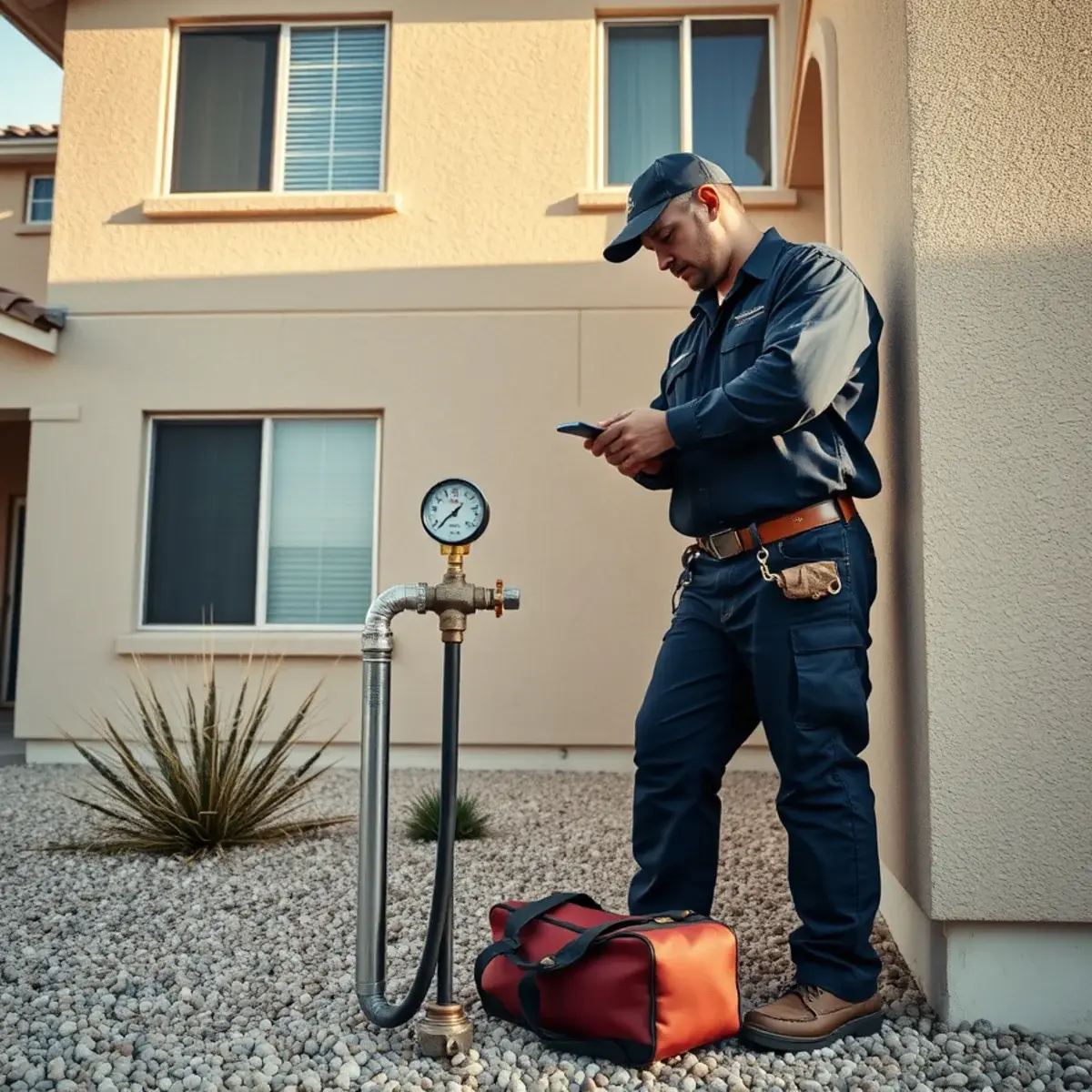
Buy a threaded pressure gauge for about fifteen dollars. Screw it onto an outside hose bib, turn the valve fully open with everything inside off, and read it.
- Below about 40 psi — genuinely low. Something is restricting supply.
- 40 to 80 psi — normal range. If pressure feels poor, the problem is inside the house rather than at the supply.
- Above 80 psi — too high. Different problem, and one that quietly damages everything downstream.
That number is the most useful piece of information in the entire diagnosis, and it costs almost nothing to obtain.
Step 3 — Check the pressure-reducing valve
Most homes here have a PRV, usually near where the supply enters the house or in the valve box outside. It steps municipal pressure down to a safe household level, and it wears out.
PRVs fail two ways, and both are common on 2000s-era homes:
- Failed closed or partially closed — chokes the whole house. This is the cause of a great many 'we need a repipe' complaints, and replacing the valve fixes it in one visit.
- Failed open — pressure climbs, and instead of low pressure you get a pattern of small unrelated failures: fill valves, supply lines, a weeping relief valve on the water heater.
Step 4 — Consider elevation, which you cannot change
This is why two-story homes complain more. Every foot of height costs pressure — roughly half a psi per foot. An upstairs shower is running at meaningfully lower pressure than the kitchen tap by simple physics.
Combine that with a partially clogged showerhead and a PRV that has drifted, and an upstairs bathroom can drop below usable while downstairs seems fine. Homes on elevated lots — San Tan Ridge toward San Tan Mountain, for instance — see this more than most.
Step 5 — Scale inside the pipe
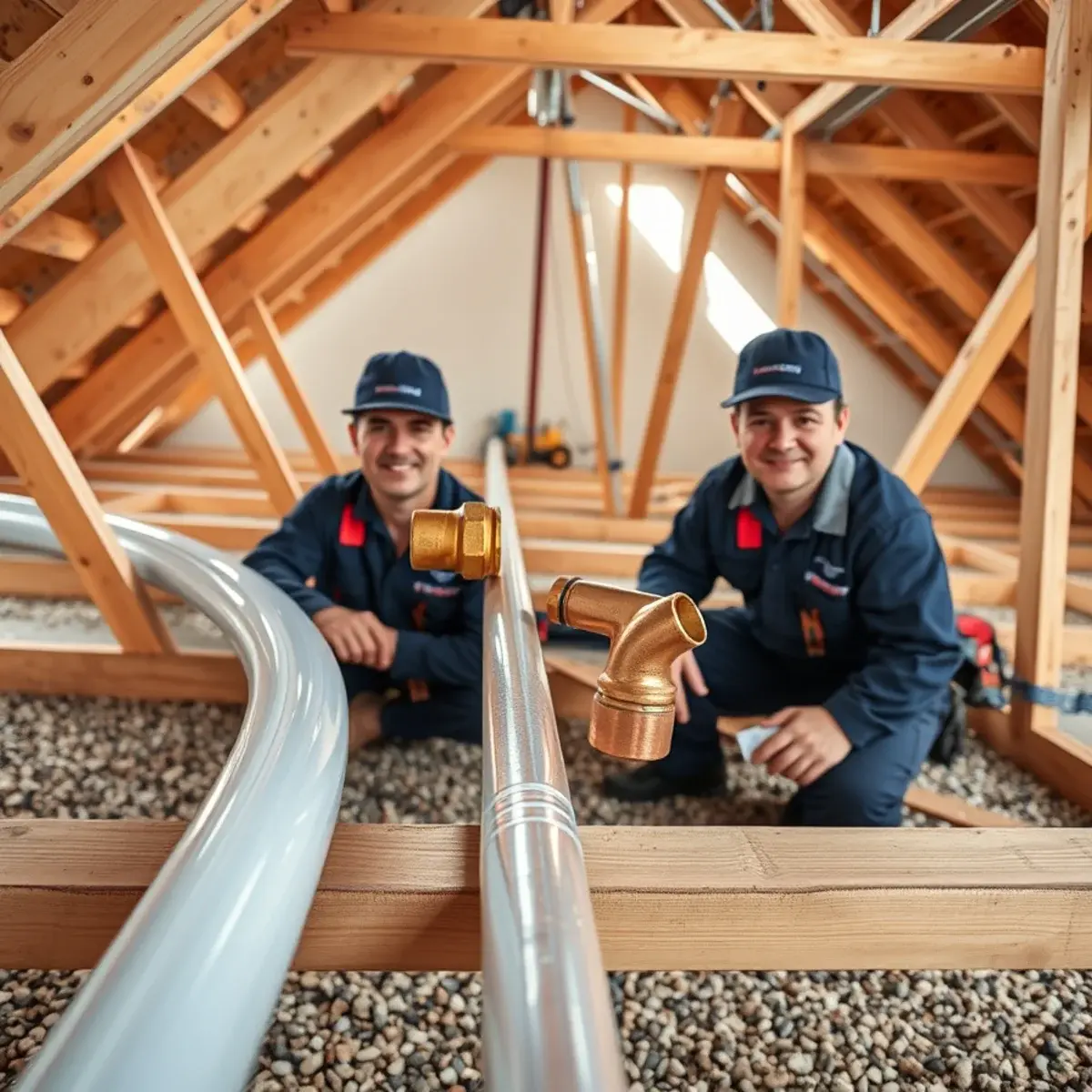
Only now do we get to the expensive answer. Two decades of 15 to 18 grain water leaves a mineral layer on the interior of supply lines that reduces effective diameter. A half-inch line does not stay a half-inch line.
The tell: static pressure at the hose bib reads normal, the PRV is working, every fixture has been descaled, and the house is still weak — particularly when two fixtures run at once. At that point repiping in PEX genuinely is the fix, and PEX is immune to the process that narrowed the original system.
Two other causes worth ruling out
A partially closed valve. The main shutoff, a PRV bypass, or a fixture angle stop that got bumped. It sounds trivial and it happens, particularly after other work has been done in the house.
A hidden leak. A significant leak upstream of the fixtures reduces pressure everywhere. If pressure dropped suddenly rather than gradually, check the meter with everything off — see the DIY whole-home leak audit.
Preventing the slow decline
The reason pressure degrades gradually in this town is scale, and the only thing that stops scale is a water softener. It will not dissolve what is already there — anyone claiming otherwise is overselling — but it stops the next twenty years of accumulation.
Beyond that: descale aerators and showerheads annually, have the PRV checked as part of an annual inspection, and treat a sudden pressure change as a leak until proven otherwise.
Why this is where homeowners get oversold
'You need a repipe' is a plausible-sounding answer to a symptom with four much cheaper causes ahead of it. We have talked more than one homeowner out of a five-figure job with a fifteen-dollar gauge, because the actual fault was a pressure-reducing valve that had failed closed and was choking the whole house.
The physics people miss: elevation costs roughly half a psi per foot. An upstairs shower starts meaningfully lower than the kitchen tap before anything is wrong. Add a partially clogged head and a PRV that has drifted after twenty years, and the upstairs drops below usable while downstairs still seems fine.
So before you accept any repipe quote for low pressure, ask three questions: what did static pressure read at the hose bib, was the PRV tested, and were the fixtures descaled. If those have not been answered, the diagnosis is incomplete — whatever the quote says.
The bottom line
Scale inside the pipe is a real cause and sometimes the answer, and when it is, PEX ends it permanently because the material cannot be narrowed the same way. But it should be the last conclusion rather than the first. Check the free and cheap causes, then decide — and install a softener either way so the next twenty years do not repeat the last twenty.
Frequently asked questions
Elevation costs pressure — roughly half a psi per foot of height — so an upstairs fixture starts lower by physics. Add a partially clogged showerhead and a pressure-reducing valve that has drifted, and the upstairs can drop below usable while downstairs still seems fine. Check the showerhead first; it is free.
Usually not, and it should be the last conclusion rather than the first. A failing pressure-reducing valve, clogged aerators and a partially seized cartridge produce the same complaint for a fraction of the cost. Only after static pressure, the PRV and every fixture have been checked does scale inside the pipe become the answer.
Between about 40 and 80 psi at an outside hose bib with everything else off. Below 40 is genuinely low. Above 80 is too high and quietly shortens the life of every fixture, valve and appliance — which is a different problem worth correcting for its own sake.