EPCOR's San Tan district delivers water at **15 to 18 grains per gallon**. The Water Quality Association classifies anything above 10.5 as 'very hard.' We are not close to the line — we are well past it, and every appliance, fixture and pipe in your house is paying for it.
What you need to know about water softener installation here
This is the one upgrade we recommend to almost every San Tan Valley homeowner, and it is the only one where we can point to a genuine financial return rather than a comfort argument. Softened water extends water heater life, ends the fixture-replacement treadmill, cuts soap and detergent use substantially, and stops the scale that narrows your pipes a little more every year.
It is also the local product with the most aggressive door-to-door sales activity, some of it built on fear left over from the Johnson Utilities era. So we will tell you plainly what a system should cost, what it should do, and what claims to walk away from.
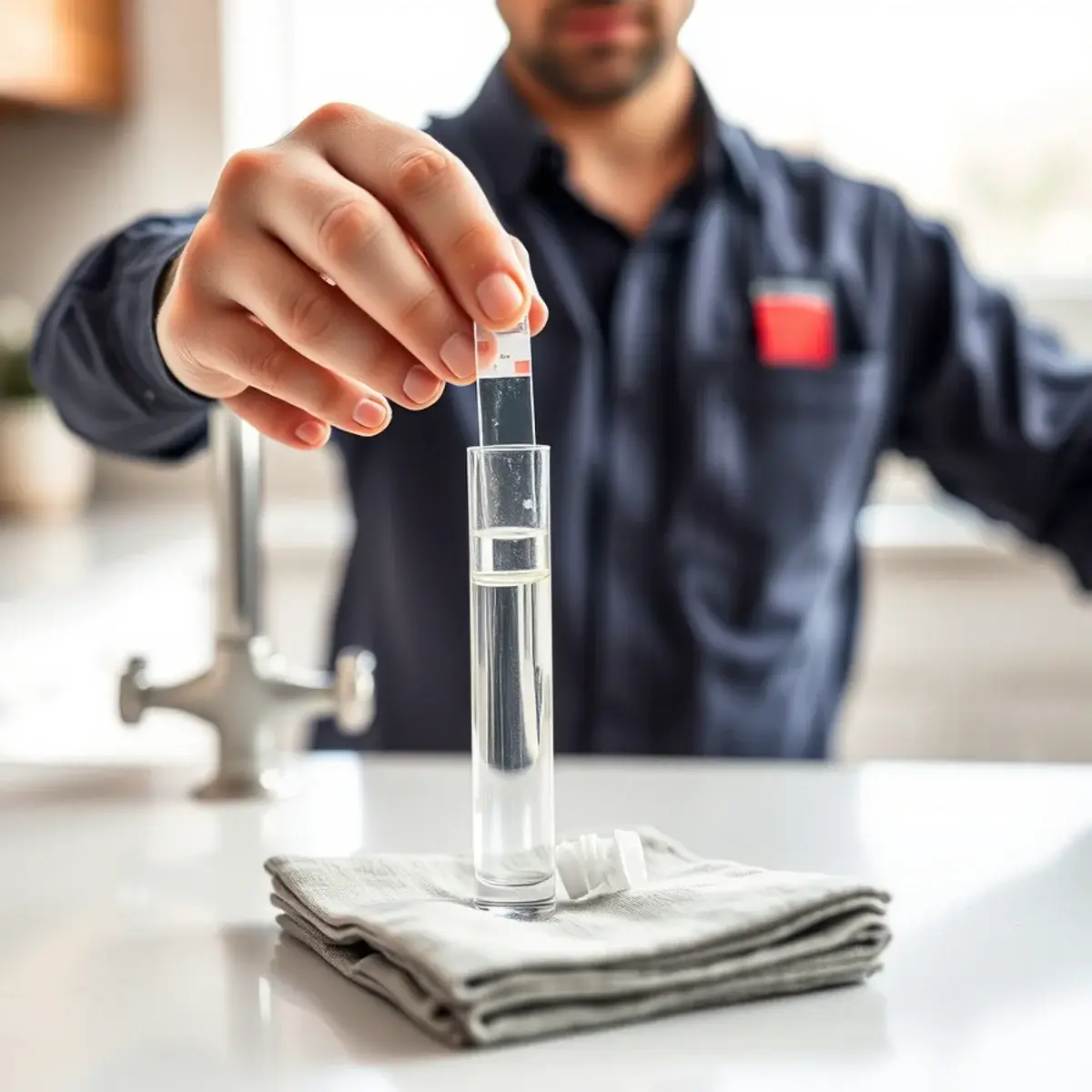
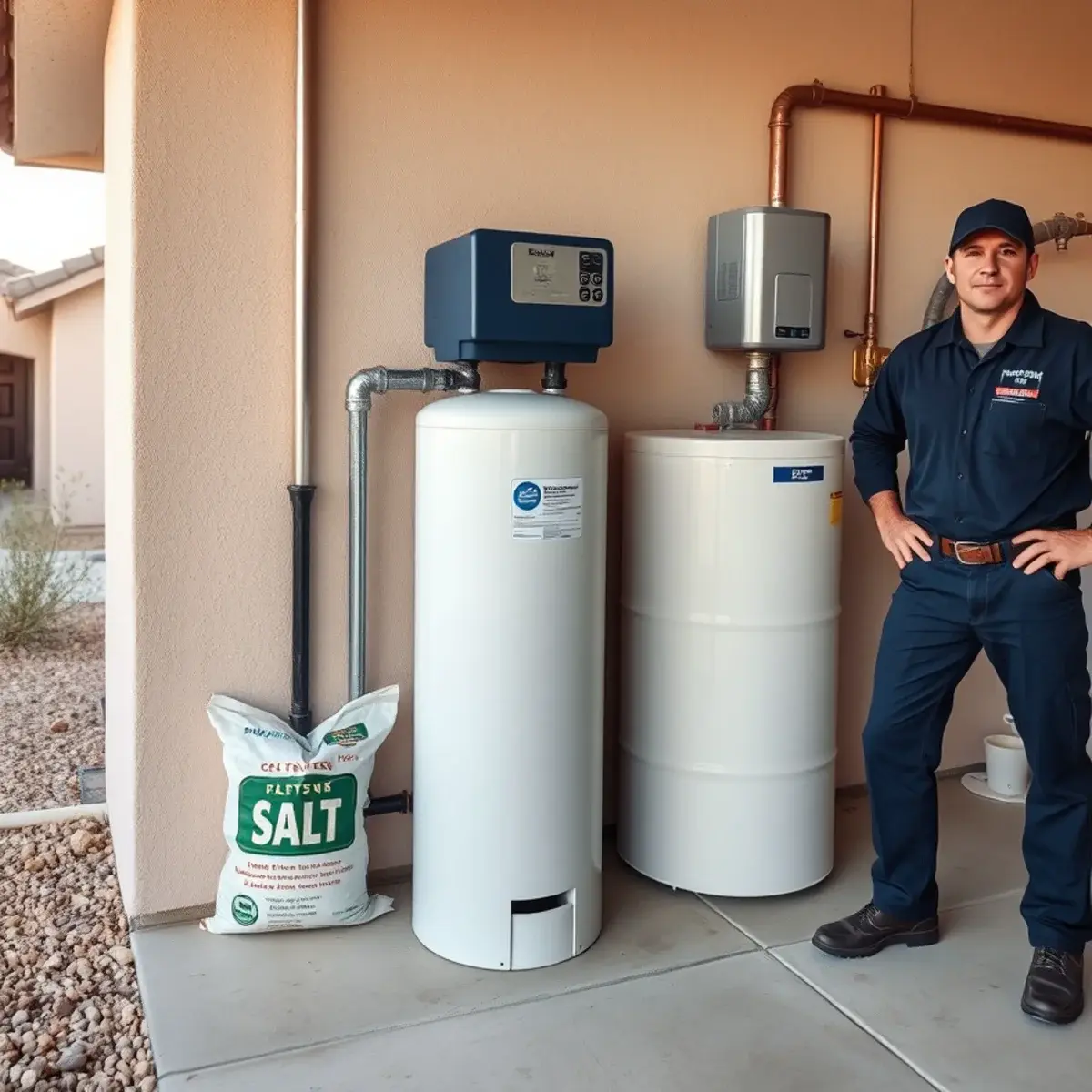
On-site water hardness test showing very hard water at a San Tan Valley home
On-site hardness test — the district average is 15 to 18 grains but your specific service can differ, and wells are usually higher
Grain capacity calculated from your hardness, occupancy and real daily use, not from a brochure
Two or three specific units presented with real prices and the honest trade-offs between them
Demand-initiated metered regeneration rather than a timer head, so the system regenerates on water actually used
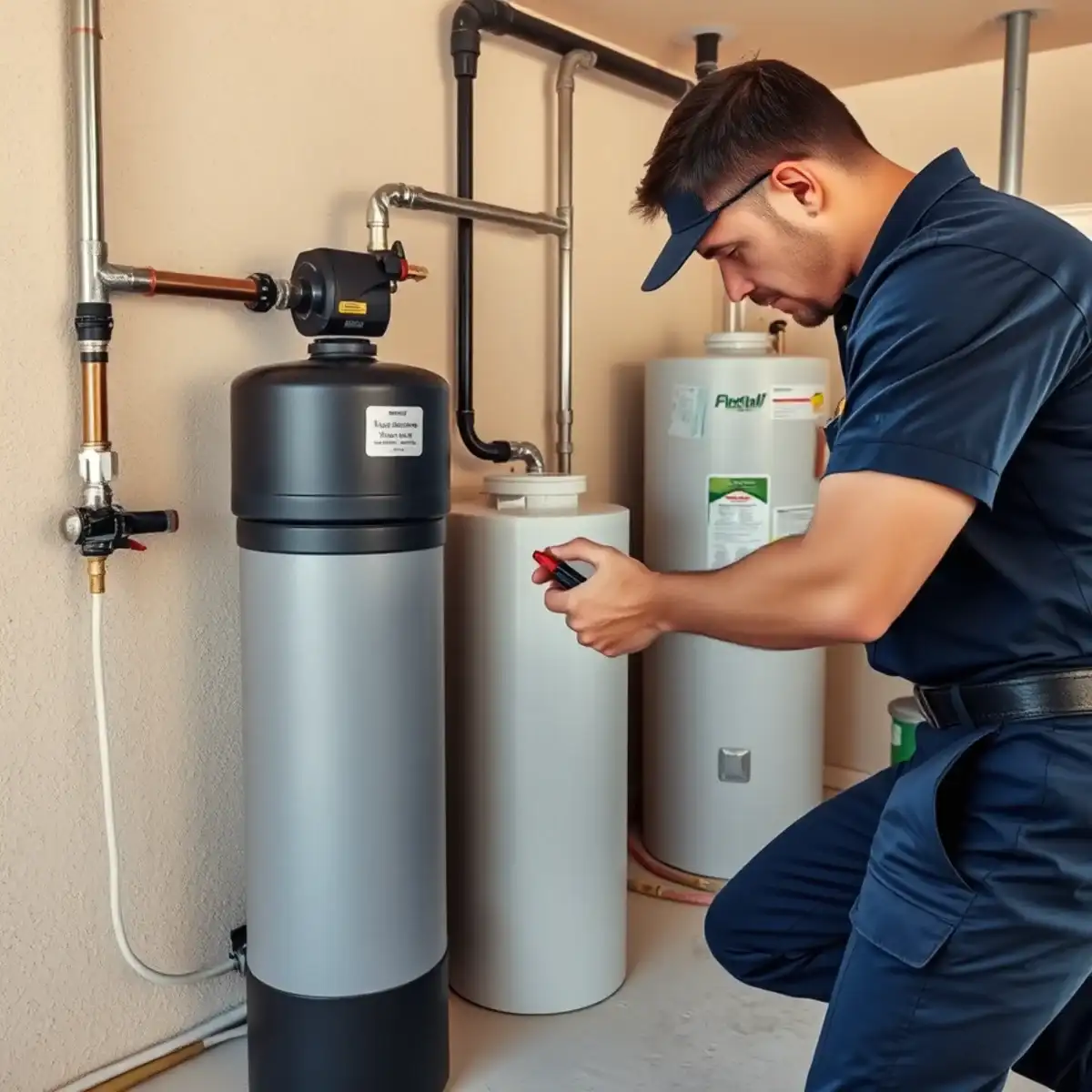
Installation at the existing garage softener loop, or new loop plumbing tied into the main where there is none
A bypass valve so the system can be serviced without shutting off the house
Drain line routed correctly with a legal air gap
Exterior hose bibs deliberately left on unsoftened water so you are not paying to soften your landscape
Regeneration settings programmed to your household, brine tank filled, system cycled and softened hardness verified at a tap before we leave
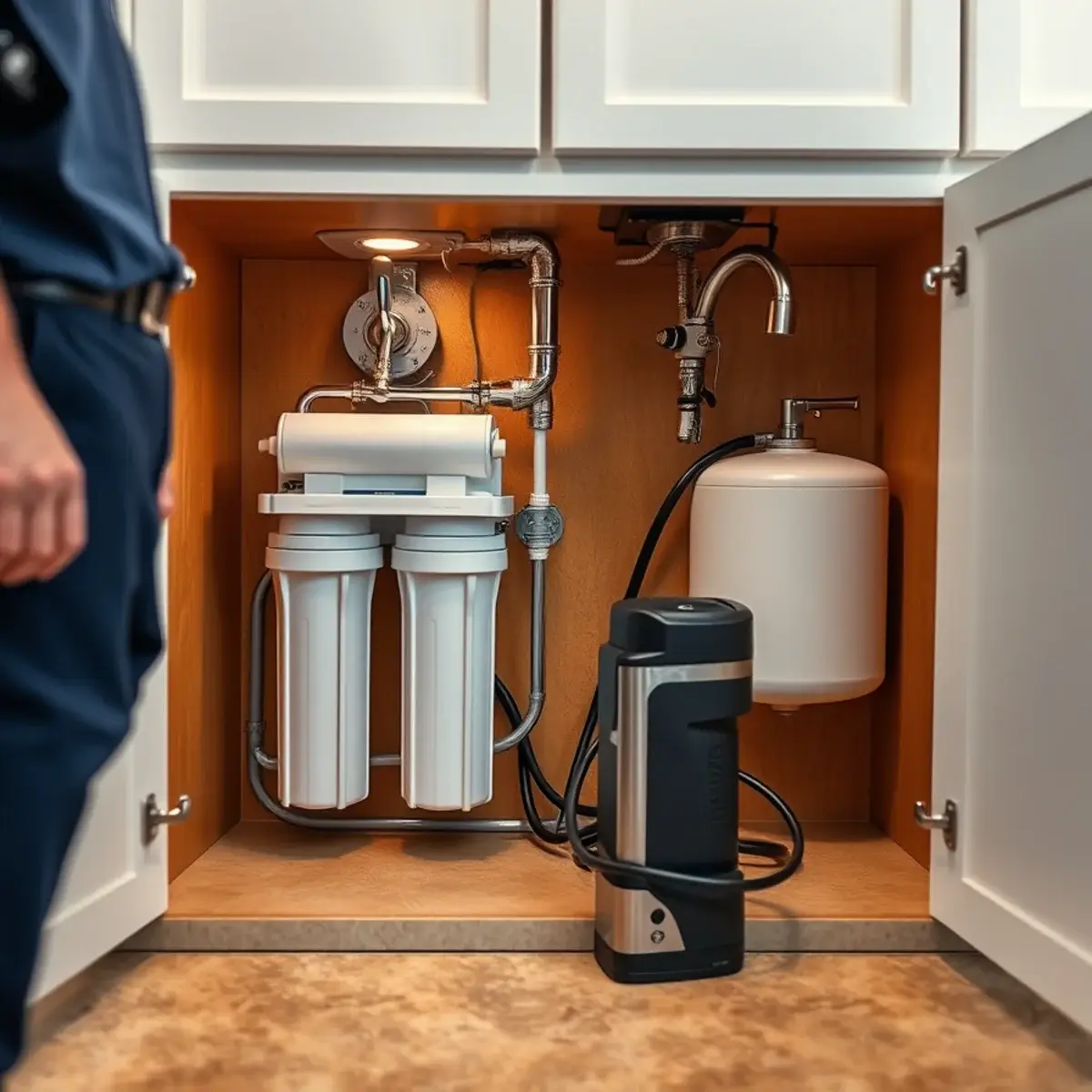
Optional under-sink reverse osmosis with a dedicated faucet and a line to the refrigerator ice maker, installed in the same visit
Water Softener Installation details
What 15–18 Grains Actually Costs You
Here is where the money goes in an unsoftened San Tan Valley home, and why we treat softening as an investment rather than a comfort purchase.
Impact area
What hard water does
Water heater
Sediment bed insulates the burner from the water, raising energy use and shortening tank life by years
Fixtures and valves
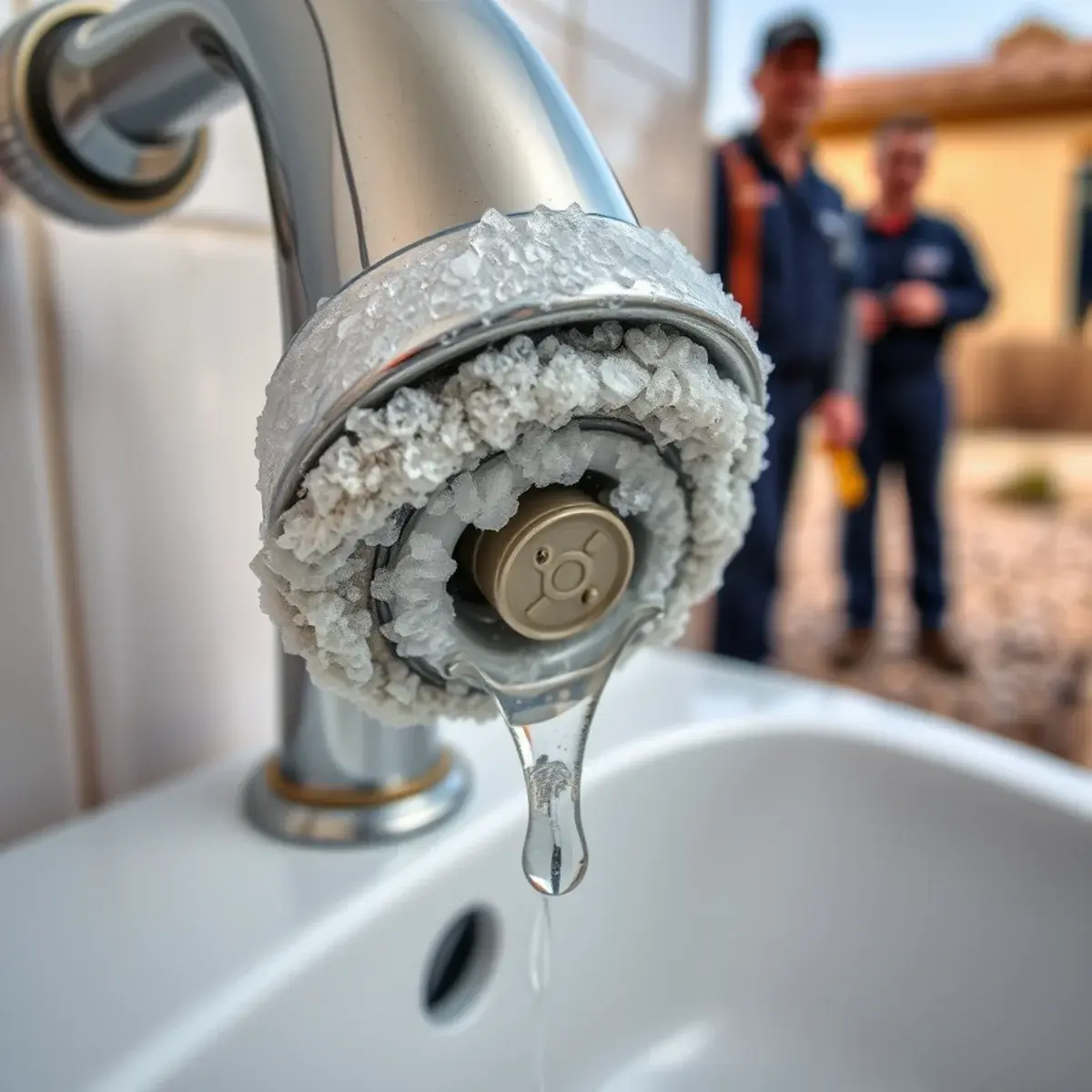
Cartridges seize, flappers mineralize, aerators clog — the recurring repair calls we run constantly
Dishwasher and washing machine
Scaled heating elements and valves, more detergent, shorter appliance life
Pipes
Scale accumulates on the interior wall, narrowing effective diameter and causing the gradual whole-house pressure loss
Soap, shampoo and detergent
Substantially higher consumption because hardness minerals bind the surfactants
Tankless water heaters
Heat exchanger scaling — the single biggest reason a tankless underperforms in this town
We work the actual numbers for a typical local household in is a water softener worth it in San Tan Valley: the ROI math. The short version: in this hardness, most homes reach payback well within the system's service life, and the water heater savings alone carry a meaningful share of it.
Sizing It Correctly — Where Most Installs Go Wrong
A softener is sized by grain capacity, which is a function of your hardness, the number of people in the home and daily water use. Get it wrong in either direction and you have a problem:
Undersized — the unit regenerates constantly, wastes salt and water, and still lets hard water through during peak use.
Oversized — the resin bed sits too long between regenerations, which can allow bacterial growth and channeling in the bed.
For a four-person San Tan Valley household at 16 grains, the arithmetic points to a specific capacity range, and we will do that calculation with you rather than handing you the one model a salesperson is compensated on. We also test your actual hardness on site — the district average is 15 to 18, but your specific service can differ.
Salt-Based, Salt-Free, and What Actually Works
Ion-exchange (salt-based) softeners
The only technology that actually removes hardness minerals from your water. Calcium and magnesium are exchanged for sodium or potassium on a resin bed, and the bed is regenerated periodically with brine. If you want the water heater protection, the fixture protection and the lather, this is the category. Demand-initiated regeneration — where the unit regenerates based on the water you actually used, not on a clock — is worth the modest premium in a market this hard.
Salt-free conditioners (TAC)
These do not remove hardness. They convert dissolved minerals into microscopic crystals that are less likely to adhere to surfaces. That has genuine value for scale prevention in pipes and heaters, and it uses no salt and produces no discharge water — which matters if you are on a septic system or a community with discharge restrictions.
But be clear about what you are buying: you will still get spots on glassware, soap will still behave the way it does now, and your water hardness on a test strip will be unchanged. At 15 to 18 grains, we recommend salt-based to homeowners whose primary goal is the whole package, and TAC where salt discharge is genuinely restricted.
Reverse osmosis for drinking water
A softener makes your water gentle on your house. It does not make it taste better — a softener adds a small amount of sodium and removes nothing else. For drinking and cooking, an under-sink RO system removes dissolved solids, chlorine byproducts and the mineral taste, and it is the pairing most homeowners here end up wanting. We plumb RO to a dedicated faucet and to the refrigerator ice maker in the same install.
About the Johnson Utilities History
A lot of San Tan Valley homeowners carry a real distrust of the tap, and it has a real origin. Johnson Utilities served much of this area for years and its record — including operational failures and the eventual appointment of an interim manager before EPCOR took over the system — left a lasting impression on residents who lived through it.
EPCOR now operates the San Tan district, and the water meets drinking water standards. Hardness is a mineral content issue, not a safety issue. But it is entirely reasonable to want filtration on your drinking water in addition to softening on your house, and we will not tell anyone their concern is silly. The full story is in from Johnson Utilities to EPCOR.
Wells on the San Tan Valley Fringe
Not everyone here is on EPCOR. Properties on the semi-rural edges — parts of Sun Valley Farms, Taylor Ranch and out toward Chandler Heights — are on private wells, and well water is a different problem. Hardness is usually higher, and you may also be dealing with iron, manganese, sulfur odor, sediment or nitrate.
On a well, treatment starts with a laboratory test, not a sales visit. The right sequence of sediment filtration, iron or sulfur treatment, softening and point-of-use RO depends entirely on what that test shows. Details in private wells on San Tan Valley's fringe.
Under-sink reverse osmosis drinking water system installed in a San Tan Valley kitchen
How we work
Our water softener installation process
No surprises, no mystery. Here is exactly what happens from the phone call to the walkthrough.
1
Test your actual water
On-site hardness test, plus a look at your pressure, your existing loop and your household size and usage. Well properties get a lab test rather than a strip.
2
Size it with arithmetic, not a brochure
Grain capacity calculated from your hardness, occupancy and demand — then two or three real options with real prices and the trade-offs between them.
3
Install at the loop, properly
Bypass valve so the system can be serviced without shutting off the house, correct drain line with a legal air gap, and the outside hose bibs left on unsoftened water so you are not softening your landscape.
4
Program and commission
Regeneration settings tuned to your household and hardness, brine tank filled, system cycled, and softened hardness verified at a tap before we leave.
5
Show you how to run it
Salt type and level, bypass operation, what a regeneration sounds like, and the service schedule. Maintenance guidance is in our [water softener maintenance checklist](/blog/water-softener-maintenance-checklist/).
What it costs
What drives the price of water softener installation
We do not publish flat prices for work nobody has looked at — that is a guess dressed up as a quote. Here is what actually moves the number, so you can read any estimate you receive.
System capacity and type
Grain capacity is the main cost driver, followed by whether you choose demand-initiated regeneration and metered control versus a basic timer head.
Existing loop or new plumbing
An existing garage loop makes for a clean, quick install. A home with no loop needs new plumbing tied into the main and a drain routed correctly, which adds real labor.
Adding reverse osmosis
An under-sink RO with a dedicated faucet is a modest add-on when installed at the same time, and includes running a line to the refrigerator if you want it.
Drain and discharge routing
The regeneration drain needs a legal air gap to an approved location. Where the nearest one is far from the loop, that adds pipe and labor.
Well systems
Well treatment is priced from the lab results. Iron, sulfur or sediment issues each add a treatment stage ahead of the softener.
Why Economy Plumbers
Why San Tan Valley homeowners call us for water softener installation
Licensed, bonded and insured Arizona plumbing contractor. 20+ years of combined plumbing experience, dispatched from 2769 E Combs Rd — and 4.9★ from 168 customers who mostly mention the same things.
We size it, we do not sell you a model
Undersized units regenerate constantly and still let hard water through at peak use. Oversized ones let the resin bed sit too long. We do the capacity arithmetic with you.
No water-test theatre
The electrode demonstration that produces a dramatic reaction in your kitchen works on hard water anywhere in the country. We bring a hardness reading and a capacity calculation instead.
Straight talk on salt-free
Conditioners reduce scale adhesion, which is genuinely useful. They do not remove hardness — glassware still spots and a test strip reads unchanged. At 15–18 grains we say so plainly.
We know the local water history
A lot of that distrust dates to the Johnson Utilities era and it is not silly. We explain what changed under EPCOR and what a softener does and does not fix — see the full history.
Wells get a lab test first
Iron, manganese, sulphur and nitrate each need their own stage ahead of the softener. Buying equipment before testing is guessing with money.
Get a written quote for water softener installation
Flat-rate pricing agreed before work starts, and we will tell you honestly if there is a cheaper answer.
Semi-rural edge community where some lots predate EPCOR service; well-water testing, softening and pump/pressure-tank work set it apart from the tract core.
Unincorporated lake community off I-10 with heavy groundwater reliance; very hard well water makes softeners, RO and sediment-heavy heater flushes core offers.
EPCOR's San Tan district runs about 15 to 18 grains per gallon, which is classified as very hard — anything above 10.5 grains earns that label. That is why fixtures scale, water heaters fail early and glassware spots here more than in most of the valley.
Not immediately, and any company that promises it will is overselling. A softener stops new scale from forming, so it prevents further loss and protects the pipe you have. Existing pressure loss from scale already in the lines, from a clogged aerator, or from a failing pressure-reducing valve are separate fixes — and we check all three.
They do one specific thing: they reduce the tendency of minerals to stick to surfaces, which helps with scale in pipes and heaters. They do not remove hardness, so you will still see spots on glassware and soap will behave exactly the way it does now. At 15 to 18 grains we recommend salt-based softening unless salt discharge is genuinely restricted for your property.
Most homes built here after about 2000 do — look in the garage for two stubbed-out pipes near a drain, often behind or beside the water heater. If you have one, installation is quick and inexpensive. If you do not, we can add one.
They solve different problems. A softener protects your plumbing and appliances but adds a little sodium and does not improve taste. An under-sink RO system handles drinking and cooking water, removing dissolved solids and the mineral taste. Most San Tan Valley homeowners end up wanting both, and installing them together saves a second trip.
Anything above 10.5 grains per gallon is classified as very hard. We are at 15 to 18. Here is what that number does to every pipe, fixture and appliance in your house.
The honest version: three savings categories that are real and measurable, two that get oversold, and the reason the answer here is different from most of the country.
Read the guide
Free estimate
Request a quote for water softener installation
Tell us what is happening and we will call you back. Or call now — a real person answers.
Need a plumber in San Tan Valley today?
Call and a real person picks up — day, night, weekend or holiday. Most in-town calls see a truck in 60–90 minutes.