Is a Water Softener Worth It in San Tan Valley? The ROI Math
The honest version: three savings categories that are real and measurable, two that get oversold, and the reason the answer here is different from most of the country.
The short answer
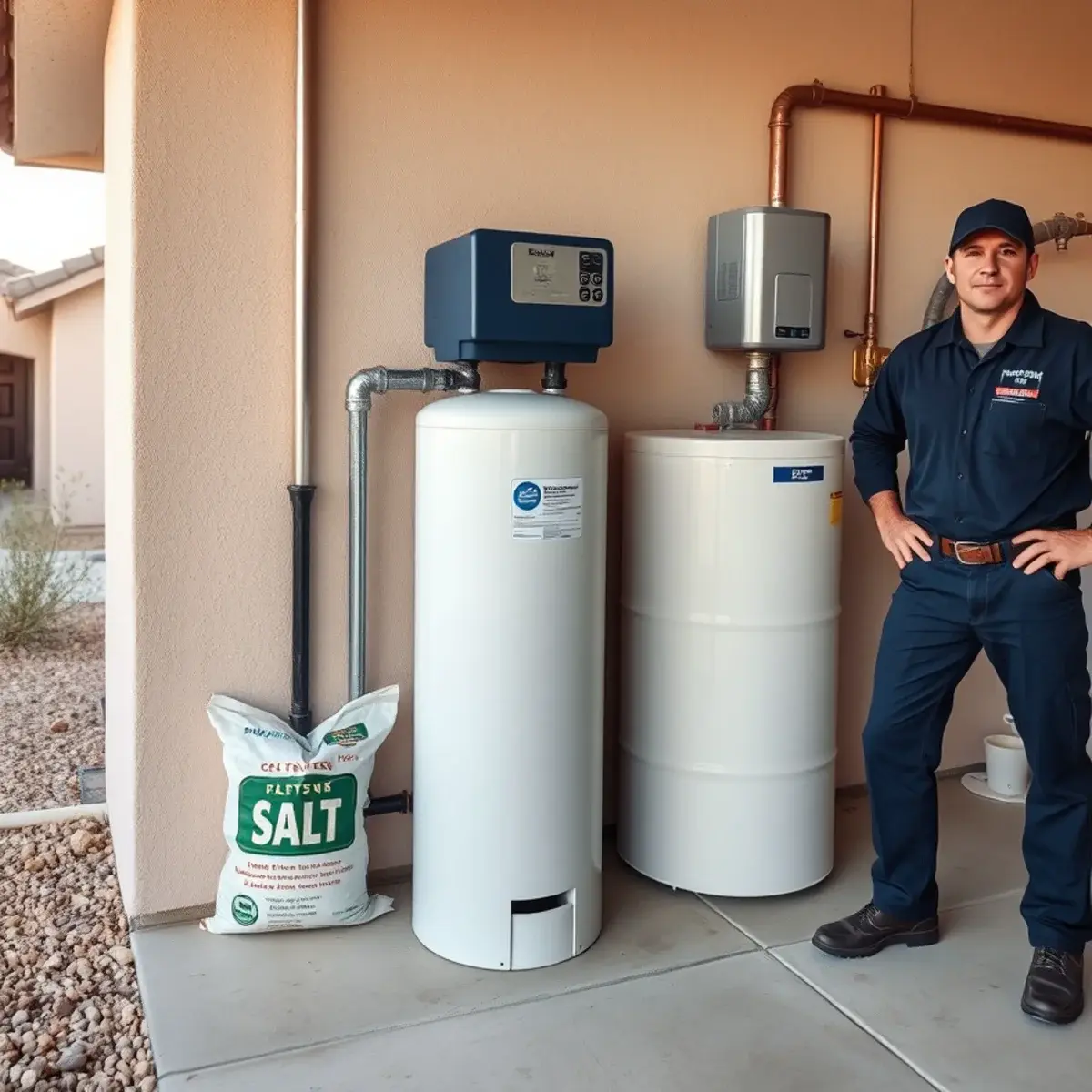
At 15 to 18 grains per gallon, yes for most San Tan Valley households — but not for the reason it is usually sold. The return is equipment life, chiefly the water heater, followed by the end of the fixture-replacement treadmill. Soap savings and energy savings are real but minor, and any ROI pitch leaning on them is padding the maths.
A water softener is the most-pitched product in San Tan Valley plumbing, which means it is also the most oversold. So here is the honest breakdown: what genuinely saves you money, what is real but modest, and what gets exaggerated.
The short version: at 15 to 18 grains per gallon, the answer here is yes for most households — and the reason is not soap savings. It is equipment life.
Where the money actually is
1. Water heater life — the biggest single item
This is where the real return lives. In our water, sediment accumulates continuously on a tank floor, insulating the burner from the water, cutting effective capacity and superheating the tank bottom until the glass lining fails.
Manufacturers rate a standard tank at eight to twelve years. In San Tan Valley the honest unsoftened range is six to ten. A softened, annually flushed tank routinely runs to the top of the label range or past it. That is a several-year extension on a four-figure replacement, and it repeats every cycle for as long as you own the home. See water heater replacement cost.
2. The fixture replacement treadmill
This one is invisible because it arrives in small pieces. Toilet flappers and flush valve seats mineralize. Shower cartridges seize. Aerators clog. Angle stops freeze. Dishwasher and washing machine valves scale.
Our own dispatch history is the evidence: homes with softeners call us for fixture work at a fraction of the rate of homes without one. Every one of those calls has a trip charge attached to it. See toilet and fixture repair.
3. Appliance life
Dishwashers and washing machines have heating elements, valves and pumps that scale. Manufacturers of tankless water heaters, ice machines, espresso equipment and steam ovens frequently exclude scale damage from warranty coverage entirely — check the fine print on anything expensive you own.
Where the claims are overstated
Soap and detergent savings. Real, and pleasant, but it is a modest line item in a household budget. If a salesperson's ROI calculation leans heavily on shampoo, the math is being padded.
Energy savings. A water heater without a sediment bed does heat more efficiently, which is genuine. But it is a supporting number, not the headline. Anyone presenting energy savings as the primary payback is selling, not calculating.
Restored water pressure. A softener stops new scale from forming. It does not dissolve scale already in your pipes. If your pressure has declined over fifteen years, softening prevents further loss — it does not reverse what happened. Any company promising otherwise is overselling, and we say so on our water softener page too.
The costs on the other side
| Ongoing cost | Reality |
|---|---|
| Salt | Ongoing, modest. Demand-initiated regeneration uses considerably less than a timer-based unit. |
| Regeneration water | Each cycle discharges water. Demand-initiated systems regenerate only when needed. |
| Service | Occasional — resin has a long life, but valves and control heads eventually need attention. |
| Installation | Modest if you have an existing garage loop, which most post-2000 homes here do. Higher if a loop has to be added. |
The households where it pays fastest
- Large households. More water volume means faster scale accumulation and faster payback. A family of five in Copper Basin reaches break-even considerably sooner than a couple.
- Homes with a tankless water heater, or planning one. Tankless heat exchangers scale fast in this water, and softening is close to a requirement rather than an option.
- Homes with frameless glass showers or premium finishes. Mineral deposits eventually etch glass permanently, and replacement panels are not cheap.
- Newly built homes. Installing before scale accumulates protects equipment that is currently undamaged — the cheapest version of this project.
- Anyone who just repiped. Protecting a brand-new system from the chemistry that killed the old one.
Salt-based or salt-free?
Salt-based ion exchange is the only technology that actually removes hardness. Salt-free conditioners convert minerals into crystals less likely to adhere — genuinely useful for scale prevention in pipes and heaters, and they use no salt and produce no discharge.
But be clear about what you are buying with salt-free: glassware still spots, soap still behaves the same way, and a hardness test reads unchanged. At 15 to 18 grains we recommend salt-based unless discharge is genuinely restricted for your property.
Sizing matters as much as buying
Grain capacity should be calculated from your actual hardness, occupancy and water use. Undersized units regenerate constantly, waste salt and water, and still let hard water through at peak use. Oversized units let the resin bed sit too long between regenerations. Neither is a small problem, and both are common when someone sells you the one model they are compensated on.
And for drinking water, add an under-sink reverse osmosis system. A softener protects your house; it does not improve taste, and it adds a small amount of sodium. Most homeowners here end up wanting both — see what San Tan Valley's water hardness actually means.
Where the payback actually comes from
The water heater carries most of it. Manufacturers rate a tank at eight to twelve years; the honest unsoftened range here is six to ten. A softened, annually flushed tank runs to the top of the label or past it. That is a several-year extension on a four-figure replacement, and it repeats for as long as you own the home.
The second piece is invisible because it arrives in small amounts: flappers, cartridges, aerators, angle stops, dishwasher and washer valves. Our own dispatch history is the evidence — homes here with a softener call us for fixture work at a fraction of the rate of homes without one. Every one of those calls carries a trip charge.
And the honest limit: a softener does not restore pressure you have already lost. It stops new scale forming and protects the pipe you have. Anyone promising it will dissolve existing deposits is overselling, and that claim is a reliable signal to end the conversation.
The bottom line
Payback arrives fastest in large households, homes with a tankless heater, and homes with frameless glass showers where mineral etching becomes permanent. It arrives slowest in a two-person home with builder-grade fixtures throughout. Either way, size it by arithmetic from your real hardness and occupancy rather than buying the one model a salesperson is compensated on — see water softener installation.
Frequently asked questions
Most households reach payback well within the equipment's service life, and the largest driver is water heater longevity rather than soap savings. Large households and homes with tankless heaters or premium fixtures reach it fastest. We will run the arithmetic for your specific household rather than handing you a generic figure.
No, and be skeptical of anyone who says it will. A softener prevents new scale from forming, which protects the pipe you have. It does not dissolve deposits already inside your lines. Existing pressure loss is a separate diagnosis — often a failing pressure-reducing valve or clogged fixtures.
New is the ideal time. At 15 to 18 grains per gallon, scale begins accumulating on a new water heater, new fixtures and new appliances immediately. Installing at move-in, when the loop already exists and nothing is damaged, is both the cheapest and the highest-return version of this project.