Running Toilet? The Hard-Water Fixes That Actually Last
You replaced the flapper and it started running again eight months later. The flapper was not the whole problem — and a running toilet is quietly the most expensive small leak in your house.
The short answer
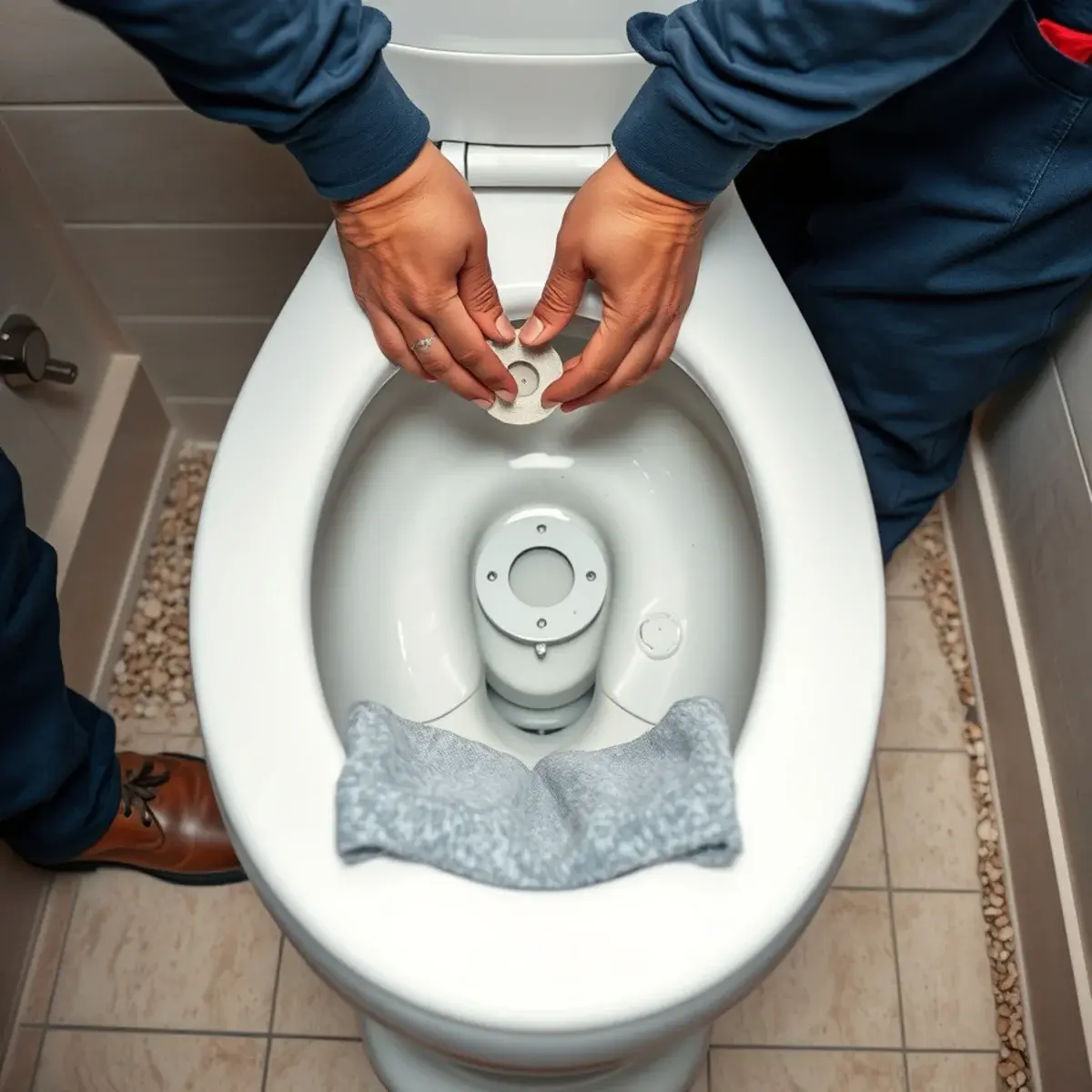
Because the flush valve seat mineralises too. Replacing only the flapper installs a fresh sealing surface against a rough, pitted seat, so it weeps again within months. The repair that lasts is descaling or replacing the seat as well and fitting a chlorine- and mineral-resistant flapper rather than standard rubber.
A running toilet is the most expensive small problem in a San Tan Valley home. A continuously running toilet can waste several hundred gallons a day, and the silent version — one that leaks past the flapper without any audible running — shows up as an unexplained water bill increase that homeowners frequently mistake for a slab leak.
The free test everyone should run
Put a few drops of food coloring in the tank. Do not flush for twenty minutes. Then look in the bowl. If you see color, water is leaking from the tank into the bowl and it has been on your bill the whole time.
Do this on every toilet in the house before you assume anything more expensive. In neighborhoods like Circle Cross Ranch with busy family bathrooms, we regularly find two leaking simultaneously.
Why your new flapper failed
Here is the part nobody explains at the hardware store. A flapper seals against the flush valve seat — the plastic or brass ring at the bottom of the tank. In 15 to 18 grain water, both surfaces mineralize.
Replace only the flapper and you have installed a fresh sealing surface against a seat that is now rough and pitted. It seals adequately at first, then starts weeping within months. The homeowner concludes flappers are junk.
The durable fix is to address both: descale or replace the seat, and use a chlorine- and mineral-resistant flapper rather than the standard rubber one. Same labor, same visit, years instead of months.
The five things that make a toilet run
| Symptom | Cause | Fix |
|---|---|---|
| Continuous running, water audible | Fill valve not shutting off, or float set too high | Adjust float; replace fill valve if the diaphragm is scaled |
| Refills on its own every few minutes | Flapper leaking past a mineralized seat | Mineral-resistant flapper plus seat descale or replacement |
| Water trickling into the overflow tube | Float set too high, or a failed fill valve | Set the water level about an inch below the overflow tube top |
| Runs briefly then stops after a flush | Flapper closing too slowly, or chain length wrong | Adjust chain slack; replace flapper if warped |
| Weak flush needing a second attempt | Scale in the rim jets and siphon jet | Descale the jets — often restores it with no parts at all |
What we replace on a toilet service
A full rebuild is inexpensive relative to a new toilet and gets you another decade. It covers:
- Mineral- and chlorine-resistant flapper
- Flush valve seat descaled or replaced
- New fill valve, if the existing one is scaled or noisy
- New supply line and angle stop — the ten-dollar parts that prevent four-figure floods
- New closet bolts and wax ring if the toilet rocks
- Rim jets and siphon jet descaled to restore flush performance
When to replace instead of rebuild
- 1A cracked tank or bowl. Not repairable, and a hairline tank crack becomes a floor flood without warning.
- 2First-generation 1.6 gallon toilets from the mid-1990s that never flushed well when new. Rebuilding a poor design gets you a well-maintained poor design.
- 3Accessibility. In the 55+ communities — Solera at Johnson Ranch, Trilogy at Encanterra — moving to a comfort-height bowl with a slow-close seat is the most-requested upgrade we install and makes a real daily difference.
The systemic fix
Everything above traces back to hardness. A water softener is why homes with one call us for toilet work at a fraction of the rate of homes without one — the flapper, the seat, the fill valve diaphragm and the rim jets all stop mineralizing.
In the meantime, dye-test your toilets twice a year. It takes twenty minutes, it costs nothing, and it catches the most common cause of a mystery bill increase in this town before it runs for a season. More on our toilet and fixture repair service.
The most expensive small problem in a San Tan Valley home
A continuously running toilet can waste several hundred gallons a day. The silent version — leaking past the flapper with no audible running — is arguably worse, because it can go on for months and shows up only as a bill that stepped up and stayed up.
That is why we dye-test every toilet before anyone discusses a slab leak. Food colouring in the tank, twenty minutes without flushing, check the bowl. In family neighbourhoods we regularly find two doing it at once, and it is a sub-hundred-dollar fix for a bill increase people were bracing to spend thousands on.
One thing to stop doing: in-tank cleaning tablets, particularly chlorine-based ones. They degrade flappers, gaskets and fill valve seals, and they are a common cause of the exact leak they sit next to. Clean the bowl directly and leave the tank alone.
The bottom line
Dye-test your toilets twice a year — it takes twenty minutes, costs nothing, and catches the single most common cause of a mystery bill increase in this town. When one does need work, a full rebuild with mineral-resistant parts costs a fraction of a new toilet and buys another decade. Replacement makes sense for cracked tanks, mid-90s low-flow models that never worked, and accessibility upgrades. See toilet and fixture repair.
Frequently asked questions
Because the flush valve seat mineralized too, so a new flapper is sealing against a rough surface. Descaling or replacing the seat, and using a chlorine- and mineral-resistant flapper instead of standard rubber, is what makes the repair last years rather than months.
A continuously running toilet can waste several hundred gallons a day. The silent version — leaking past the flapper with no audible running — is worse in a sense, because it can go on for months. If your bill jumped and nothing changed at home, dye-test every toilet before assuming anything larger.
Yes, particularly chlorine-based ones. They degrade flappers, gaskets and fill valve seals, and they are a common cause of the exact leak they sit next to. Clean the bowl directly instead and leave the tank alone.