Tankless vs. Tank Water Heaters for Arizona Hard Water
We install both and we are not religious about it. Here is the honest trade-off in water this hard — including the condition that decides the answer.
The short answer
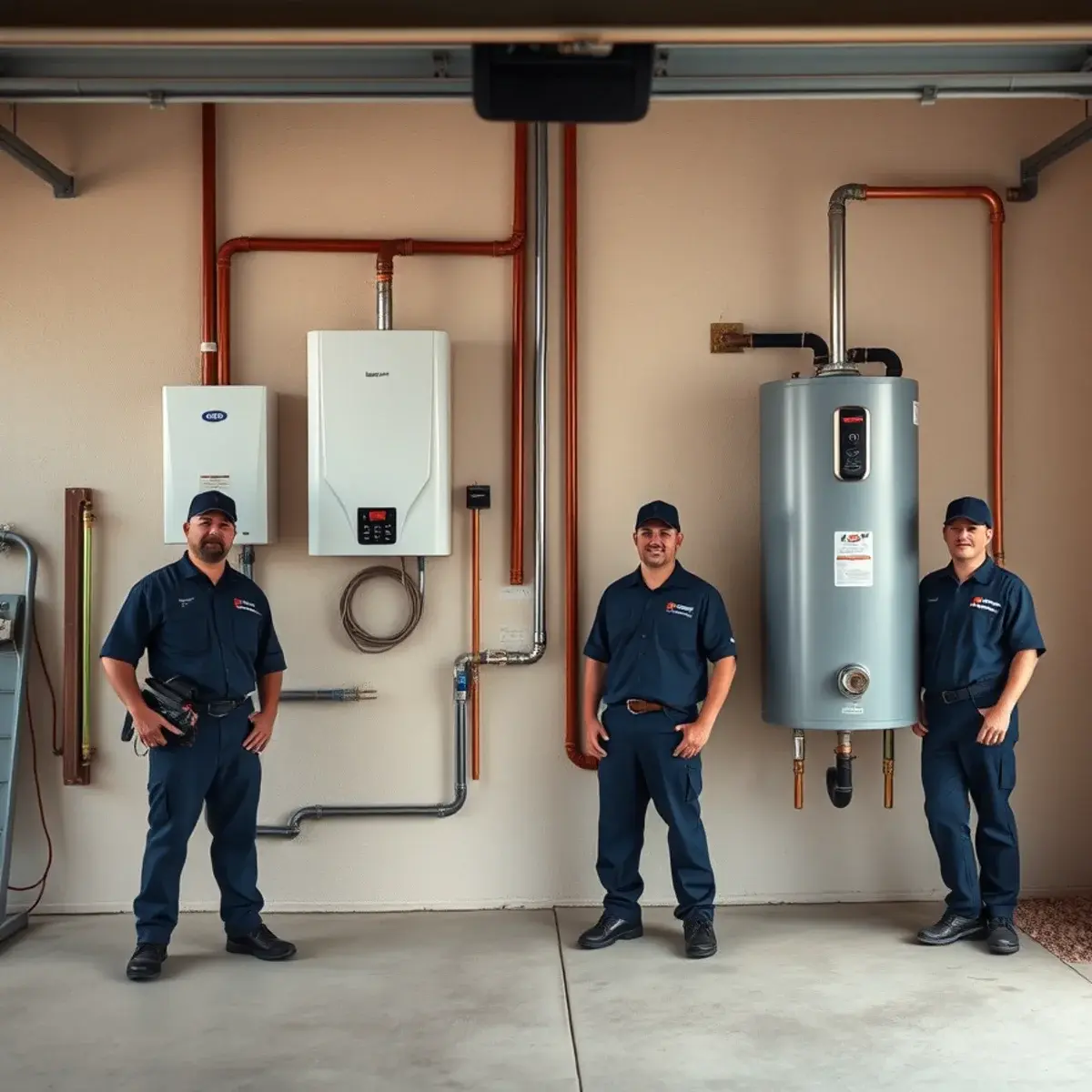
In San Tan Valley the answer hinges on one thing: whether you will soften the water. With a softener and periodic descaling, tankless is excellent — endless hot water and a service life past twenty years. Without them, a tankless heat exchanger scales fast, loses flow and throws error codes, and a right-sized tank is the better buy.
The tankless question comes up on almost every water heater replacement, and the honest answer depends on one thing more than any other: whether you are going to soften your water.
With a softener and periodic descaling, tankless is an excellent system here. Without them, a tank is the better buy — and we will tell you that even though the tankless is the bigger sale.
How each one fails in 15–18 grain water
A tank heater collects sediment on its floor. That bed insulates the burner from the water, so you use more energy and get less capacity, and it superheats the tank bottom until the glass lining fails. It is a slow, forgiving failure — the tank underperforms for years before it dies, and annual flushing largely prevents it.
A tankless heater scales inside its heat exchanger. It heats a small volume of water very hot very fast, which is precisely the condition that drives mineral precipitation. A tankless in unsoftened water at this hardness loses flow and starts throwing error codes within a few years, and it is a less forgiving failure — you notice it as the system not working.
Side by side
| Tank | Tankless | |
|---|---|---|
| Hot water capacity | Finite — runs out and needs recovery time | Endless, within its flow rating |
| Space | Takes floor space in the garage | Wall mounted, frees the footprint |
| Install cost | Lower | Substantially higher, for real reasons |
| Gas line | Existing line usually fine | Almost always needs upsizing |
| Venting | Existing vent often reusable | Dedicated vent penetration required |
| Hard water tolerance | Forgiving — flush annually | Demanding — needs softening plus descaling |
| Service life here | 6–10 years unsoftened, longer if maintained | 20+ years with softening and maintenance |
| Failure mode | Gradual underperformance, then leaks | Error codes and lost flow |
| Recovery after outage | Tank of hot water already stored | Instant, but no reserve |
The gas line reality
This is the part that surprises people and the reason honest tankless quotes look expensive next to dishonest ones.
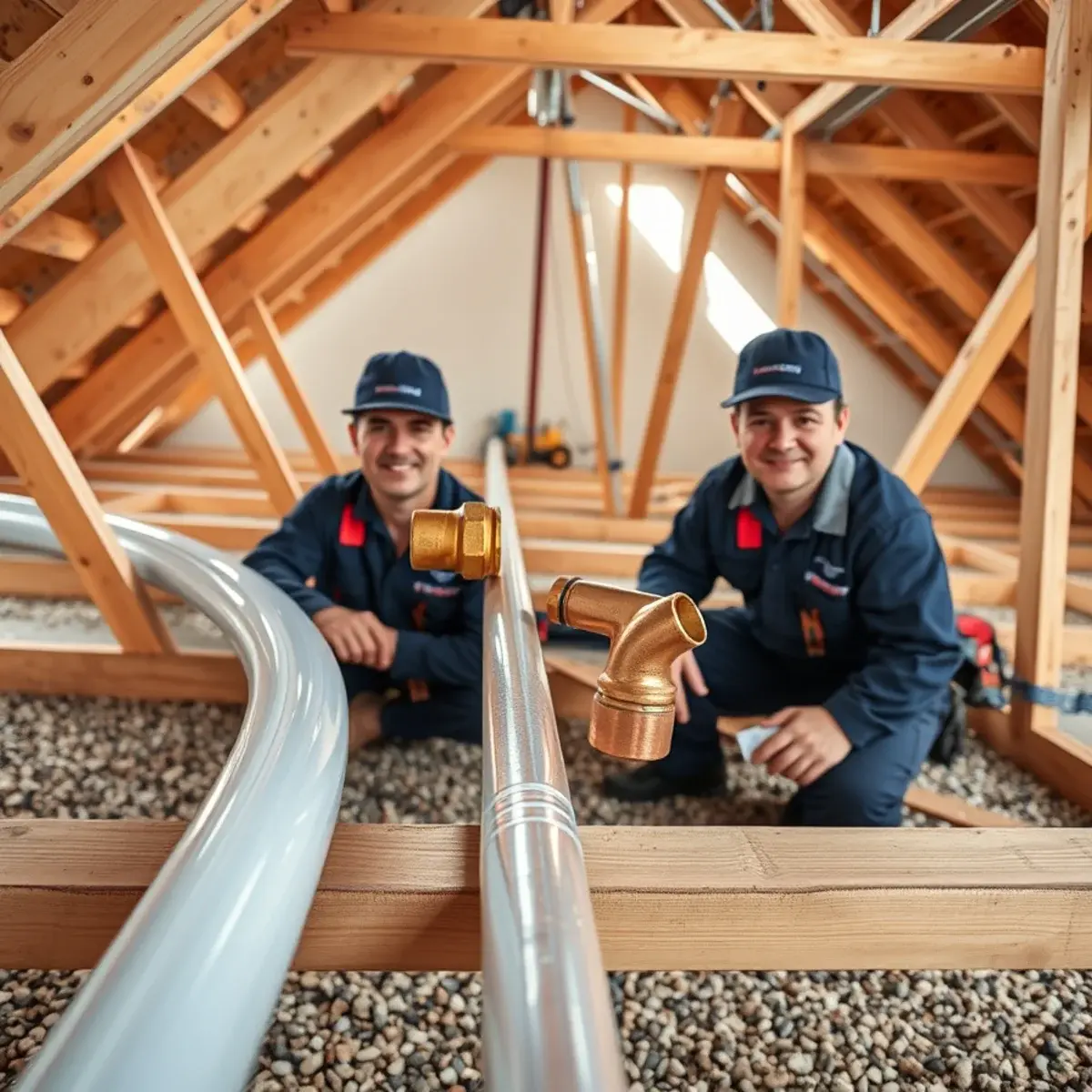
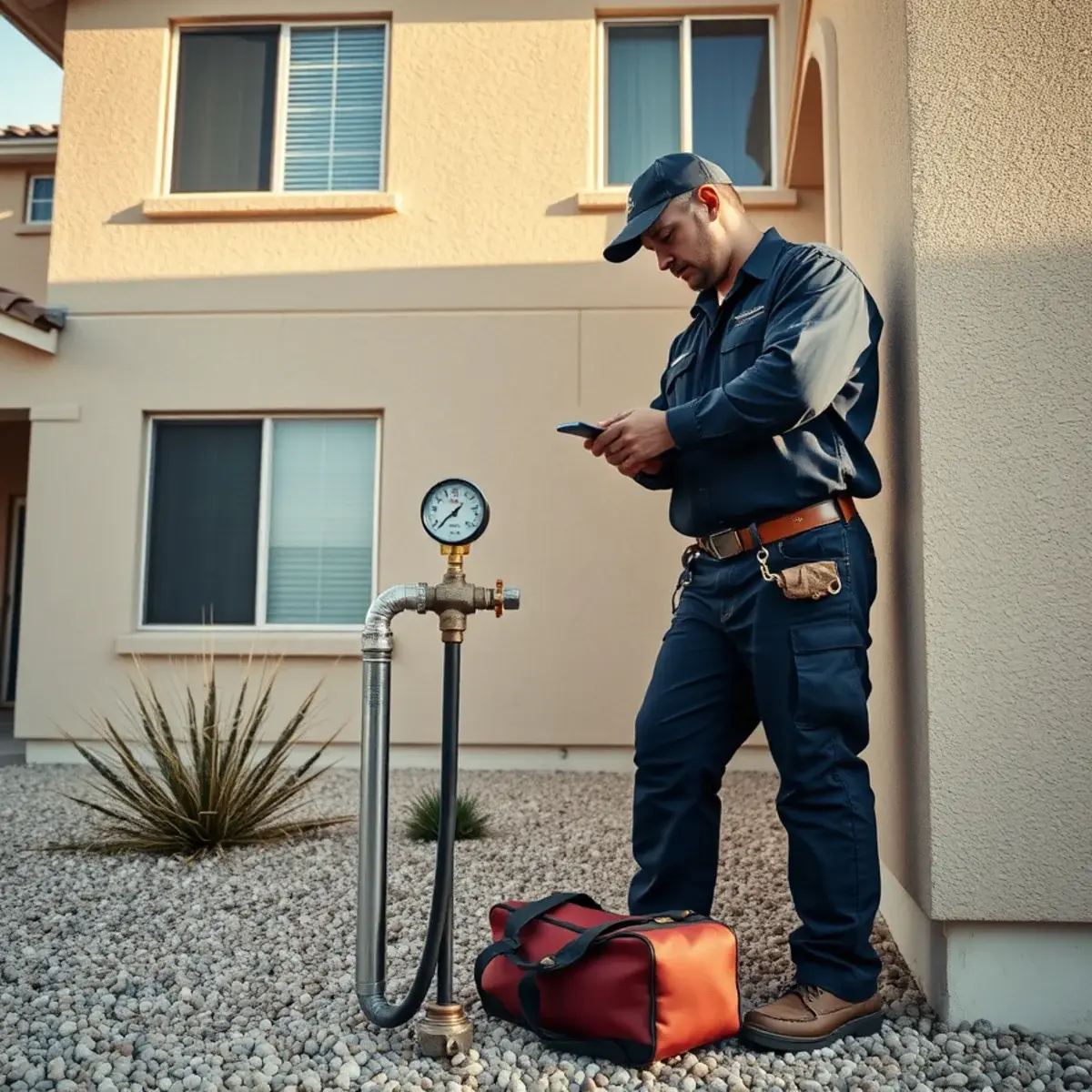
A tank heater might draw 40,000 BTU. A whole-home tankless draws 150,000 to 199,000. Connect that to the existing half-inch line that fed the tank and it will modulate down, throw error codes and never deliver its rated output — and the homeowner will blame the heater.
A correct conversion includes sizing and upsizing the gas line, a dedicated vent penetration, a condensate path, and occasionally a meter upgrade from the utility. See gas line services. Anyone quoting a tankless conversion at swap prices has not looked at your gas meter.
Who should go tankless
- Households that run out of hot water and want that problem gone permanently.
- Larger floor plans with big fixture packages — multi-head showers, soaking tubs — common in Vineyard Estates and Encanterra.
- Anyone already committed to a softener. If you are softening anyway, the main objection disappears.
- Owners planning to stay long term. The longer service life is where the value is, and it needs time to materialize.
- Anyone who needs the garage floor space.
Who should stay with a tank
- Anyone not installing a softener. This is the decisive one.
- Households whose current tank works fine and who simply need a replacement.
- Budget-constrained replacements — a right-sized tank solves the actual problem for far less.
- Rental properties, where descaling maintenance is unlikely to happen on schedule. See property manager water heater fleets.
- Homes where a high-recovery tank or a recirculation loop solves the real complaint more cheaply.
The middle option people forget
A lot of 'we need tankless' conversations are really 'we run out of hot water' conversations, and those have a cheaper answer: a properly sized high-recovery tank, sometimes with a recirculation loop so the far bathroom stops running cold for ninety seconds.
We have installed that solution for owners who had been quoted tankless by two other companies, and it delivered what they actually wanted for considerably less. Sizing is done on first-hour demand, not raw gallons — see water heater repair and installation.
If you do go tankless, maintain it
- Install a water softener. Non-negotiable at this hardness.
- Descale the heat exchanger on the manufacturer's schedule — annually is typical here.
- Make sure service valves are installed so descaling does not require cutting into pipe.
- Clean the inlet filter screen periodically.
- Keep the venting and condensate path clear.
Do those and a tankless will outlive two or three tanks. Skip them and it will underperform a tank you paid half as much for.
The gas line is where honest quotes separate from cheap ones
A tank heater might draw 40,000 BTU. A whole-home tankless draws 150,000 to 199,000. Connect that to the existing half-inch line that fed the tank and the unit modulates down, throws error codes and never delivers its rated output — and the homeowner blames the heater rather than the installation.
So a correct conversion includes upsizing the gas line, a dedicated vent penetration, a condensate path and occasionally a meter upgrade from the utility. Anyone quoting tankless at swap prices has not measured your gas line. That single question exposes it: what size is my line now, and what will it need to be?
The option most people forget: a lot of 'we need tankless' conversations are really 'we run out of hot water' conversations, and a properly sized high-recovery tank with a recirculation loop solves that for considerably less. We have installed exactly that for owners quoted tankless twice, and it delivered what they actually wanted.
The bottom line
Go tankless if you are already committed to a softener, you have a large fixture package, and you plan to stay long enough for the service life to pay off. Stay with a tank if you are not softening, the budget is tight, or it is a rental where descaling will not happen on schedule. Either way, size it on first-hour demand — see water heater repair and installation.
Frequently asked questions
Yes, if you pair it with a water softener and descale it on schedule. At 15 to 18 grains per gallon, the heat exchanger scales quickly and an unmaintained tankless loses flow and throws error codes within a few years. With softening and maintenance it is excellent — endless hot water and a service life well past twenty years.
Because it is not a swap. A whole-home tankless draws roughly four times the fuel of the tank it replaces, so the gas line almost always needs upsizing, plus a dedicated vent penetration and a condensate path. A quote that does not include those has not accounted for the real work.
Not necessarily. A right-sized high-recovery tank, sometimes with a recirculation loop, solves that complaint for considerably less on most homes. We size on first-hour demand from how your household actually uses hot water, then compare both options honestly.