
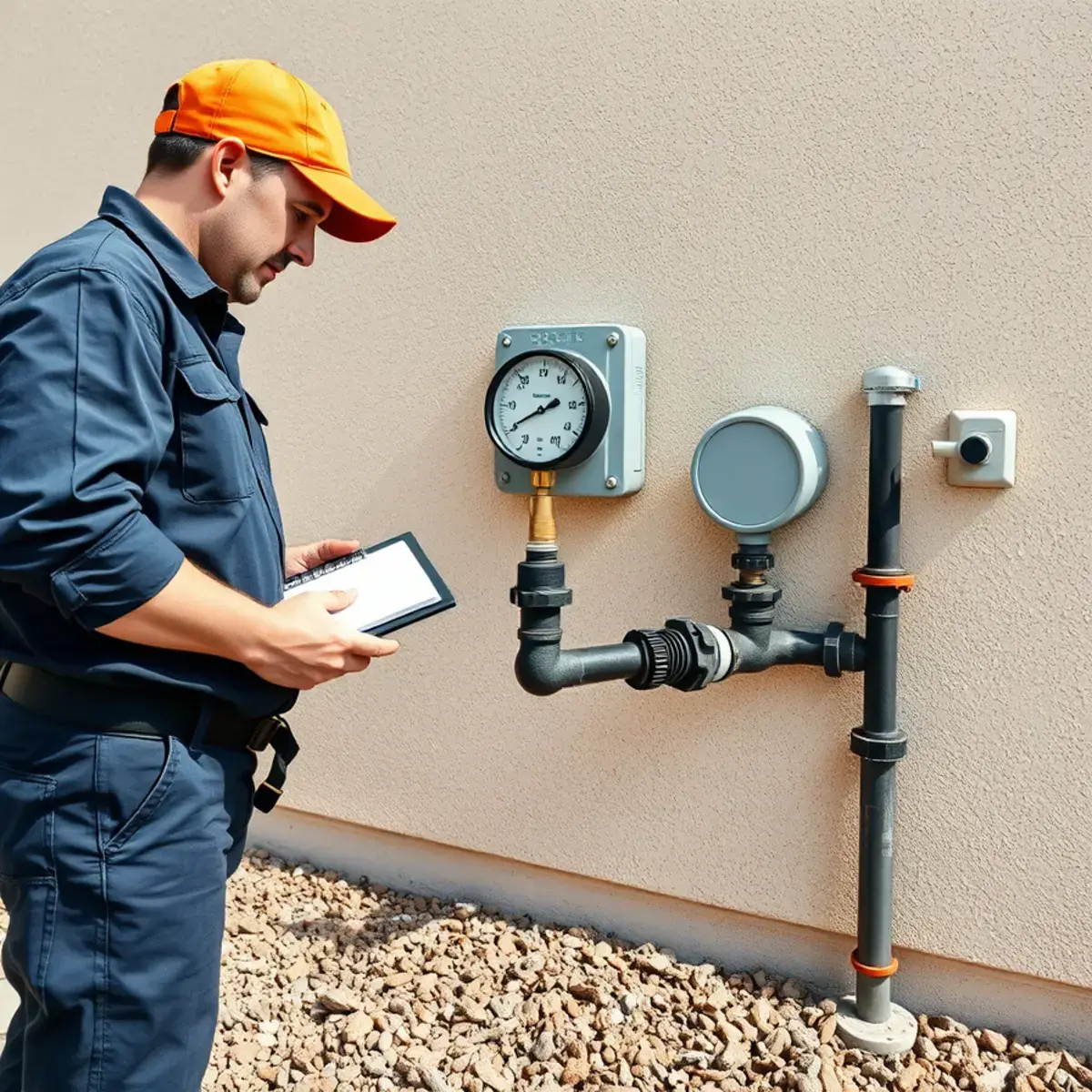
Emergency5 min read
Smell Gas? Emergency Steps Every Homeowner Should Know
Six actions, and four things you must not do. This is the one plumbing emergency where the wrong instinct is genuinely dangerous.
Read the guide24/7 emergency dispatch — a real person answers, day or night.
2769 E Combs Rd, San Tan Valley, AZ 85140
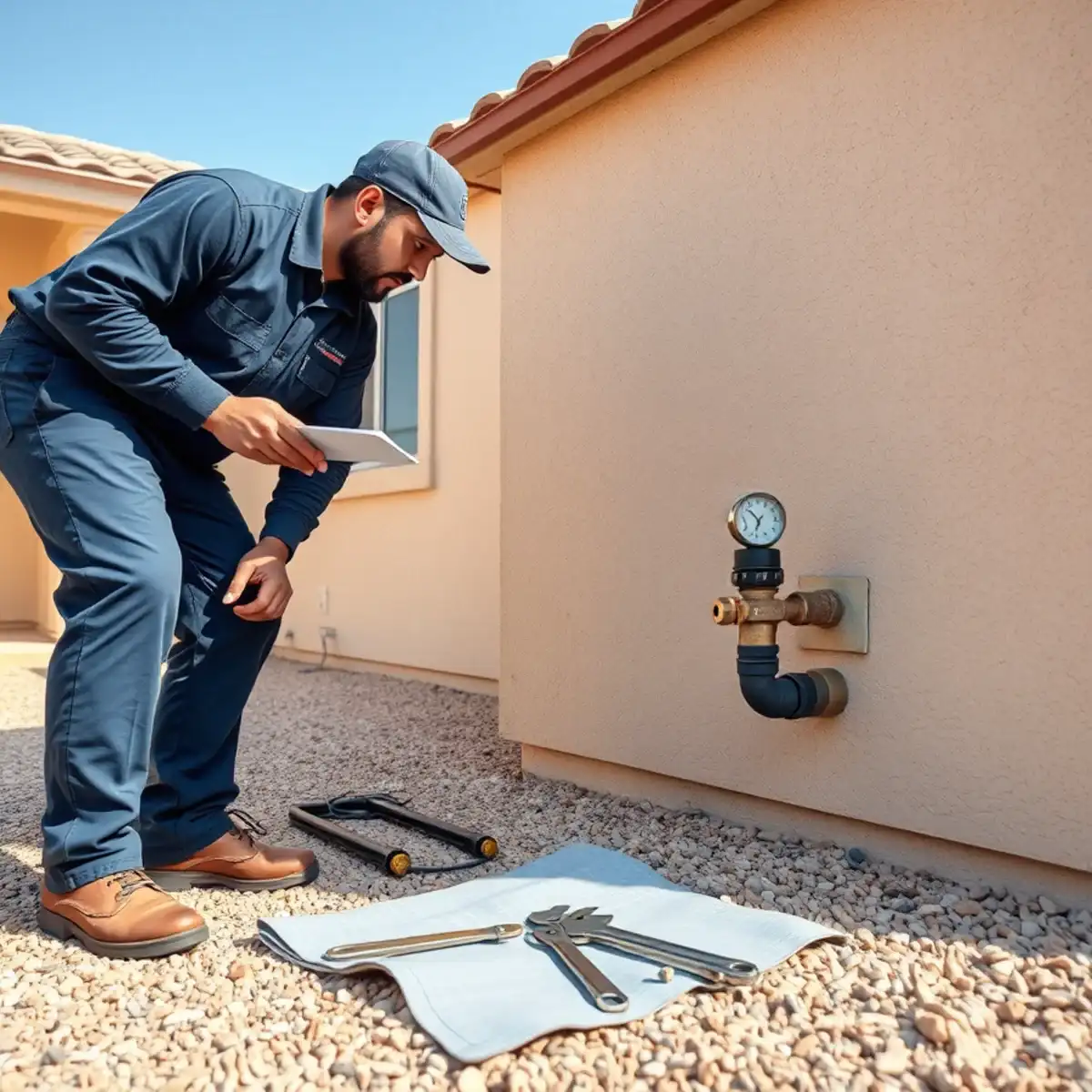
Plumbing service
4.9★
168 customer reviews
60–90 min
Typical San Tan Valley response
Licensed & insured
Bonded Arizona contractor
15–18 gpg
Hard-water specialists
Gas Line Services in San Tan Valley
Most of what we run in San Tan Valley is outdoor living: a line to a built-in grill or outdoor kitchen, a pool or spa heater, a fire pit, a patio heater. After that comes appliance work — converting an electric range to gas, adding a gas dryer connection, running a line for a standby generator.
And then there is the call nobody wants to make. If you smell gas, put the phone down, get everyone out, and call the gas utility and 911 from outside. Then call us to do the repair once the property has been made safe.
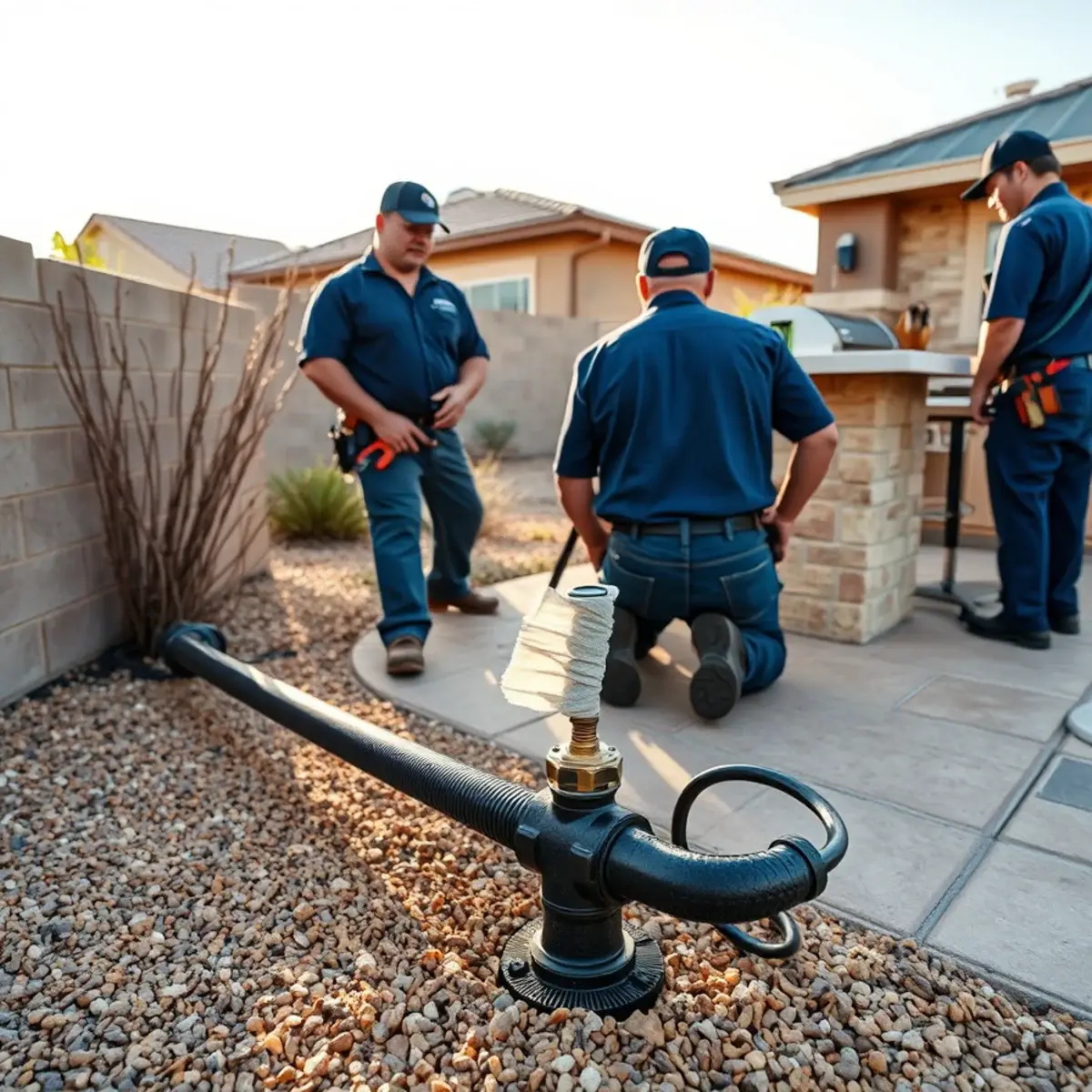
Signs you need us
The odorant added to natural gas. Leave the building immediately, do not operate switches, garage door openers or vehicles, and call the utility and 911 from outside.
An active leak of some volume. Same response — leave and call from outside.
An underground leak displacing oxygen in the soil. Not always accompanied by an indoor odor.
A supply pressure problem, a venting problem or an appliance problem. Yellow-tipped flames on a burner that should burn blue deserve immediate attention.
The most common reason for a call — a range conversion, a dryer, an outdoor kitchen, a pool heater, a generator.
Worth a pressure test. Small leaks do not always announce themselves by smell.
What you get
Gas piping is sized by total connected BTU load, pipe length and the number of fittings. Every appliance on the system shares the supply, so adding a big new load to an existing line can starve everything else on it.
The classic example is a tankless water heater conversion. A tank heater might draw 40,000 BTU. A whole-home tankless can draw 180,000 to 199,000. Connecting that to the existing half-inch line that fed the tank produces a unit that throws error codes, modulates down and never delivers its rated output — and homeowners blame the heater.
Same story with an outdoor kitchen. A built-in grill, a side burner and a fire pit together can rival the load of your furnace. We calculate the load and size the pipe, and if the meter itself is undersized for what you want, we tell you before you buy the appliance rather than after.
| Appliance | Typical BTU load | What it usually means |
|---|---|---|
| Gas range or cooktop | 45,000 – 65,000 | Often fine on an existing branch |
| Gas dryer | 20,000 – 25,000 | Modest load, straightforward run |
| Tank water heater | 35,000 – 50,000 | Baseline for most homes |
| Tankless water heater | 150,000 – 199,000 | Almost always needs a larger line, sometimes a larger meter |
| Built-in grill | 50,000 – 90,000 | Sizing depends on what else is on the run |
| Pool or spa heater | 200,000 – 400,000 | Frequently the largest single load on a residential system |
| Standby generator | Varies widely by kW | Sized with the generator's spec sheet, coordinated with the electrician |
For most residential work we use black iron pipe indoors and coated steel or approved polyethylene for underground runs, depending on the application and what the jurisdiction accepts. CSST — the flexible yellow-jacketed tubing — has legitimate uses and we install it where appropriate, always with correct bonding, which is the detail most often missed on someone else's installation.
Underground runs to a pool heater or a detached outdoor kitchen are trenched to required depth with proper backfill and tracer, and every buried line is pressure tested before it is covered. Any dig starts with a Blue Stake call, always, no exceptions.
Gas work requires a permit and an inspection in this jurisdiction. San Tan Valley's incorporation as a town in August 2025 has been changing how permitting is handled locally, and we track those requirements so you do not have to — more on that in San Tan Valley is officially a town: what changes for plumbing permits.
Unpermitted gas work is a serious problem when you sell a home, and it is a very serious problem if there is ever an incident and an insurer looks at how the line was installed. If someone offers to run you a grill line for cash with no permit, understand exactly what is being offered.
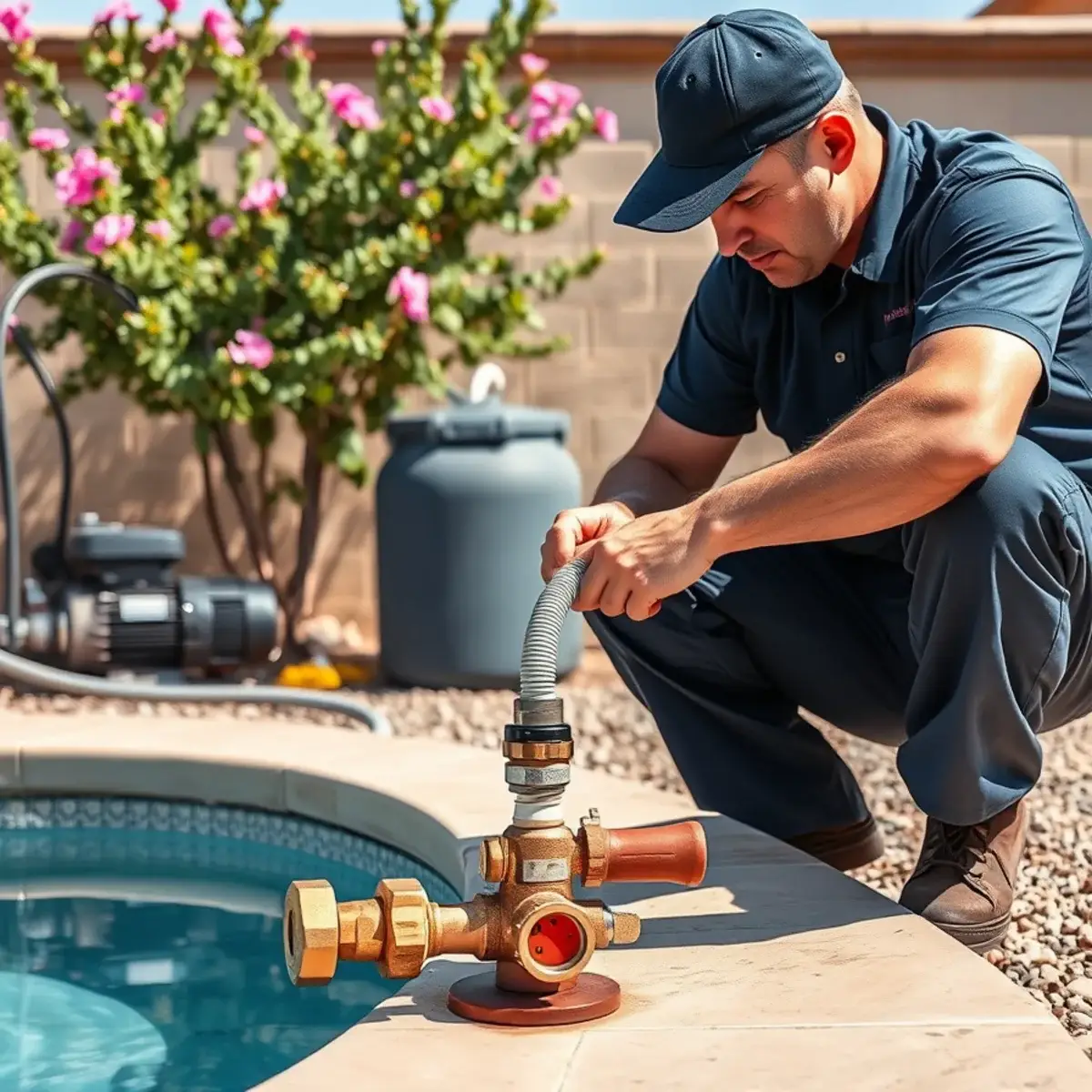
How we work
We total the connected BTU load, measure the run, count the fittings and size the pipe correctly. Then we plan a route that is serviceable and protected rather than merely convenient.
Permit pulled before work starts, utility locates called before any excavation. Both are non-negotiable on gas.
Service shut down, line installed with correct materials, sediment traps and appliance shutoffs at every connection point.
The system is pressurized and held for the required duration and observed, before anything is buried or closed up. Inspection scheduled and met.
Every gas appliance in the home relit and checked, flame quality verified, leak check at each connection, and a walkthrough of your shutoff locations.
What it costs
A ten-foot run inside a garage wall and a sixty-foot underground run to a pool heater across a paved patio are very different jobs.
Larger loads need larger pipe, and larger pipe costs more in material and labor. This is set by calculation, not preference.
Trenching through gravel landscaping is inexpensive. Cutting and patching concrete, pavers or a driveway is not.
If your existing meter cannot supply the new total load, the utility has to upgrade it. That is their process and their timeline, and we coordinate it — but it affects the schedule.
Set by the jurisdiction and passed through at cost. Always included in the quote, never a surprise.
Why Economy Plumbers
A whole-home tankless draws four times the fuel of the tank it replaces. A pool heater is often the largest single load on a residential system. Finding that out after purchase is expensive.
If someone offers to run you a grill line for cash with no permit, understand exactly what is being offered. Unpermitted gas work is a disclosure problem at sale and a very serious problem with an insurer after an incident.
San Tan Valley incorporated in August 2025 and permitting has been moving under the new town, while Encanterra and Ironwood Crossing sit with Queen Creek. We confirm it per address rather than assuming.
Missing bonding on flexible gas tubing is the single most common defect we inherit from other people's installations. We check it on every gas call, including ones we did not create.
If you smell gas, call the utility and 911 first. Once the property is made safe, the house-side repair is ours — and we answer 24/7.
Flat-rate pricing agreed before work starts, and we will tell you honestly if there is a cheaper answer.
Where this comes up most
Luxury Shea Homes golf community in the 85140 ZIP (annexed by Queen Creek before incorporation), with high-end fixtures, a Trilogy 55+ section and premium softener and RO demand.
Upscale homes with multi-head showers and gourmet kitchens where tankless conversions and whole-home RO are the aspirational upgrades.
Gated North and South sections with larger lots, where bigger irrigation systems mean backflow-assembly failures and hose-bib leaks in 106-degree summer heat.
Affluent agritainment hub around Schnepf Farms and the Queen Creek Olive Mill, with nonstop luxury new construction driving softener and tankless demand.
We serve San Tan Valley and the surrounding Pinal County area — see every area we cover.
Questions we get
Get everyone out immediately without touching light switches, the garage door opener or any electrical device, and without starting a vehicle in an attached garage. From well outside the building, call the gas utility's emergency line and 911. Do not go back in until they clear it. Once the property is made safe, call us for the house-side repair.
Yes — grills, side burners, fire pits, patio heaters and pool or spa heaters. Pool heaters in particular are a large BTU load, often the biggest on a residential system, so we calculate the total load and size the pipe before quoting rather than assuming your existing line can carry it.
Yes. Gas work is permitted and inspected work here, and we pull the permit and coordinate the inspection as part of the job. Unpermitted gas work creates disclosure problems when you sell and can create serious complications with an insurer if there is ever an incident.
Because it draws roughly four times the fuel of the tank heater it replaced — often 150,000 to 199,000 BTU versus 40,000. Connected to the original half-inch line, it will modulate down, throw error codes and never deliver its rated flow. Upsizing the line, and occasionally the meter, is part of a correct tankless conversion.
We isolate the section, pressurize it with air to the required test pressure, and hold it on a gauge for the required duration while it is observed. A line that loses pressure has a leak, and we locate it with electronic detection equipment before repairing. That test is also what the inspector wants to see.
Related
Tank and tankless repair, replacement and annual descaling — sized and installed for 15–18 gpg water and 110-degree garages.
Learn moreRough-in through finish for kitchens, baths, casitas, additions and new builds — permitted, inspected and scheduled around your other trades.
Learn moreA real person answers at 2 AM. Burst pipes, sewage backups, no water, flooding — dispatched from our Combs Rd shop, not a call center.
Learn moreSix actions, and four things you must not do. This is the one plumbing emergency where the wrong instinct is genuinely dangerous.
Read the guide
Arizona's 92nd incorporated town, as of August 2025. Here is what permitting looks like now, which jobs need one, and why unpermitted work costs more than the permit ever would.
Read the guideFree estimate
Call and a real person picks up — day, night, weekend or holiday. Most in-town calls see a truck in 60–90 minutes.