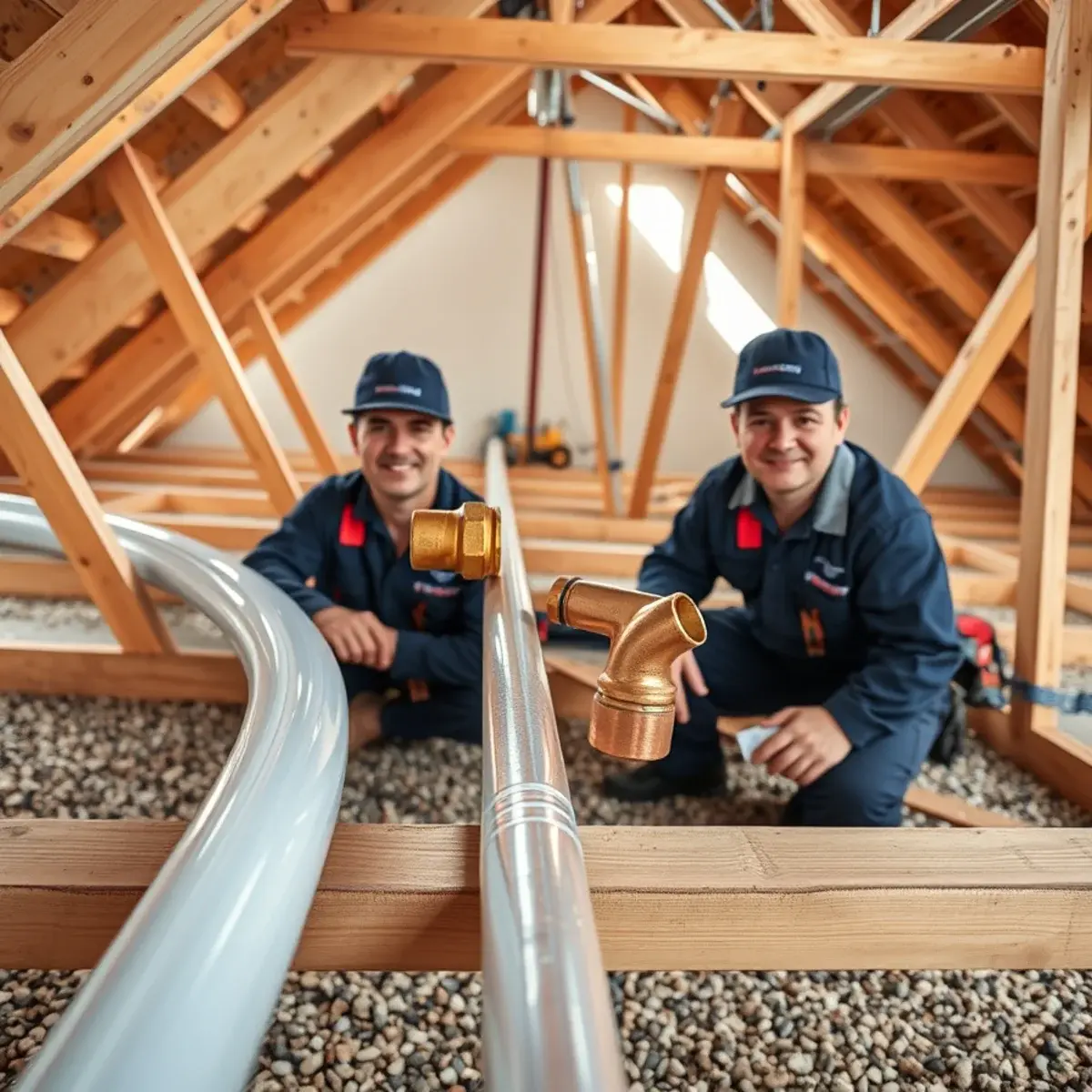
Why Your Drains Keep Clogging: Hard Water Scale Explained
The house that never had drain problems in 2012 clogs twice a year now. The pipe did not change size on paper — it changed size in practice.
The short answer
A drain that clogs repeatedly in the same line is a pipe condition, not a habits problem. At 15 to 18 grains per gallon, mineral precipitates onto the drain wall and builds a rough layer that both narrows the pipe and catches hair, grease and lint. Cabling bores through it; jetting removes it.
Here is the conversation we have constantly: a homeowner apologizing for their family's habits because a drain keeps clogging. They have stopped putting anything down the disposal, they run hot water after every dish, and it still backs up every few months.
It is almost never a habits problem. A drain that clogs repeatedly in the same line is telling you something about the condition of the pipe.
What hard water does inside a drain
Most people think of hard water as a supply-side issue — scale on faucets, spots on glasses, sediment in the water heater. It does the same thing on the drain side, and almost nobody talks about it.
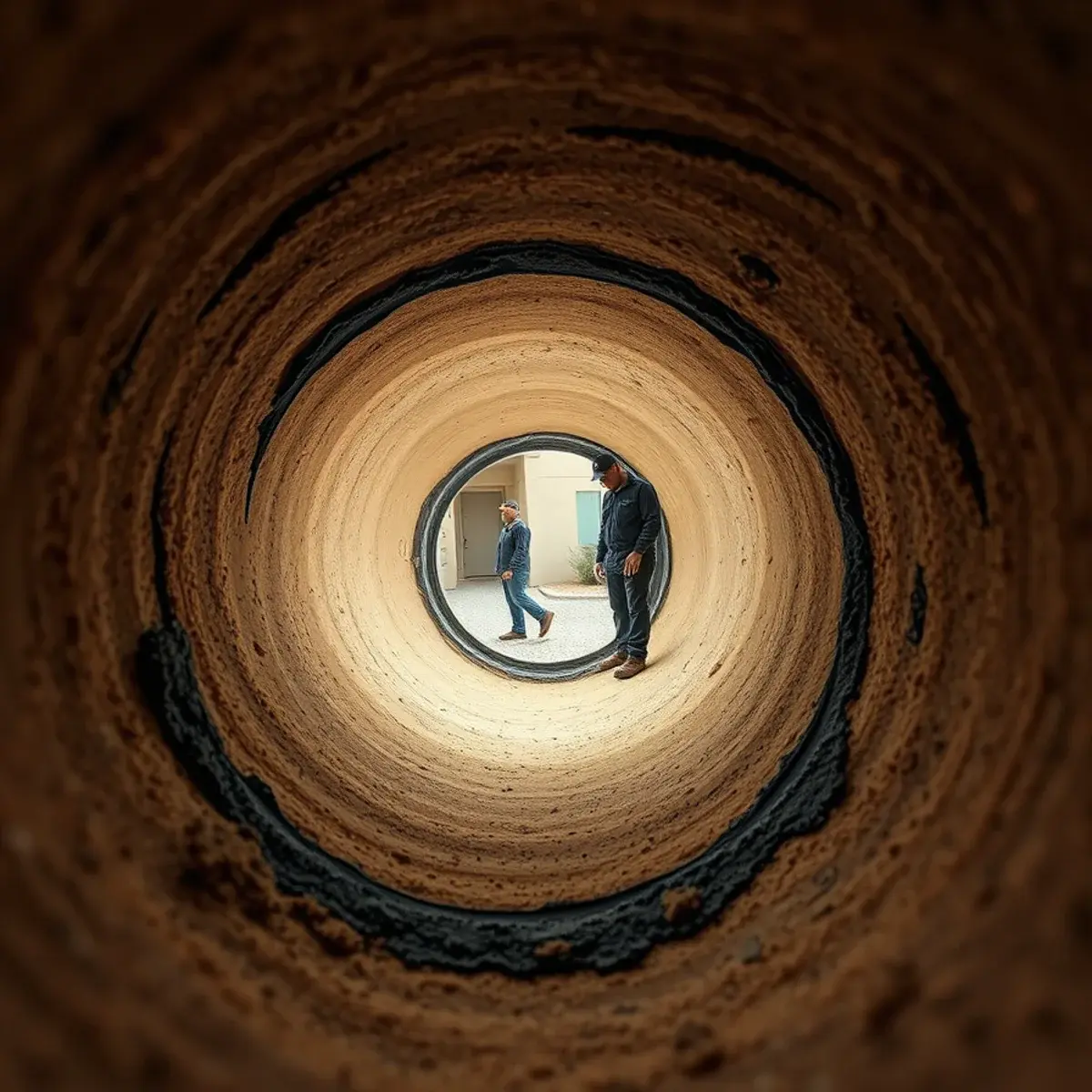
Every gallon that goes down your drain carries 15 to 18 grains per gallon of dissolved calcium and magnesium. As that water moves through a horizontal drain line, some of it evaporates and some of the mineral precipitates out onto the pipe wall. Over ten or fifteen years that builds a rough mineral layer.
Two things follow. The effective diameter shrinks — a two-inch line does not stay a two-inch line in practice. And the surface goes from smooth to rough, which means hair, grease, soap curd and lint have something to catch on where previously they would have washed through.
The three-way combination
In a San Tan Valley kitchen line, three things stack:
- 1Mineral scale on the pipe wall from hard water.
- 2Grease from cooking, which cools and solidifies fast — especially on a line running under a slab where the pipe stays cool.
- 3Food solids and detergent residue that catch on the rough surface.
The result is a composite deposit that is much harder than plain grease and far more stubborn. It is why cabling a kitchen line in this town buys you months rather than years — the cable punches a hole through the middle of the deposit and leaves the rest bonded to the wall.
Cabling versus jetting: what actually differs
| Cable / snake | Hydro jetting | |
|---|---|---|
| What it does | Bores a channel through the blockage | Scours the pipe wall back toward full diameter |
| Best for | A single fresh blockage in a line with no history | Repeat clogs, grease, scale, pre-camera cleaning |
| Typical result | Flow restored now | Flow restored and the cause removed |
| How long it lasts | Until the remaining deposit catches something again | Years, when the underlying pipe is sound |
| Cost | Lower | Meaningfully higher, for real reasons |
| When it is wrong | When the line is coated rather than blocked | Never on cracked, collapsed or deteriorated pipe |
When it is not scale
Recurring clogs have three other common causes, and a camera distinguishes them:
- Roots at a joint. Signature: backs up around the same time every year, because roots grow seasonally. Common in the mature-landscaping neighborhoods like Magma Ranch.
- A belly in the line. A low spot where the trench backfill settled, holding standing water that catches solids. Signature: recurs every few months regardless of season, and cabling never helps for long.
- An offset or cracked joint. Signature: the cable catches at the same distance every time.
None of those are cleaned away — they are repaired. See sewer line repair.
What to stop doing
- Chemical drain openers. They do not touch a mineral-bound deposit, they damage older pipe, they destroy trap seals, and they turn the line into a hazard for whoever opens it next.
- Running hot water to 'melt' grease. It moves the grease further down the line where it cools and solidifies somewhere less accessible.
- Assuming it is your fault. If you have modified your habits and it still recurs, the pipe is the variable.
What actually fixes it
- 1Jet the line to restore full diameter rather than cabling it again.
- 2Camera it afterward to confirm there is no structural defect underneath the symptom.
- 3Install a [water softener](/water-softener-installation/). It stops new scale forming on both the supply and drain sides. Homes here with softeners generate a fraction of the recurring drain calls.
- 4Fix any defect the camera found — roots, belly or offset — rather than managing it on a schedule indefinitely.
The households where this matters most are the busy ones. In high-occupancy neighborhoods like Copper Basin and The Parks, volume plus hardness compresses the timeline considerably — which also means the softener payback arrives faster. Details on our drain cleaning service.
Reading the recurrence pattern before touching the pipe
The timing tells us what it is before the camera goes in. Backs up around the same month every year? Roots — they grow seasonally. Every few months regardless of season? A belly holding standing water. Cable catches at the same distance each time? An offset or a crack. Sudden with no history? Something got flushed.
That matters because only one of those is actually a cleaning problem. Roots need the entry point sealed. A belly needs the section re-laid — you cannot clean a low spot away, and anyone cabling your belly every eight months without mentioning it is charging you rent on a defect.
The honest tradeoff on jetting: it costs meaningfully more and it is over-buying for a single fresh clog. It earns its price when the line has failed more than once in a year, because at that point you are paying repeatedly for a symptom. And never jet a pipe the camera shows as cracked — that turns a repair into an excavation.
The bottom line
If you have modified your habits and the line still clogs, stop apologising for your family and get the pipe looked at. Jet it to restore full diameter, camera it to rule out a structural defect underneath, and install a softener so it stops accumulating again. In high-occupancy neighbourhoods like Copper Basin that combination is the difference between twice a year and not at all.
Frequently asked questions
Because cabling bores a channel through the blockage and leaves the coated pipe wall behind. In hard water that wall is mineral scale bonded with grease, and it re-catches debris quickly. Hydro jetting scours the pipe back toward full diameter, which is what actually stops the cycle.
It stops new scale from forming, which prevents the problem getting worse and dramatically reduces recurrence over time. It does not remove deposits already bonded to the pipe wall — that takes jetting. The two together are the durable fix.
A camera settles it. Seasonal recurrence points to roots. Recurrence every few months regardless of season points to a belly holding standing water. A cable that catches at the same distance every time points to an offset or crack. Scale looks like uniform coating along the pipe wall.