Water Softener Maintenance: Salt, Settings & Service Schedule
A neglected softener quietly stops softening, and most owners do not notice for months. Here is the maintenance routine, the salt question settled, and the failure everyone misses.
The short answer
Check the salt level monthly and probe for a bridge with a broom handle, verify the system is actually working with a test strip every few months, and once a year clean out the brine tank, check the settings against your real hardness, and confirm the bypass valve still operates. Evaporated salt pellets are the best general choice.
A water softener is the most valuable appliance in a San Tan Valley home and the one people think about least. It sits in the garage doing its job until it quietly stops — and because the failure is gradual, most owners do not notice for months. By then the scale has started again.
Which salt to use
| Type | Verdict |
|---|---|
| Solar salt (crystals) | Good general choice. Inexpensive and widely available. |
| Evaporated salt (pellets) | Highest purity, least residue in the brine tank. Our default recommendation. |
| Rock salt | Cheapest, and it leaves the most insoluble residue in the tank. We do not recommend it here. |
| Potassium chloride | For sodium-restricted households. Works well; costs more and you use somewhat more of it. |
| Salt with rust remover additive | Useful on well water with iron. Unnecessary on municipal supply. |
Whichever you choose, do not mix types in the same tank. Different salts dissolve at different rates and mixing them makes bridging more likely.
The failure everyone misses: salt bridging
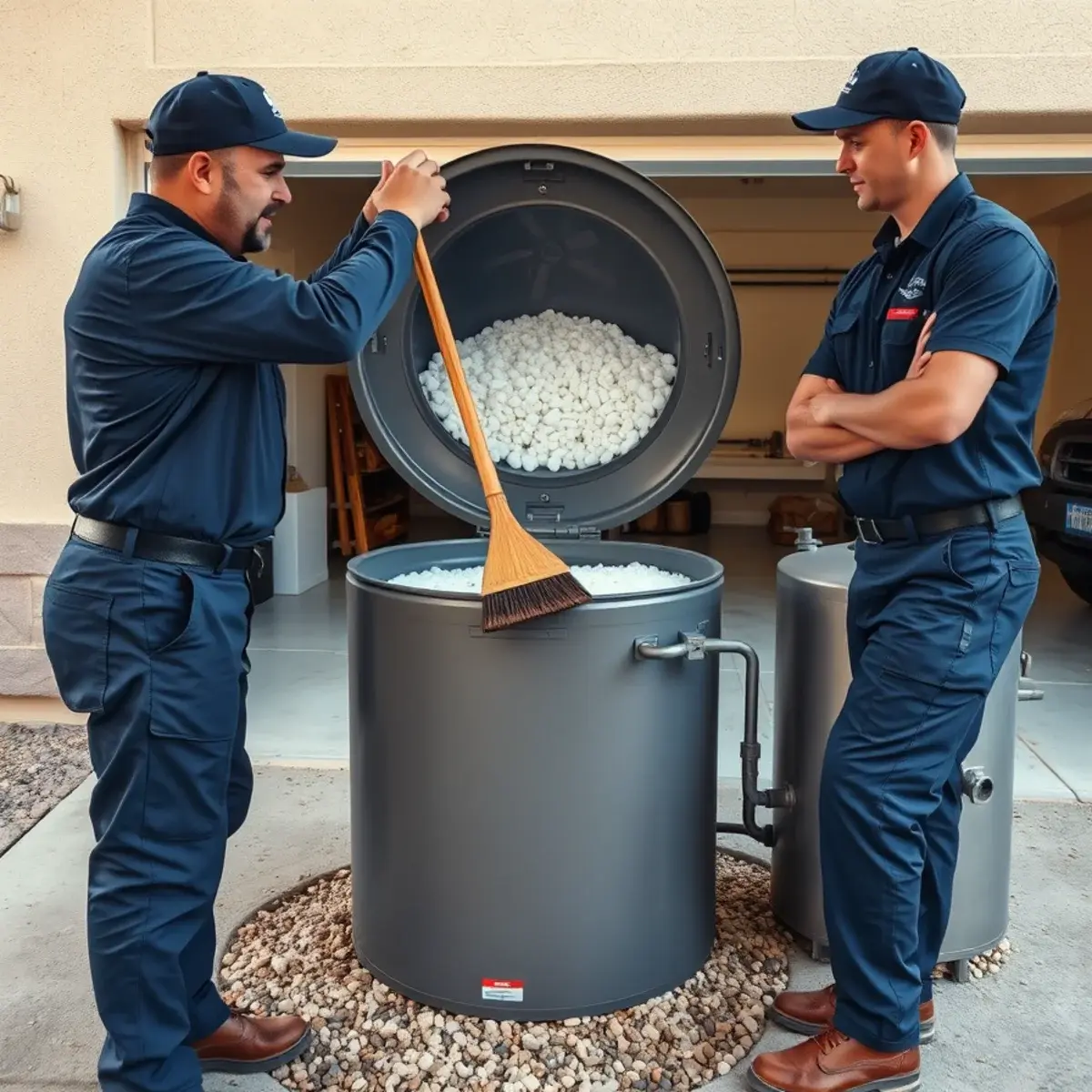
A salt bridge is a hard crust that forms across the brine tank, leaving an air gap beneath it. From above, the tank looks full of salt. Underneath, the water has no salt to dissolve — so the system regenerates with plain water and softens nothing.
The symptoms are exactly what a homeowner would attribute to something else: spots return on the glassware, soap stops lathering, scale reappears on fixtures. Meanwhile the tank looks fine.
The routine
Monthly
- Check the salt level. Keep the tank between one-third and two-thirds full — overfilling encourages bridging.
- Push a broom handle through to confirm there is no bridge.
- Look for water pooling around the base, which points to a drain line or seal problem.
Every few months
- Confirm it is actually working. A hardware store test strip on a kitchen tap takes a minute and settles it definitively.
- Check the drain line — it should be secured with an air gap, not pushed into a standpipe where waste could siphon back.
- Listen for a regeneration cycle. If you have never heard one, that is worth investigating.
Annually
- Let the salt run low and clean out the brine tank — insoluble residue accumulates in the bottom, particularly with rock salt.
- Clean or replace the brine tank's salt platform and check the float assembly.
- Verify settings against your actual hardness and household size. Occupancy changes and settings do not update themselves.
- Check the bypass valve operates freely — you will want it to work when something needs servicing.
- Sanitize the system if it has been idle for an extended period.
Settings that matter
Two things determine whether your system performs: the hardness setting and the regeneration mode.
Hardness should be programmed to your actual water — around 15 to 18 grains per gallon on EPCOR's San Tan district, and typically higher on a private well. If it is set to a default from the factory, it is almost certainly wrong.
Regeneration should be demand-initiated where the unit supports it — meaning it regenerates based on water actually used rather than on a clock. Timer-based regeneration either wastes salt and water on low-use weeks or lets hard water through on high-use ones.
Signs your softener has stopped working
- Spots returning on glassware and shower glass
- Soap not lathering the way it did
- Scale reappearing on faucets and showerheads
- Salt level not dropping over weeks — meaning it is not regenerating at all
- Salt disappearing far faster than usual — meaning it is regenerating too often
- Water in the salt tank above the salt level
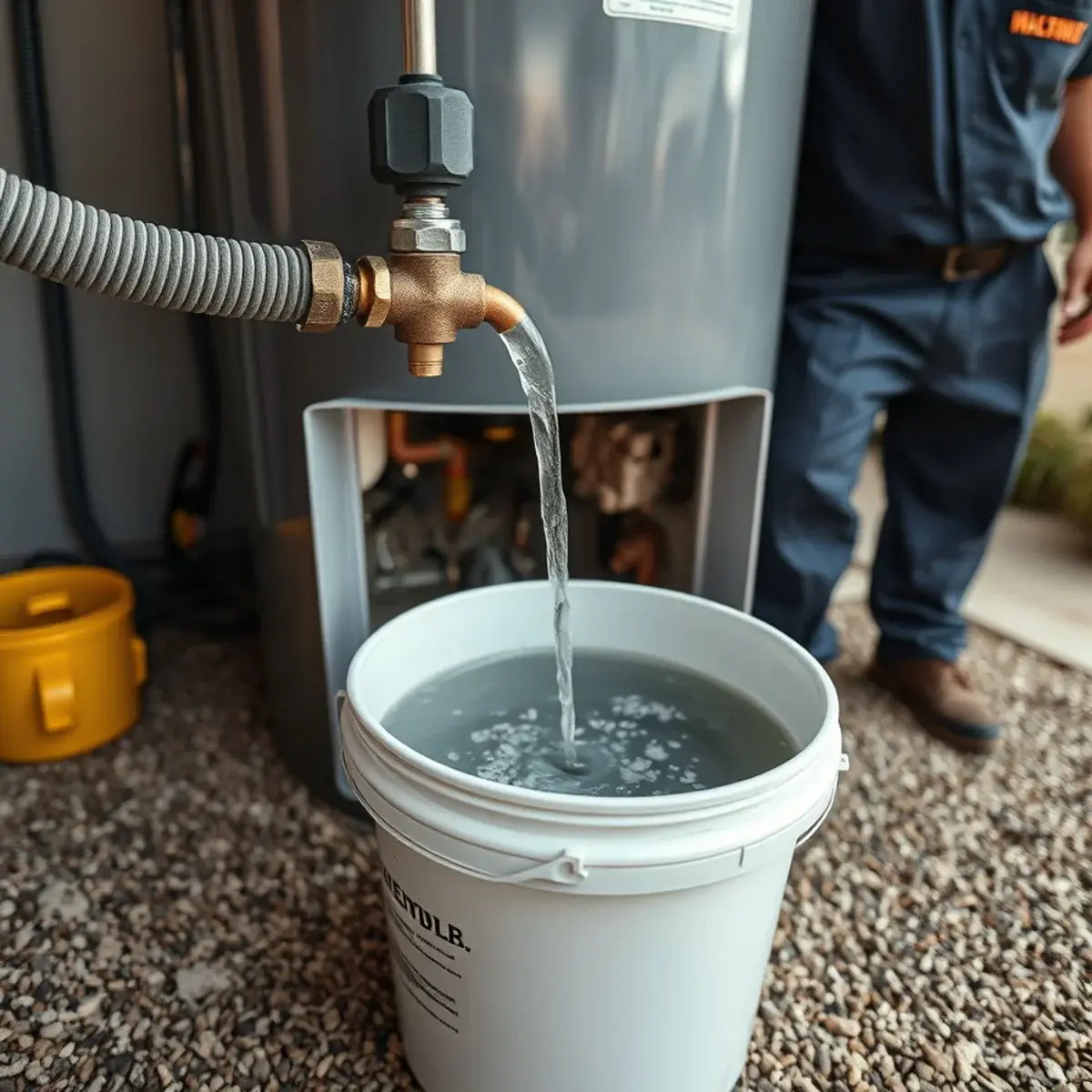
A test strip settles it in a minute. If the water tests hard, something is wrong and it is worth a service call before the scale gets a head start.
What we service
Control head valves and seals, brine tank cleaning, resin bed assessment, injector and venturi cleaning, drain line correction, settings review against your actual hardness, and full system replacement when a unit has reached the end of its life.
Resin has a long service life; it is usually the control head that fails first. Details on our water softener page — and in 55+ communities like Solera at Johnson Ranch we handle scheduled salt delivery and service so it is not something residents have to lift or track.
The failure everyone misses
A salt bridge — a hard crust across the brine tank with an air gap beneath it. From above the tank looks full of salt. Underneath, the water has no salt to dissolve, so the system regenerates with plain water and softens nothing at all.
The symptoms are exactly what a homeowner attributes to something else: spots returning on glassware, soap not lathering, scale reappearing on fixtures. Meanwhile the tank looks fine and the salt level has not dropped in weeks — which is itself the tell. Push a broom handle straight down; if it hits a crust with space below, you have found it.
The setting that quietly matters: hardness programmed into the control head. If it is still on a factory default it is almost certainly wrong for 15 to 18 grain water, and the system either wastes salt or lets hard water through at peak use. Occupancy changes too, and settings do not update themselves.
The bottom line
The definitive test takes a minute: a hardware store hardness strip on a kitchen tap. Softened water reads near zero. If it reads hard, something is wrong — and catching that early prevents scale getting a head start on a water heater you have already paid to protect. We service control heads, brine tanks, resin beds and settings, and in 55+ communities like Solera we handle scheduled salt delivery too.
Frequently asked questions
Evaporated salt pellets are the best general choice — highest purity and least residue in the brine tank. Solar salt crystals are a good economical alternative. Avoid rock salt, which leaves the most insoluble residue. Use potassium chloride if your household is sodium-restricted, and never mix types in the same tank.
Most likely a salt bridge — a hard crust across the tank with an air gap beneath it, so the brine water has no salt to dissolve. Push a broom handle down through the salt; if it hits a crust with space below, break it up carefully and let the level run low before refilling.
Test it. A hardware store hardness strip on a kitchen tap takes a minute and gives you a definitive answer. Softened water should read near zero. If it reads hard, something is wrong — and catching that early prevents scale getting a head start on your water heater and fixtures.