Annual Water Heater Flush Checklist for Hard-Water Homes
Under an hour, once a year, and it routinely adds years to a tank in this water. Here is the full sequence — plus the two checks worth doing while the tank is drained.
The short answer
Flush annually, and twice a year for a large household on unsoftened water. Shut off the heat source, close the cold inlet, open a hot faucet to break the vacuum, drain through a hose, then surge the cold inlet in short bursts to stir settled sediment out. Refill completely before restoring power or gas.
This is the highest-return maintenance task in a San Tan Valley home. At 15 to 18 grains per gallon, sediment accumulates continuously on your tank floor — insulating the burner from the water, cutting effective capacity, and superheating the tank bottom until the glass lining fails.
A softened, annually flushed tank routinely outlives an unsoftened, neglected one by four or five years. Here is how to do it.
Before you start
- A garden hose long enough to reach a driveway or a drain
- A bucket, a flathead screwdriver, and channel-lock pliers
- About an hour, most of which is waiting
- Know where your main shutoff is — see how to shut off your main water valve
The sequence
- 1Shut off the heat source. Gas: turn the control to PILOT or OFF. Electric: switch the breaker off. Do not skip this — heating an empty electric tank destroys the elements in seconds.
- 2Close the cold water inlet valve at the top of the tank.
- 3Open a hot water faucet somewhere in the house and leave it open. This breaks the vacuum so the tank can drain.
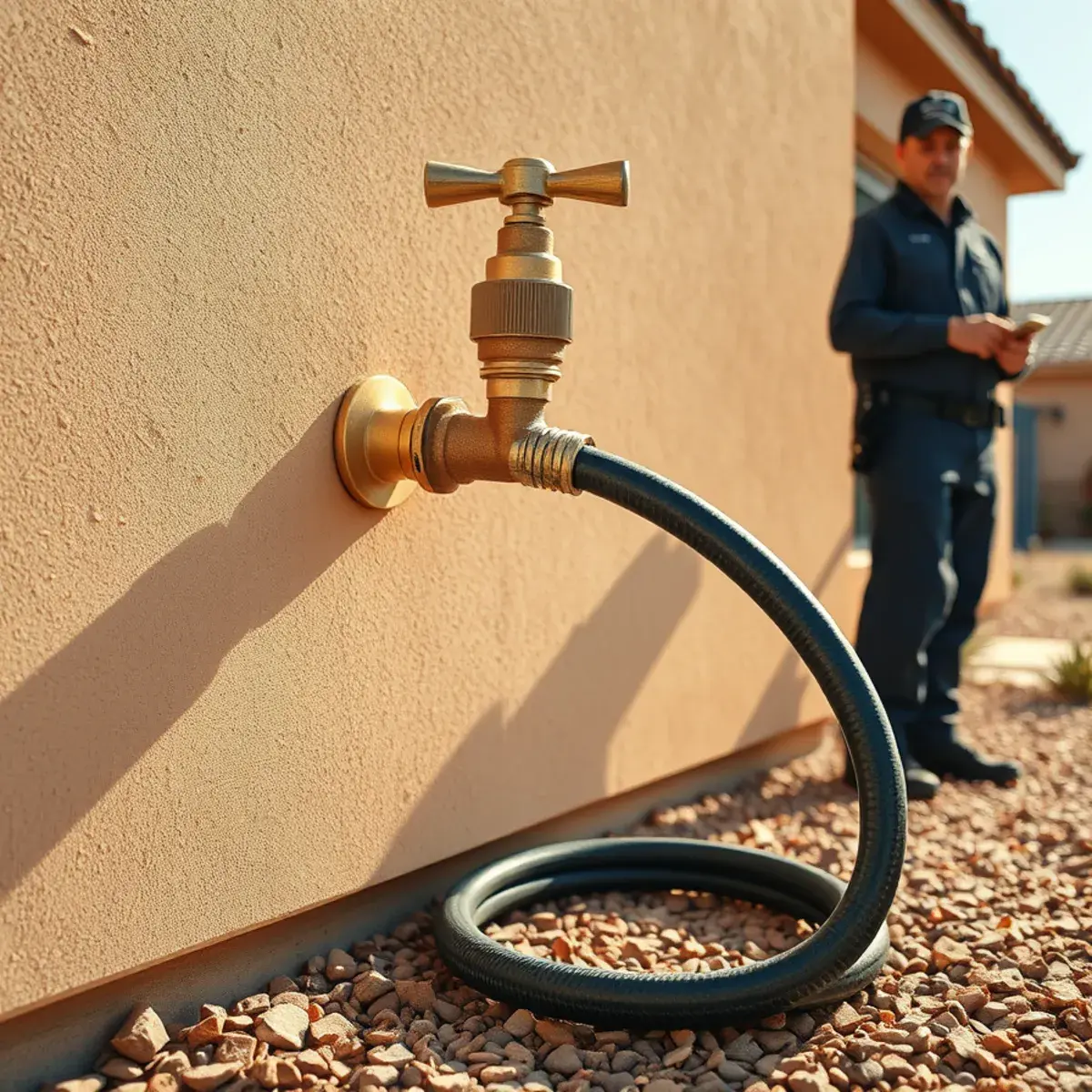
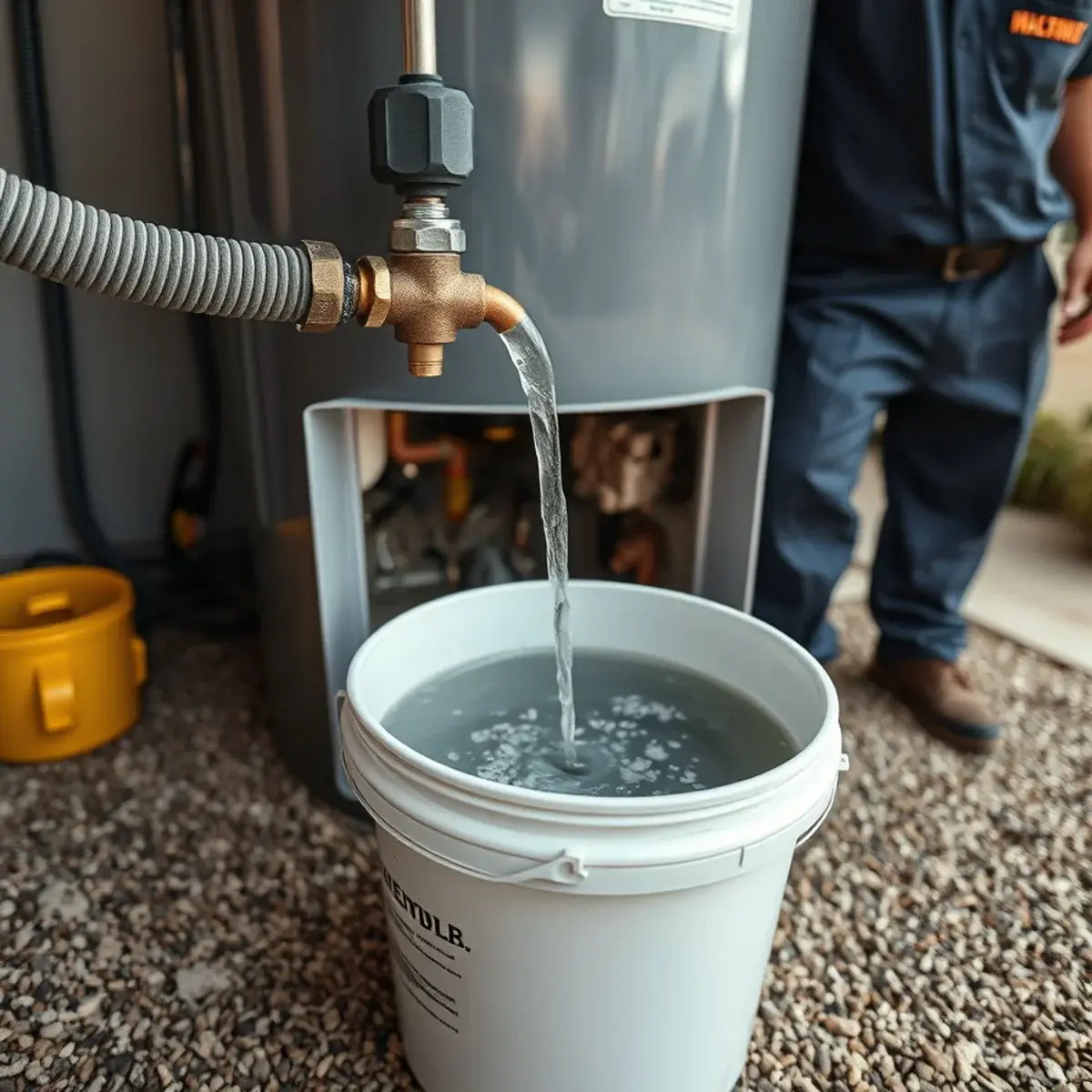
- 4Connect the hose to the drain valve at the bottom of the tank and route it to a driveway or drain. The water will be hot and it will carry sediment — do not run it onto a lawn you care about.
- 5Open the drain valve and let the tank empty. This takes twenty to thirty minutes on a full tank.
- 6Once it is empty, open the cold inlet briefly — several seconds at a time, with the drain still open. That surge stirs up settled sediment and pushes it out. Repeat until the water running from the hose is clear.
- 7Close the drain valve, remove the hose, and open the cold inlet fully.
- 8Let the tank fill completely. You will know it is full when the open hot faucet inside runs a steady stream with no air spitting.
- 9Close the faucet, then restore the heat source. Gas: relight per the label instructions. Electric: breaker back on only after the tank is confirmed full.
- 10Check for leaks at the drain valve and connections, and check again an hour later.
What the water should look like
First flush in a tank that has never been done: cloudy, gritty, sometimes with visible chunks of scale. That is what has been sitting on your burner. Subsequent annual flushes should run much cleaner much faster — which is the point.
If nothing comes out at all when you open the drain valve, the valve itself is likely blocked by sediment. That is common on neglected tanks and it usually needs a plumber, because clearing it without making a mess takes some care.
Two things to check while you are there
The anode rod
A sacrificial metal rod inside the tank that corrodes so the steel tank does not. Hard water consumes it faster. Check it around year five: if it is heavily eroded or down to the core wire, replace it. It is an inexpensive part that can add years to the tank, and almost nobody in this town has ever had theirs looked at.
Access can be difficult on garage installs with low ceiling clearance, which is one reason it gets skipped. Worth asking about at your next service visit.
The expansion tank
If your system is closed — which it is if you have a pressure-reducing valve or a check valve — heated water needs somewhere to expand. Without a properly charged expansion tank, pressure spikes every heating cycle and the T&P relief valve weeps.
Tap the tank: the top half should sound hollow and the bottom solid. If it sounds solid throughout, it has lost its charge and needs recharging or replacing. Homeowners routinely mistake this for a failing water heater.
How often, in this water
| Situation | Flush frequency |
|---|---|
| Unsoftened water, large household | Twice a year |
| Unsoftened water, small household | Annually |
| Softened water | Annually — still worth doing |
| Tank has never been flushed and is 8+ years old | Have it inspected before flushing; disturbing heavy sediment can reveal an existing weakness |
| Tankless unit | Descale annually per the manufacturer, not flush |
When to call instead
- The drain valve will not open or nothing comes out
- The tank is more than eight years old and has never been flushed
- You see rust in the drained water or in your hot water at the tap
- The relief valve is discharging
- You are not comfortable working around a gas appliance — which is a completely reasonable position
We do flushes as a standalone service and as part of our annual inspection, which also covers pressure, the PRV, angle stops and a dye test on every toilet. Details on our water heater service page — and in neighborhoods like Wayne Ranch where garage tanks bake all summer, this is the maintenance that matters most.
The one situation where we say do not flush it yourself
A tank that is eight or more years old and has never been flushed. Disturbing a heavy sediment bed occasionally exposes corrosion that the sediment was effectively sitting on, and the tank starts weeping afterwards. That is not the flush causing the failure — it is the flush revealing it — but it is a bad afternoon to discover on your own.
The check almost nobody does is the anode rod. It is a sacrificial metal rod that corrodes so the steel tank does not, and hard water consumes it faster. Checking it around year five and replacing it if it is spent is inexpensive and can add years — and access on a low-clearance garage install is exactly why it gets skipped.
While you are down there: tap the expansion tank. The top half should sound hollow and the bottom solid. If it sounds solid throughout it has lost its charge, and that is the real reason your relief valve has been weeping — a problem homeowners routinely get told is a dying water heater.
The bottom line
Do it in May. You catch problems before the summer load, before the garage hits 115 degrees, and before the August emergency queue. If the drain valve will not open, if the tank is past eight years and never been flushed, or if you would simply rather not work around a gas appliance — that is a completely reasonable position, and it is a scheduled visit rather than an emergency. See water heater repair and installation.
Frequently asked questions
Annually at minimum, and twice a year for a large household on unsoftened water. At 15 to 18 grains per gallon sediment accumulates fast, and it is the direct cause of the early tank failures common here. Softened water reduces the rate but annual flushing is still worth doing.
It can reveal an existing weakness. On a tank that is eight or more years old and has never been flushed, disturbing heavy sediment occasionally exposes corrosion that the sediment was effectively sitting on. That is worth having inspected first rather than discovering it on your garage floor.
It is a sacrificial metal rod inside the tank that corrodes so the steel tank does not. Hard water consumes it faster than average. Check it around year five and replace it if it is heavily eroded — it is an inexpensive part that can add years to the tank, and it is almost universally neglected here.