How Much Does Slab Leak Repair Cost in Arizona?
Three repair paths with very different price tags, and the counterintuitive result: on most San Tan Valley homes, the option that never touches concrete is often the cheapest one.
The short answer
There is no single price because 'slab leak repair' describes three different jobs: a spot repair through the floor, an overhead reroute that abandons the failed line, or a whole-home repipe. Which one you need is a diagnostic question, and on most San Tan Valley homes the reroute — the option that never touches concrete — works out cheapest once flooring restoration is counted.
Slab leak pricing has enormous spread, and the reason is that 'slab leak repair' describes three genuinely different jobs. Which one you need is a diagnostic question, and the answer changes the number by a factor of several.
Detection is its own scope
Locating comes first and is priced separately, because sometimes the honest outcome is that your slab is fine and an irrigation valve is leaking. Roughly one call in six ends that way, and we would much rather find that than sell you a slab job.
Detection involves meter isolation, hot-versus-cold isolation at the water heater, pressure testing, acoustic listening, thermal imaging and electronic line tracing. If we do the repair, the detection fee is credited toward it. See slab leak detection and repair.
Option 1: spot repair — open the slab
Cut a small opening in the floor at the leak, repair the section, patch the concrete. Lowest material cost, and the right answer when the pipe is otherwise sound and the location is accessible and low-consequence — a garage or laundry room, for example.
What drives the price up: flooring. Cutting through tile in a hallway means matching tile you may no longer be able to buy, and restoration frequently costs more than the plumbing. Cutting a bare garage slab means a broom finish and you are done.
And in San Tan Valley there is a mandatory addition: post-tension cable scanning. Nearly every home here sits on a post-tension slab containing steel tendons under enormous tension. Scanning before any cut is not optional, and it is a real line item.
Option 2: overhead reroute — skip the concrete entirely
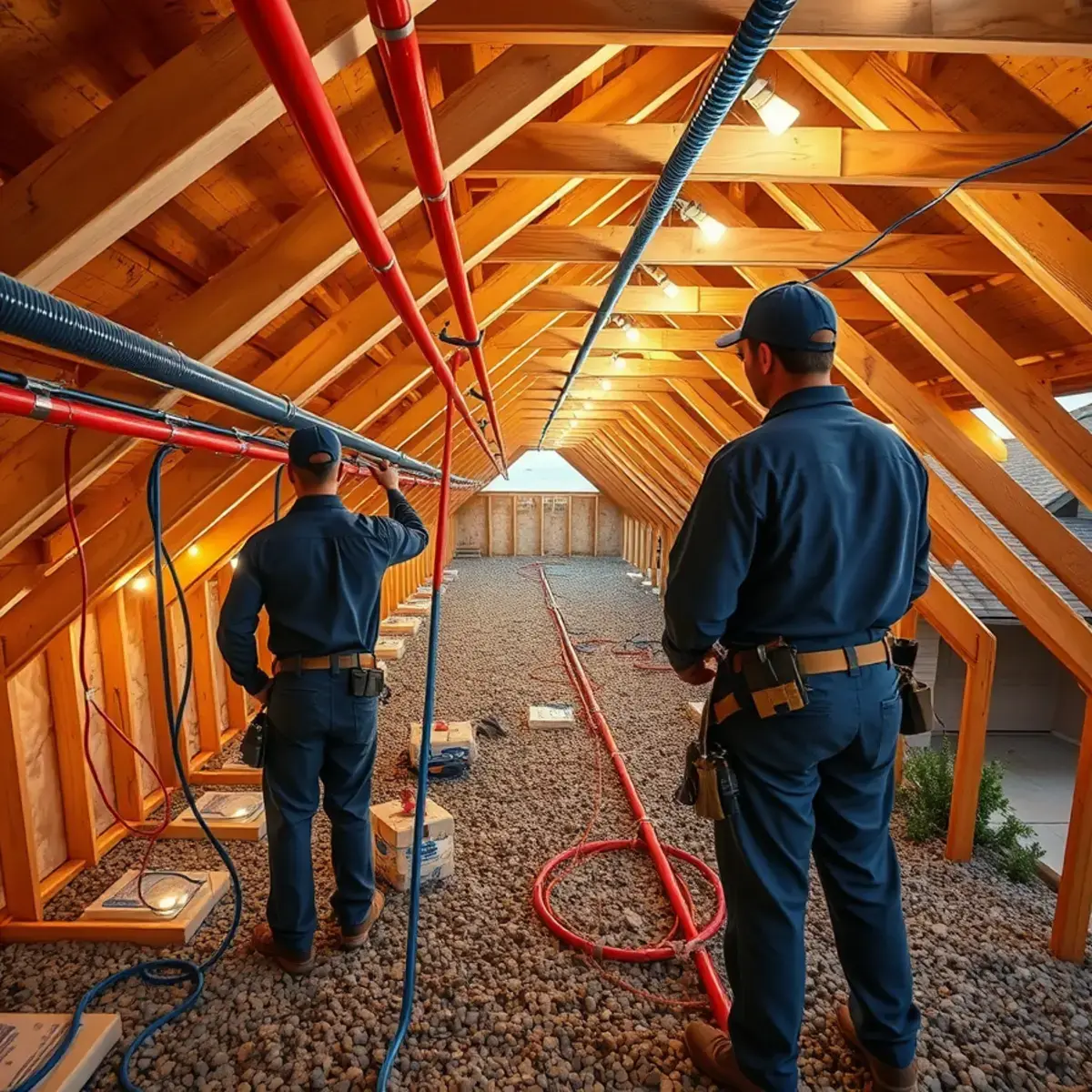
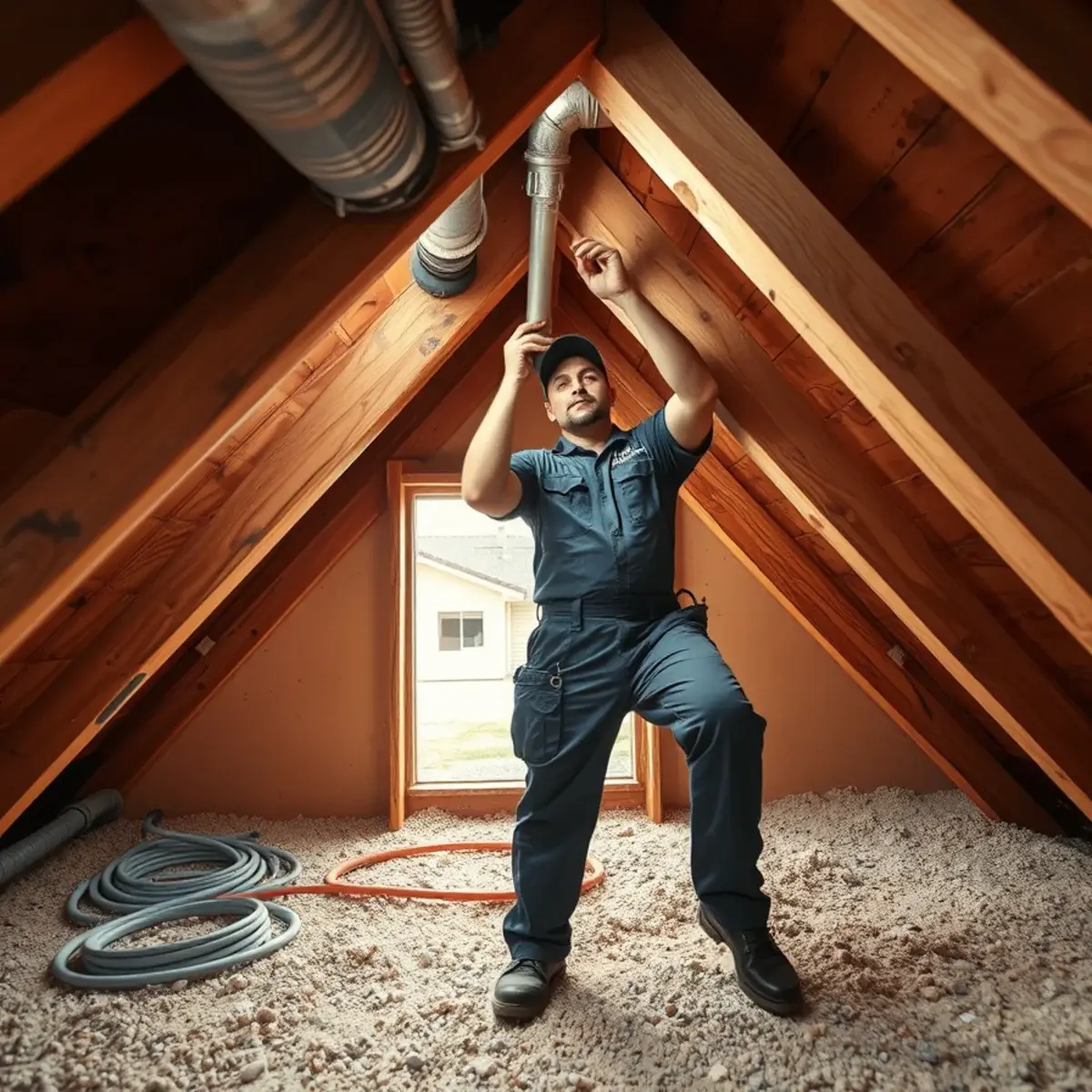
Abandon the leaking under-slab run and route a new PEX line through the attic and down the walls to the fixture. This is our most common recommendation for a single-line failure in San Tan Valley, and here is the counterintuitive part: on many homes it costs less than a spot repair once you count flooring restoration.
It also eliminates the post-tension risk entirely and leaves the new line accessible forever. The trade-off is some drywall patching where the line drops into walls, which we patch and texture as part of the job.
Option 3: whole-home repipe
The largest number, and the only one that ends the problem permanently. This is the right answer when a house has produced two or three pinholes — at that point the system is telling you its service life is over, and each additional spot repair is money spent postponing the same conclusion.
The cost driver is fixture count, not square footage. Details in the whole-home repipe cost guide and on our repiping service page.
The variables that actually move the price
| Variable | Effect |
|---|---|
| Hot side vs cold side | Hot lines fail far more often. Isolating at the heater halves the search area for free. |
| Flooring over the leak | Garage slab is cheap to restore. Discontinued tile in a hallway is the single largest restoration variable. |
| Depth and location under the slab | A line near an exterior wall is easier to reroute than one under the center of a great room. |
| Post-tension scanning | Required on any slab penetration here. Non-negotiable and priced in. |
| Number of prior leaks | First is a repair. Third is a repipe conversation. |
| Emergency vs scheduled | An active flood is emergency work. Once stabilized, the permanent repair is usually schedulable at standard rates. |
The insurance question
Most Arizona homeowners policies cover the resulting water damage — flooring, drywall, contents — while excluding the pipe repair itself, and coverage for access varies enormously by carrier. Read your actual policy language. We cover the details in does homeowners insurance cover slab leaks in Arizona.
What helps every claim: a written detection report identifying location and cause, date-stamped photos before anything is moved, and twelve months of water bills showing the consumption change. We provide the report on every slab leak job whether or not you file.
What we would do in your house
Honestly? For a first leak on a single line in a home you plan to stay in, an overhead reroute. It avoids the slab, it costs less than the flooring-restoration version of a spot repair on most homes, and the new run is accessible for the rest of the building's life.
For a home that has already produced multiple pinholes — common in the boom-era communities like Rancho Bella Vista — a repipe. Not because it is the bigger sale, but because the arithmetic on repeat repairs stops working after the second one.
Why the cheap-sounding option is often the expensive one
A spot repair looks cheapest on the plumbing line and frequently is not, because the flooring is the real variable. Cutting a garage slab means a broom finish and you are done. Cutting through hallway tile means matching tile that may have been discontinued eight years ago, and that restoration can exceed the entire plumbing cost.
There is a second cost that only exists here: post-tension cable scanning. Nearly every San Tan Valley home has a slab with tensioned steel in it, and any penetration needs a GPR or cable-locator scan first. It is a real line item and it is not the place to economise — it is what keeps a plumbing repair from becoming a structural one.
The honest read on repipe versus repeat repairs: one pinhole is a repair. By the third, every additional spot repair is money spent postponing the same conclusion, and the arithmetic stops working over any reasonable time horizon. We will show you both sets of numbers rather than quietly selling the third patch.
The bottom line
Detection is priced separately for a reason — roughly one call in six turns out to be irrigation, a toilet flapper or a failing pressure regulator, and finding that is a good outcome. If we do the repair, the detection fee comes off it. Before you accept any quote, ask how they plan to avoid the post-tension cables; the answer tells you most of what you need to know. See slab leak detection and repair.
Frequently asked questions
Because it describes three different jobs. A spot repair in a garage, an overhead reroute of one line, and a whole-home repipe differ by a factor of several. Which one you need is determined by where the leak is, what flooring is over it, and how many leaks the house has already produced.
On many San Tan Valley homes, yes — once you count flooring restoration. Cutting through tile you may not be able to match, patching concrete and refinishing frequently costs more than running a new PEX line through the attic. It also avoids the post-tension cables entirely.
You pay the detection fee, which covers real diagnostic work. Roughly one call in six turns out to be an irrigation leak, a toilet flapper or a failing pressure regulator — all much cheaper problems, and finding that is a good outcome. If we do perform the repair, the detection fee is credited toward it.