Haboobs & Your Plumbing: What Dust Storms Actually Do
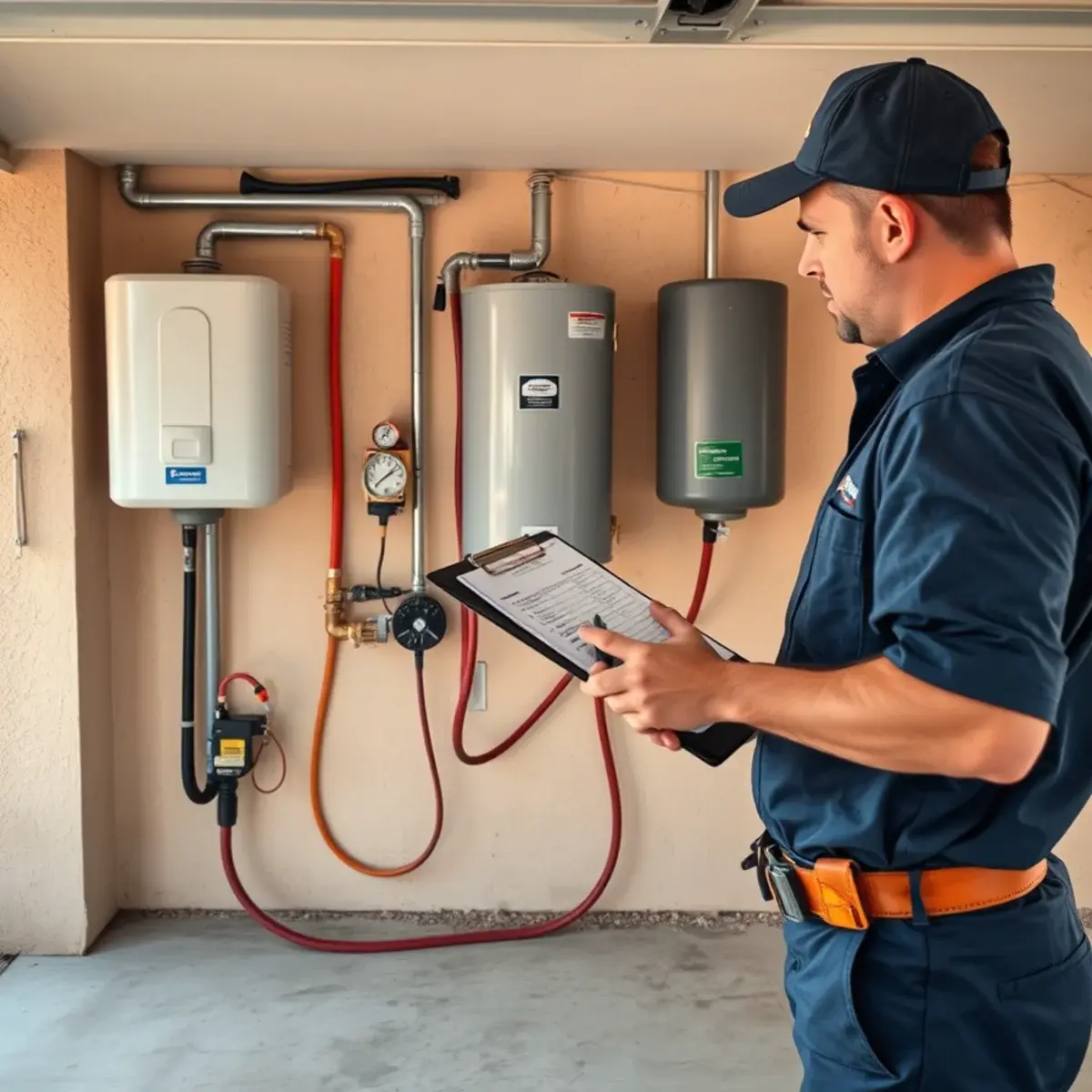
Dust storms do not damage plumbing directly — they load your systems with fine silt that shows up weeks later as clogged aerators, a blocked condensate line and a hose bib that will not seal.

The short answer
Dust storms do not break pipes. What they do is deposit very fine silt into every exterior opening — hose bib packing, aerator screens, appliance inlet screens, evaporative cooler pads and your AC condensate line — which shows up as plumbing problems weeks later. Almost all of it is preventable with a short post-storm checklist and free to fix yourself.
A haboob rolling across the valley is a genuinely impressive sight and, for plumbing, a fairly indirect problem. Dust storms do not break pipes. What they do is deposit an enormous quantity of very fine silt into every exterior opening on your property — and that silt shows up as plumbing problems weeks later.
1. Hose bibs and outdoor fixtures

Fine dust gets into the packing and seat of an exterior valve. After a big storm, hose bibs that previously sealed cleanly start weeping at the stem or dripping from the spout when closed.
A weeping hose bib is not just wasted water — on the south and west walls it also means water running against your foundation, and it accelerates the cracking that already comes from thermal cycling. Replacement with a quarter-turn frost-free bib is inexpensive and holds up better.
2. Aerators, showerheads and inlet screens
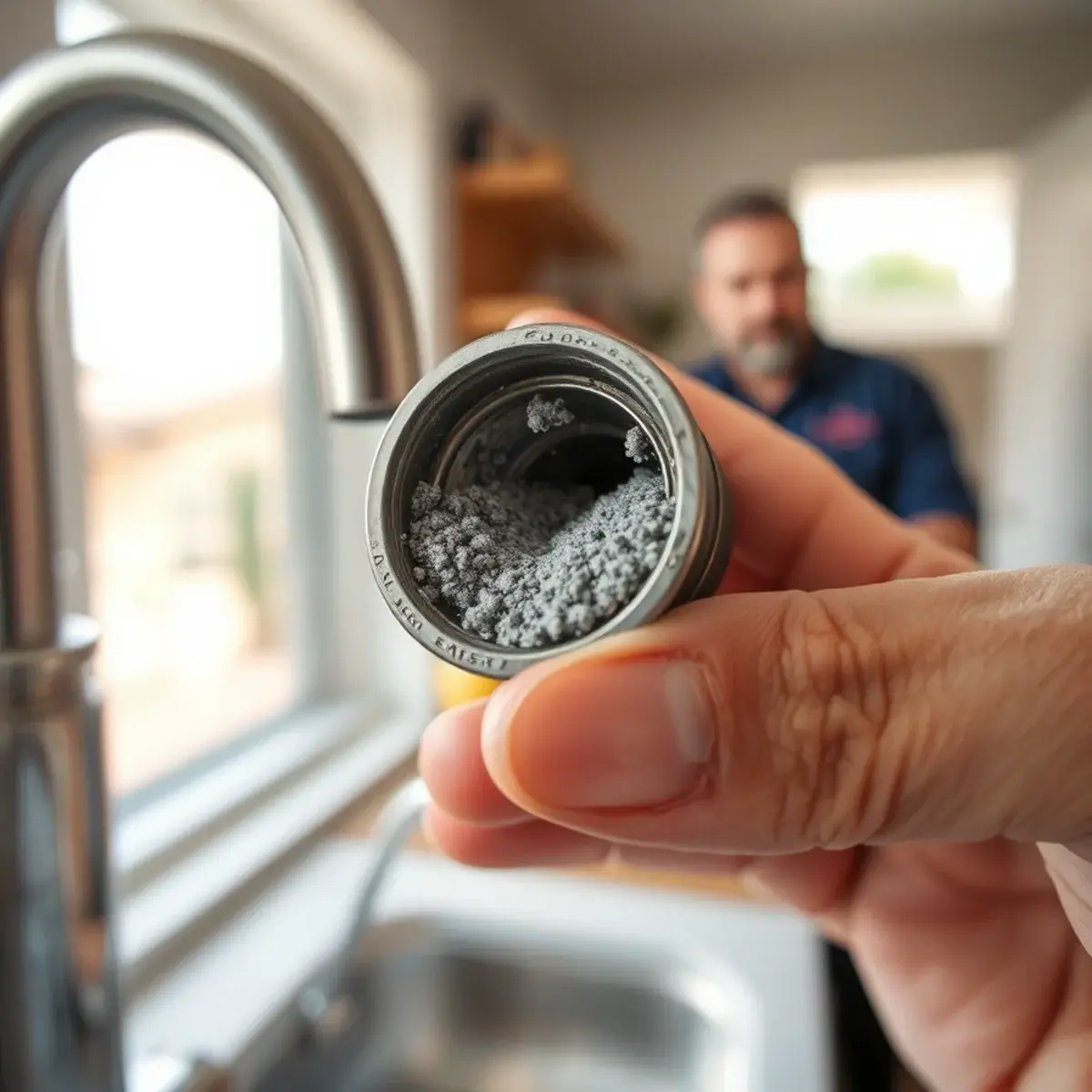
Where dust really becomes a plumbing issue is in combination with utility work. If a main is disturbed nearby — and construction is constant in this area — silt-laden water reaches your fixtures and settles in every screen.
Symptoms show up as a kitchen faucet that suddenly flows at half rate, a shower that lost pressure overnight, or a washing machine that fills slowly. The fix is free: unscrew aerators, pull showerheads, clean the inlet screens on your washer and dishwasher, and soak everything in vinegar.
3. Your AC condensate drain line

This one is plumbing whether or not people think of it that way. Your air conditioner produces condensate that drains through a small PVC line, and dust drawn into the system combines with that moisture to form sludge inside the line.
When it blocks, the drain pan overflows — into your attic, your ceiling or down an interior wall, depending on where the air handler sits. Homeowners frequently call us about a ceiling stain in July with no rain in weeks, and this is one of the two usual answers. The other is an attic supply line failure — see why attic heat causes leaks.
Prevention: flush the condensate line at the start of cooling season and again mid-summer. It is a simple job and it prevents a genuinely expensive one.
4. Evaporative coolers
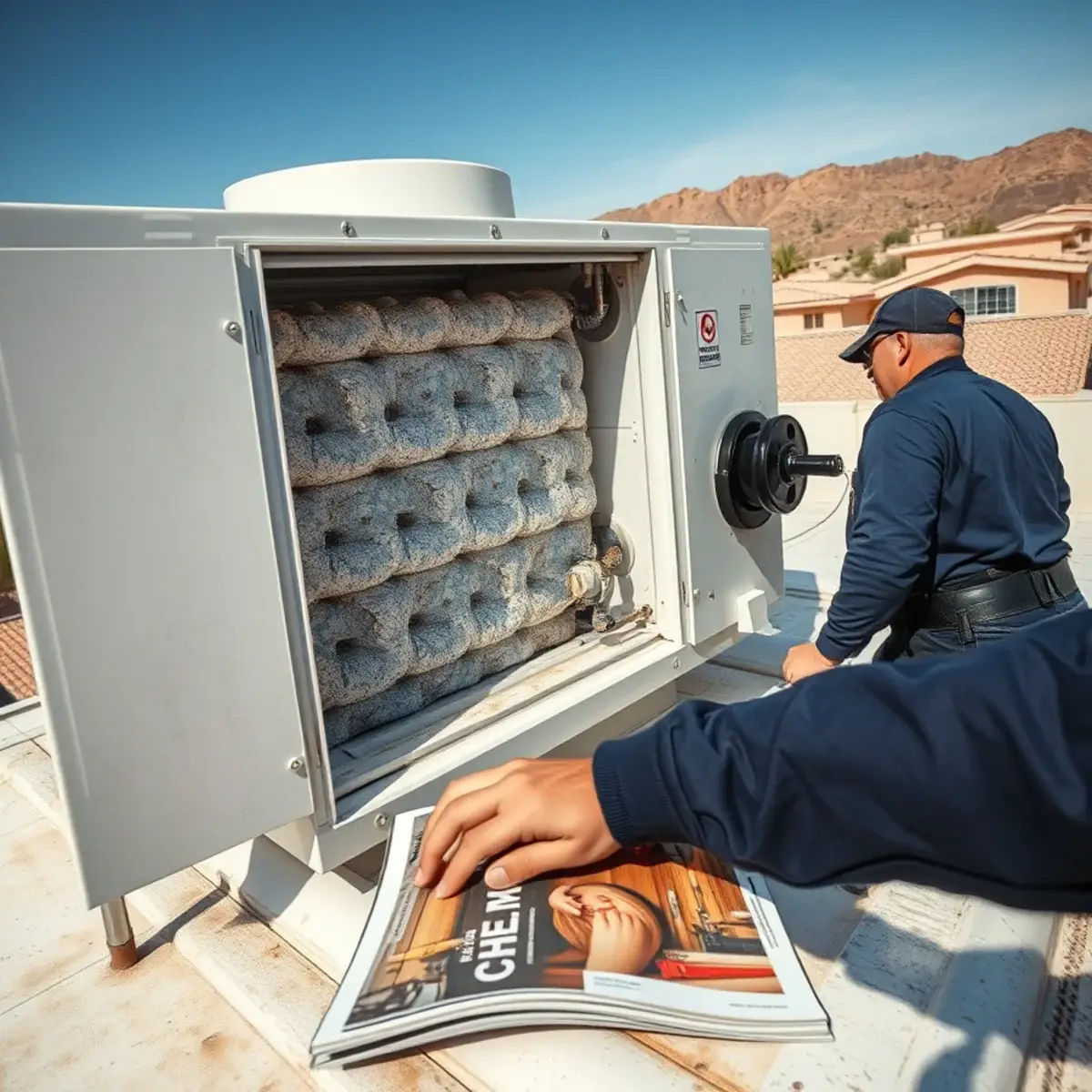
Where homes still use them, evap coolers pull outside air directly through wet pads, which means a dust storm loads them heavily. Mineral scale from our 15–18 grain water plus silt is a fast route to a clogged float valve, a blocked bleed line and a scaled distribution system.
5. Pool equipment and outdoor kitchens

Dust in a pool means more filter cleaning and more backwashing, which means more water moving through the backwash line. And any outdoor kitchen sink or ice maker that sat uncovered through a storm should be flushed thoroughly before use.
The post-storm checklist
- 1Run each outdoor hose bib for a minute and watch for weeping at the stem when closed.
- 2Check the AC condensate line for flow, and flush it if you have not this season.
- 3If water pressure at any fixture changed, pull the aerator or showerhead and clean it before calling anyone.
- 4Check the washing machine and dishwasher inlet screens if they are filling slowly.
- 5Rinse the backflow assembly and irrigation valve box area so silt does not work into the components.
- 6Clear any area drains or roof drains that dust and debris may have blocked before the next monsoon cell arrives.
None of that needs a plumber. What does: a hose bib that will not stop dripping, a condensate line you cannot clear, a ceiling stain, or fixture pressure that does not come back after cleaning. Those are toilet and fixture repair or diagnostic calls, and they are quick.
Dust storms hit the whole region — we deal with the aftermath from San Tan Valley out through Apache Junction and the US-60 corridor.
The one that costs real money
Of everything on the list, the AC condensate drain is the one that turns into a four-figure repair. Dust drawn into the system combines with condensate to form sludge inside a small PVC line. When it blocks, the drain pan overflows — into your attic, your ceiling, or down an interior wall depending on where the air handler sits.
That is why we get calls about ceiling stains in July with no rain in weeks. It is either an attic supply line or that condensate line, and the two look identical from below. Flushing the line at the start of cooling season and again mid-summer prevents an expensive and entirely avoidable problem.
The habit worth building: after any nearby utility work or water outage, run an outside hose bib wide open for several minutes before touching an indoor fixture. That flushes sediment out where it cannot clog anything. Two minutes of prevention against an afternoon of pulling aerators and cleaning appliance screens.
The bottom line
Run the post-storm checklist and most of this never becomes a service call — aerators soak in vinegar, hose bibs get checked for weeping, and the condensate line gets flushed. What does need a plumber: a hose bib that will not stop dripping, a condensate line you cannot clear, a ceiling stain, or fixture pressure that does not return after cleaning. See toilet and fixture repair.
Frequently asked questions
Not directly. What it does is deposit fine silt into exterior valves, screens and openings, which shows up later as weeping hose bibs, clogged aerators, slow-filling appliances and blocked AC condensate lines. Most of it is preventable with a short post-storm checklist and free to fix yourself.
Usually silt in the aerators and showerheads, especially if there was utility work nearby that disturbed a main. Unscrew the aerator, soak it in vinegar overnight and rinse. If pressure does not return after cleaning every fixture screen, the restriction is further upstream and worth a look.
Functionally, yes — it is a drain line, and when it blocks the pan overflows into your attic, ceiling or wall. Dust plus condensate forms sludge inside it. Flushing it at the start of cooling season and again mid-summer prevents one of the more common summer ceiling-stain calls we get.